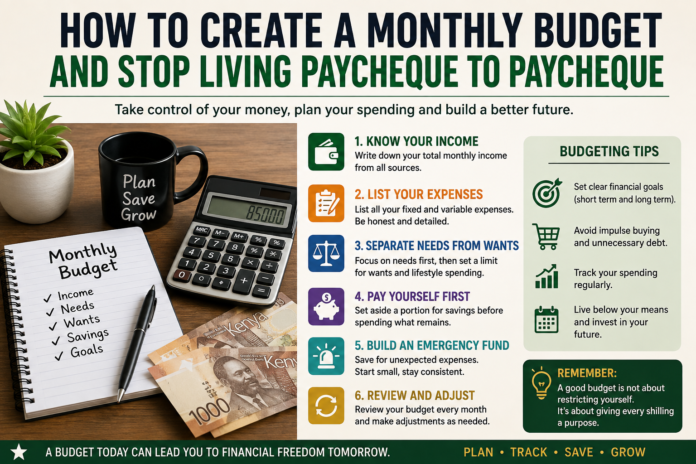
For many people, getting paid can feel like a temporary relief before bills, shopping, transport and unexpected expenses quickly eat into their income. The good news is that you do not necessarily need to earn a huge salary to improve your finances. A realistic monthly budget can help you understand where your money goes, control unnecessary spending and gradually build financial breathing room.
Highlights
- Know exactly how much money comes into your account each month.
- Separate essential expenses from wants and optional spending.
- Set aside savings before spending what remains.
- Create an emergency fund for unexpected costs.
- Review your budget regularly and adjust it when your circumstances change.
Main Story
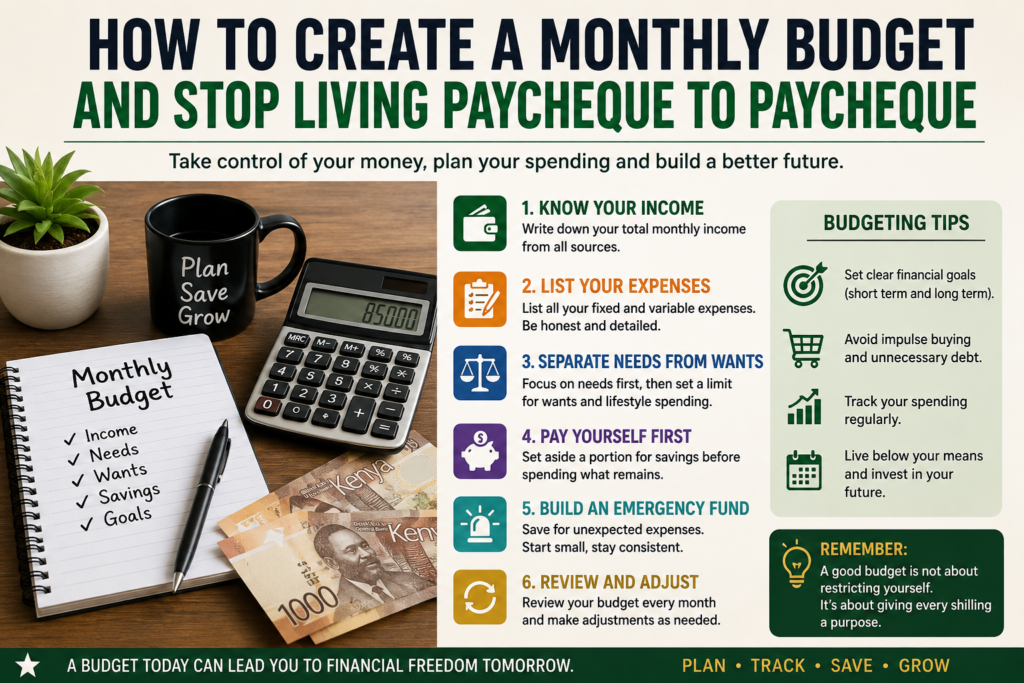
Start by Knowing Your Monthly Income
The first step in creating a workable budget is knowing how much money you actually have available.
Add up your regular income from your salary, business, freelance work or other reliable sources. If your income changes from month to month, use a conservative estimate based on your lower-earning months.
The aim is to create a budget based on money you can realistically count on rather than money you hope will come in.
List Every Major Expense
Write down your regular monthly expenses.
These may include rent, food, transport, electricity, water, school fees, debt repayments, insurance, phone bills and other household costs.
Do not forget smaller expenses. A few hundred shillings spent regularly on takeaways, subscriptions, entertainment or impulse purchases can become a significant amount by the end of the month.
Separate Needs From Wants
Not every expense has the same level of importance.
Needs are expenses that keep your household functioning, such as housing, food, transport and essential bills.
Wants include things you enjoy but could live without, such as frequent restaurant meals, unnecessary shopping or entertainment.
This does not mean you have to eliminate everything enjoyable. Instead, give yourself a reasonable spending limit so that fun does not come at the expense of your financial goals.
Give Every Shilling a Purpose
A useful budget should tell your money where to go before you spend it.
After accounting for essential expenses, decide how much will go towards savings, debt repayment, investments and personal spending.
You can use a budgeting method that suits your income and lifestyle. The important thing is consistency rather than following a particular formula perfectly.
One of the easiest ways to build savings is to save immediately after receiving your income.
Instead of waiting until the end of the month to see what is left, set aside a predetermined amount first.
Even if you start with a small figure, regular saving can gradually create an emergency cushion and reduce your dependence on borrowing when unexpected expenses arise.
Build an Emergency Fund
Unexpected expenses are one of the biggest reasons people fall back into financial stress.
A medical bill, job loss, urgent repair or family emergency can quickly disrupt a carefully planned budget.
Start small if necessary. Your first goal could be saving enough to handle one unexpected expense. Over time, work towards building a larger emergency fund that can cover several months of essential expenses.
Be Careful With Debt
Debt can make it difficult to escape the paycheque-to-paycheque cycle, particularly when high-interest loans or multiple repayments consume a large portion of your income.
List your outstanding debts, including the amount owed, interest and repayment dates.
Prioritise expensive debt while continuing to meet required payments on other obligations. Avoid taking on new debt simply to finance non-essential purchases.
Watch Your Spending Habits
A budget only works when you understand your habits.
Try tracking your spending for one month. You may discover that certain expenses are taking more money than expected.
You can also introduce simple rules, such as comparing prices before major purchases, limiting impulse buying and setting weekly spending limits.
Small changes repeated consistently can have a bigger impact than making extreme cuts that are impossible to maintain.
Review Your Budget Every Month
Your financial situation can change.
Rent may increase, income may fall, a new expense may appear or your priorities may shift. That is why a budget should not be treated as a document you create once and forget.
At the end of each month, compare what you planned to spend with what you actually spent.
Ask yourself three questions:
- What worked?
- Where did I overspend?
- What can I change next month?
Use the answers to improve your next budget.
The Goal Is Financial Breathing Room
Stopping the paycheque-to-paycheque cycle does not happen overnight.
The goal is to gradually create a gap between what you earn and what you spend. That gap can then be used to build savings, reduce debt and prepare for unexpected expenses.
You do not need a perfect financial plan. You need a realistic one that you can follow consistently.
Financial freedom often begins with a simple decision: understand your money today so that your money does not control your tomorrow.

