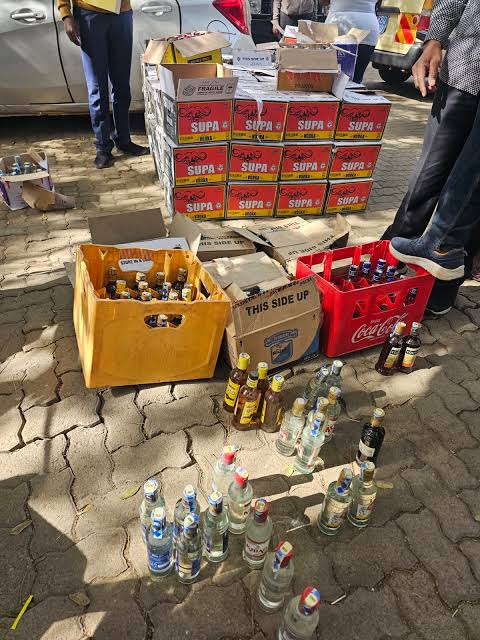
A multi-agency crackdown on illicit alcohol has intensified in Nairobi after authorities seized more than 4,000 suspected counterfeit alcoholic drinks during a major operation in Kayole, with two suspects arrested and set to face court.
Highlights
- More than 250 cartons of suspected counterfeit alcohol were seized in Kayole.
- The operation recovered over 4,000 assorted alcoholic products.
- Two suspects were arrested and detained at Jogoo Road Police Station.
- NACADA says intelligence from members of the public has helped drive recent seizures.
- Authorities say the crackdown will continue in other high-risk areas.
Main Story
Major Kayole Alcohol Bust
Authorities have stepped up the fight against counterfeit and illicit alcohol following a major operation in Kayole, Nairobi.
The operation, led by the National Authority for the Campaign Against Alcohol and Drug Abuse (NACADA), targeted a suspected distribution centre and resulted in the recovery of more than 250 cartons containing over 4,000 assorted alcoholic products believed to be counterfeit.
Two people were arrested during the raid and are being held at Jogoo Road Police Station. They are expected to appear in court tomorrow.
Multi-Agency Team Behind Operation
The operation brought together officers from NACADA, the Kenya Revenue Authority, Kenya Bureau of Standards, National Government Administration Officers, the National Police Service and the National Gang Prevention Unit.
The coordinated approach is aimed at disrupting the networks involved in manufacturing, distributing and selling illicit alcoholic products.
Authorities have warned that counterfeit drinks can expose consumers to serious health risks, making the fight against the illegal trade both a public safety and law-enforcement priority.
Crackdown Spreads Across Nairobi
The Kayole seizure follows a string of recent operations in parts of Nairobi, including Eastleigh, Jericho, Mukuru Kwa Njenga and South B.
Those raids have resulted in the recovery of counterfeit alcoholic products as well as narcotics, with authorities increasingly relying on intelligence-led operations to identify suspected distribution networks.
NACADA Chief Executive Officer Dr Anthony Omerikwa has credited members of the public for helping authorities identify illegal activities within their communities.
He urged Kenyans to continue sharing information that can assist in identifying people involved in the production and distribution of dangerous alcohol.
Beyond Arrests and Seizures
According to NACADA, the campaign is not limited to shutting down illegal supply chains.
The authority says it is also working on community-based rehabilitation programmes for people struggling with substance dependence.
Its Community-Based Rehabilitation Framework for Substance Use Disorders focuses on prevention, treatment and helping recovering individuals reintegrate into society.
This approach treats substance abuse not only as an enforcement issue but also as a public health concern requiring long-term intervention.
Authorities Warn Alcohol Dealers
The latest operation sends a fresh warning to manufacturers, distributors and outlets involved in the counterfeit alcohol trade.
NACADA says enforcement operations will continue across the country, particularly in areas identified as high-risk.
Members of the public can report suspected illegal alcohol and drug activities through NACADA’s official channels or the free helpline 1192. The authority says information received is handled confidentially.
As the government intensifies efforts to disrupt illicit alcohol networks, the latest Kayole seizure shows that authorities are increasingly targeting the supply chains behind the products reaching consumers.
The fight against counterfeit alcohol is ultimately about more than confiscated cartons it is about protecting what Kenyans consume and the communities that bear the cost of addiction and unsafe products.

