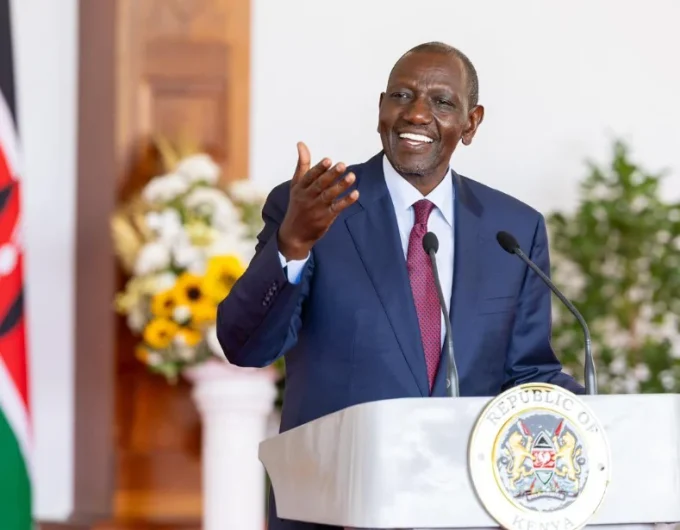
Kenya has added about 3.27 million jobs between 2022 and 2025, but the numbers tell a more complicated story than the headline suggests. Nearly nine out of every 10 new jobs were created in the informal sector, raising fresh questions about the quality, stability and earning power of employment as President William Ruto’s administration enters its fourth year.
Highlights
- Kenya created about 3.27 million jobs between 2022 and 2025.
- Approximately 2.84 million of those jobs were in the informal sector.
- The economy added 822,100 jobs in 2025, according to KNBS.
- The Affordable Housing Programme has been presented as a major source of employment.
- Ruto says unemployment and inadequate incomes remain major challenges for Kenyans.
Main Story
The Jobs Numbers Keep Rising
Kenya’s employment figures have continued to grow since President William Ruto took office, with the economy recording millions of additional jobs over the past four years.
According to figures from the Kenya National Bureau of Statistics, about 816,600 jobs were added in 2022. Of these, 702,900 came from the informal sector, while 113,700 were recorded in the modern sector.
The 2022 figure largely provides a starting point for assessing the period because Ruto assumed office in September that year.
In 2023, the country recorded its highest annual increase during the period, adding approximately 848,200 jobs. Informal employment accounted for 720,900 of them, compared with 122,800 jobs in the modern sector.
The economy added another 782,300 jobs in 2024. More than 703,000 were informal-sector positions, meaning this category accounted for roughly 90 per cent of the year’s employment growth.
In 2025, a further 822,100 jobs were created. About 716,800 were informal jobs, representing 87.2 per cent of the total.
Taken together, the figures show that roughly 2.84 million of the 3.27 million jobs added between 2022 and 2025 came from the informal economy.
That leaves about 420,400 jobs in the modern or formal economy.
Informal Work Remains the Biggest Employer
The latest KNBS figures show that total employment, excluding small-scale agriculture, climbed from 20.8 million people in 2024 to 21.6 million in 2025.
Informal employment increased to approximately 18.1 million, while wage employment rose from about 3.21 million to 3.32 million.
The numbers highlight a major feature of Kenya’s labour market: more people are working, but a large share are earning their livelihoods outside traditional formal employment.
For millions of Kenyans, that means running small businesses, offering services, working in casual arrangements or finding income through other forms of self-employment.
Affordable Housing Becomes a Major Jobs Pitch
The government has also pointed to the Affordable Housing Programme as one of its flagship employment initiatives.
In January 2026, Ruto said more than 500,000 Kenyans were working through the housing programme. That represented a significant increase from the 200,000 direct jobs he had attributed to the initiative in December 2024.
Housing Principal Secretary Charles Hinga later said government data showed more than 428,000 Kenyans were directly employed full-time at construction sites by February 2026.
He added that about one million other people were involved in supplying materials and services connected to the projects.
By that time, 262,913 housing units were reportedly under development in 111 constituencies across all 47 counties.
The government has set a target of delivering 200,000 affordable homes every year, making construction one of the key sectors in its employment strategy.
The different figures, however, measure different categories of employment. Earlier presidential figures focused on direct jobs, while later government figures also distinguished between construction-site workers and people benefiting from the wider supply chain.
Government Claims a Much Bigger Employment Figure
In May 2026, Labour Cabinet Secretary Alfred Mutua put the number of jobs and employment opportunities created during Ruto’s tenure at more than 6.2 million.
Mutua attributed the figure to a combination of public-sector recruitment and government programmes.
He cited approximately 1.895 million people employed in the public service, more than 128,000 teachers recruited into the education sector and nearly 60,000 workers employed by county governments.
He also pointed to programmes such as the Affordable Housing Programme, which he said had created 640,442 jobs, and Kazi Mtaani, which he attributed 583,868 employment opportunities to.
The figure is considerably higher than the 3.27 million employment increase recorded by KNBS.
The difference largely comes down to what is being counted. KNBS measures changes in employment across the economy, while the government figure combines jobs with employment opportunities linked to specific programmes and sectors.
Ruto Admits Joblessness Remains a Major Problem
Despite the government’s employment claims, Ruto has acknowledged that unemployment and inadequate incomes remain serious challenges.
Speaking during the Beyond Vision 2030 national conversation on August 12, the President said too many Kenyans remain without jobs or reliable sources of income.
He argued that tackling unemployment must be part of Kenya’s wider effort to reduce inequality and improve living standards, particularly for people at the lower end of the income scale.
Ruto also singled out micro, small and medium enterprises as an important avenue for creating more income opportunities.
According to the President, supporting these businesses with access to financing, markets and commercial opportunities could help more Kenyans move into sustainable livelihoods.
What Comes After Vision 2030?
The employment debate comes as Kenya considers its next long-term development framework beyond Vision 2030.
Ruto has argued that the new plan must reflect changes that were not as prominent when the original vision was developed, including rapid technological growth, artificial intelligence and climate change.
But employment is expected to remain at the heart of that conversation.
The central challenge is no longer simply whether Kenya is creating jobs. It is also whether those jobs provide reliable incomes, stability and a realistic path towards a better quality of life.
For a country with a large and youthful workforce, the distinction between having work and having sustainable employment could ultimately matter more than the headline number.
Kenya may be creating more work, but the bigger question remains: are enough of those jobs giving young Kenyans the stable incomes and opportunities they need to build better lives?

