
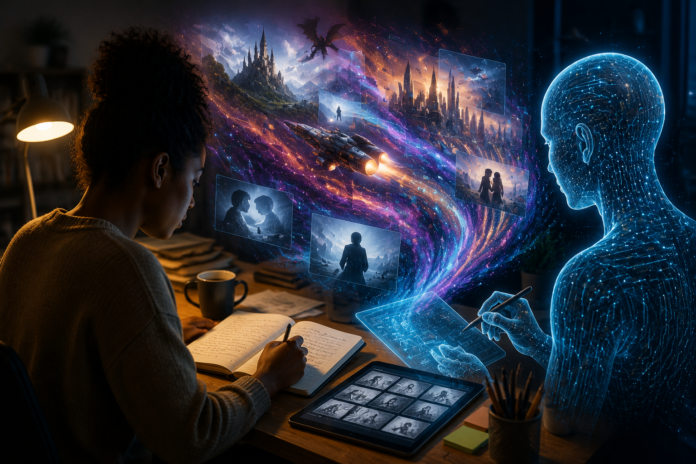
Artificial Intelligence (AI) is changing the way stories are created, produced and experienced across the world. From films and books to journalism and digital content, AI is giving creators new ways to develop ideas, improve production and connect with audiences. While some fear technology may replace human creativity, many experts believe AI is becoming a powerful partner in the storytelling process.
Highlights
- AI helps writers and creators develop ideas, characters and storylines faster.
- Filmmakers are using AI to improve animation, visual effects and production.
- Digital platforms use AI to personalise entertainment experiences.
- News organisations use AI to analyse information and support reporting.
- Questions around creativity, copyright and misinformation remain a challenge.
How AI Is Changing Storytelling
Storytelling has always evolved with technology. From handwritten books to cinema, television and social media, every generation has found new ways to share ideas and emotions.
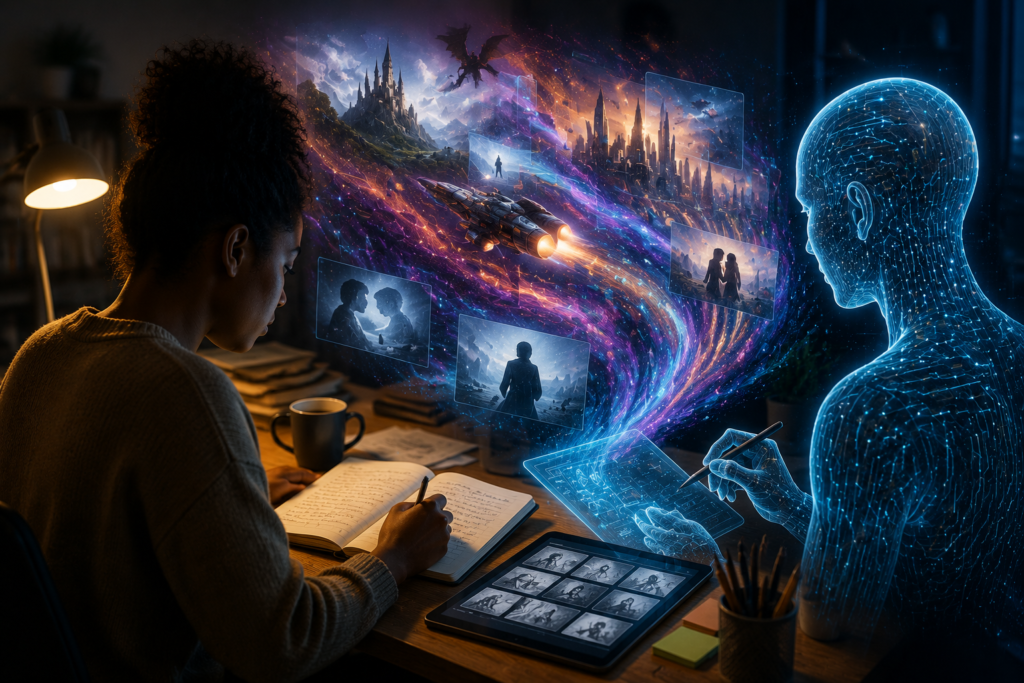
Today, Artificial Intelligence is becoming one of the biggest forces shaping the future of storytelling. AI tools are helping writers, filmmakers, journalists and content creators work faster while exploring creative ideas that were previously difficult to achieve.
AI Becomes a Creative Partner
For many writers, starting a story can be the hardest part. AI tools are now helping creators brainstorm ideas, develop characters, improve dialogue and explore different directions for their stories.
Instead of replacing imagination, AI can act as a creative assistant that helps people expand their thoughts and discover new possibilities.
Transforming Movies and Visual Content
The film industry is among the biggest beneficiaries of AI technology. Filmmakers are using artificial intelligence to improve visual effects, create realistic environments and speed up editing processes.
For smaller creators, AI tools are also making advanced storytelling techniques more accessible by reducing some of the costs associated with traditional production.
Stories That Understand Audiences
AI is also changing how people consume stories. Streaming platforms and digital services analyse viewing habits to recommend movies, shows and content that match individual interests.
In the future, AI could allow audiences to experience more personalised stories where characters, plots or endings adapt based on viewer choices.
AI and the Future of Journalism
Newsrooms around the world are exploring how AI can support journalists by analysing large amounts of information, identifying trends and assisting with content production.
However, human journalists remain important because storytelling is not only about sharing information it is about understanding people, emotions and the impact of events.
Challenges Facing AI Storytelling
Despite its advantages, AI-generated content has raised concerns among creators and audiences.
Questions about copyright, ownership of AI-created work and the protection of original ideas continue to spark debate. There are also concerns that AI could be used to create misleading stories, fake images or false information.
Experts argue that responsible use of AI will be important to ensure technology supports creativity rather than harms it.
The Future of Storytelling
As AI continues to develop, the relationship between humans and technology will likely shape the next era of storytelling.
The most powerful stories may come from a combination of human emotion and artificial intelligence, with machines providing new tools while people continue bringing experiences, culture and meaning to every story.
Technology may change how stories are created, but the human emotions behind those stories will always remain the reason people connect with them.
How Artificial Intelligence Is Transforming Stories

