
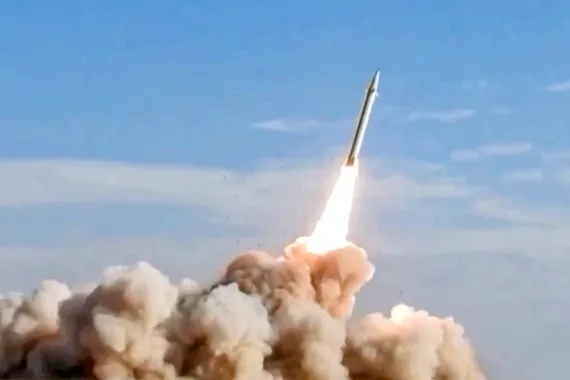
Tensions between the United States and Iran have flared up again after American forces struck two rocket launchers on Iran’s Larak Island, prompting Tehran to launch what it described as retaliatory attacks against US military positions in the region. The latest escalation has also renewed concerns over the strategically vital Strait of Hormuz and its impact on global energy markets.
Highlights
- US forces struck two rocket launchers on Iran’s Larak Island.
- Iran reported two deaths and two injuries from the American attack.
- Tehran said it retaliated against US bases in Jordan.
- Jordan reported intercepting eight missiles.
- The latest escalation threatens to further disrupt oil and gas supplies.
Main Story
US Launches Strike on Larak Island
The United States has carried out its first known attack on Iranian territory since President Donald Trump paused a renewed military campaign in late July.
US Central Command said American forces carried out a limited operation after detecting preparations by Iran to launch rockets and place sea mines in the Strait of Hormuz.
The targets were located on Larak Island, which lies close to Bandar Abbas and directly along the strategic shipping route.
Iran’s Islamic Revolutionary Guard Corps reported that two people were killed and another two injured in the strike. The IRGC also warned that the United States would face retaliation.
Iran Reports Missile Strikes on US Positions
Hours after the attack, Iranian authorities said they had responded by targeting American military facilities in Jordan.
Iranian media reported that ballistic missiles were launched at the King Hussein and Al-Azraq bases.
Jordan’s military later said its air defences had intercepted eight missiles early Monday morning.
Iranian state television also claimed that its forces had attacked an American air base in the United Arab Emirates using drones.
The UAE, however, rejected the claim that Al-Minhad Air Base had been targeted, describing the report as false. Authorities in the country confirmed that one drone had been intercepted.
Why the Strait of Hormuz Matters
The latest confrontation has put renewed attention on the Strait of Hormuz, one of the world’s most important energy routes.
Larak Island sits in a strategically sensitive section of the waterway, near Iran’s major port of Bandar Abbas.
Before the current conflict, roughly one-fifth of the world’s oil and liquefied natural gas shipments passed through the strait, making any disruption there a major concern for global markets.
The waterway has effectively been closed since fighting began in February, contributing to sharp movements in international oil prices.
Iran has also reportedly demanded that tankers travelling through the area pass near Larak Island for inspections and has allegedly required some vessels to pay fees of up to $2 million.
Tehran Promises Retaliation
Iran’s Foreign Ministry condemned the American operation and described its response against US military positions as an act of legitimate self-defence.
President Masoud Pezeshkian also signalled that Tehran was prepared to respond while insisting that Iran was not looking for a wider war.
The latest exchange nevertheless raises the possibility of another cycle of attacks between the two countries, particularly as military forces remain positioned across the region.
Trump Posts Explosive Videos
Following the US operation, President Trump shared videos on Truth Social appearing to show explosions at oil infrastructure.
One of the posts referred to Kharg Island, a major Iranian oil terminal that Trump has previously threatened to target.
The president did not provide further details alongside the footage, leaving questions over whether the posts were intended as a warning about possible future US military action.
With the Strait of Hormuz already under severe pressure, any further escalation could have consequences far beyond the Middle East, particularly for energy prices and international shipping.
As Washington and Tehran trade warnings and missiles once again, the biggest question may be how far either side is willing to go before the Strait of Hormuz becomes the centre of an even larger regional crisis.

