
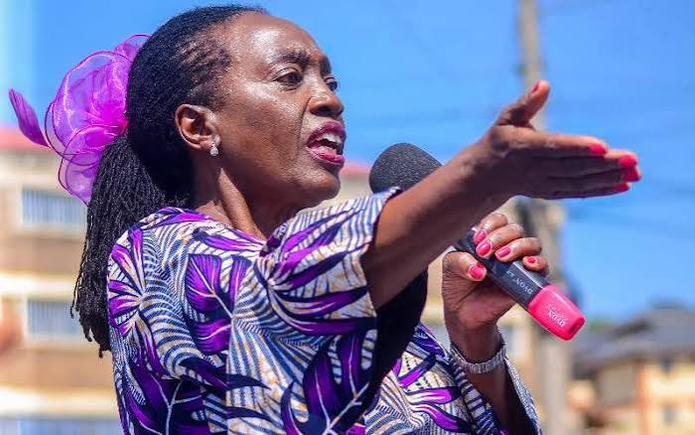
People’s Liberation Party leader Martha Karua has renewed pressure on Ugandan President Yoweri Museveni over the continued detention of opposition leader Kizza Besigye, questioning why the government is keeping him behind bars as his health deteriorates and concerns also mount over his lawyer, Erias Lukwago.
Highlights
- Karua questioned Museveni over Besigye’s continued detention.
- Besigye’s health has reportedly deteriorated significantly in custody.
- Lawyer Erias Lukwago is also being held and is reportedly in poor health.
- A Ugandan High Court recently declined to order Besigye’s transfer to a facility of his choice.
- Karua was previously detained and deported from Uganda while seeking to observe Lukwago’s court proceedings.
Main Story
Karua Puts Museveni on the Spot
Martha Karua has stepped up her criticism of Uganda’s government over the continued detention and medical condition of veteran opposition politician Kizza Besigye.
In remarks made on Thursday, September 3, Karua questioned what President Yoweri Museveni’s administration stood to fear by allowing Besigye greater access to his preferred lawyers, family and supporters.
Her intervention comes as the veteran opposition figure continues to face treason-related proceedings while dealing with serious health challenges.
Concerns Extend to Besigye’s Lawyer
Karua also highlighted the situation facing Erias Lukwago, a former Kampala Lord Mayor and member of Besigye’s legal team.
Lukwago was arrested in June and later charged with misprision of treason. He has denied the accusations.
Karua expressed concern that the pressure surrounding Besigye’s case has also affected people involved in his defence, describing Lukwago’s detention as deeply troubling.
Besigye’s Health Raises Concern
Besigye, 70, has remained in detention since November 2024 after being arrested in Nairobi and subsequently taken to Uganda.
His medical condition reportedly worsened after he collapsed during a court appearance in Kampala on July 29. He was taken to hospital before being returned to Luzira Prison.
His wife, Winnie Byanyima, has repeatedly called for him to receive specialised medical care outside Uganda.
On August 28, Byanyima reported that Besigye had been transferred from Luzira to the Joint Clinical Research Centre following a deterioration in his condition.
She said he was struggling with basic physical activities, including walking, speaking and holding objects steadily.
Uganda’s prison authorities have confirmed that Besigye and Lukwago were moved from Luzira for medical treatment. Officials said both were stable and that the transfers followed medical advice as well as a court order.
Court Rejects Transfer Request
The medical debate took another turn on Wednesday, September 2, when a Ugandan High Court judge declined to order Besigye’s transfer to a healthcare facility selected by him.
The court instead directed prison authorities to continue monitoring his health for three weeks before considering further action.
The decision has added to pressure from Besigye’s supporters and rights advocates, who have raised concerns about whether he is receiving adequate medical attention while in custody.
Karua’s Own Uganda Detention
Karua’s criticism is also informed by her direct involvement in Besigye’s legal and human rights battles.
The Kenyan politician travelled to Uganda on June 22, 2026, intending to observe proceedings connected to Lukwago’s bail application.
However, upon reaching Entebbe International Airport, she was detained by immigration officials, had her mobile phones confiscated and was later deported to Kenya.
Her involvement in the matter has since extended beyond legal representation, placing her at the centre of a wider regional debate over political freedoms, due process and the treatment of opposition figures in Uganda.
A Growing Regional Human Rights Debate
Besigye’s case has increasingly attracted attention beyond Uganda, particularly in Kenya, where his arrest and transfer from Nairobi in 2024 generated widespread concern.
Karua has remained one of the prominent Kenyan voices challenging the handling of the case.
With Besigye’s health still under scrutiny and Lukwago facing his own legal battle, pressure is likely to remain on Kampala over how it handles the two cases.
The central question now is whether Uganda’s authorities will respond to the growing calls for greater medical access and due process — or maintain their current position.
When a political dispute begins to threaten the health and dignity of those caught in it, the question of justice becomes impossible to ignore.

