The Ebola outbreak in the Democratic Republic of Congo is rapidly becoming one of the world’s most serious health emergencies, with the World Health Organization warning that it could surpass the deadliest Ebola outbreak ever recorded if the virus continues spreading at its current rate.
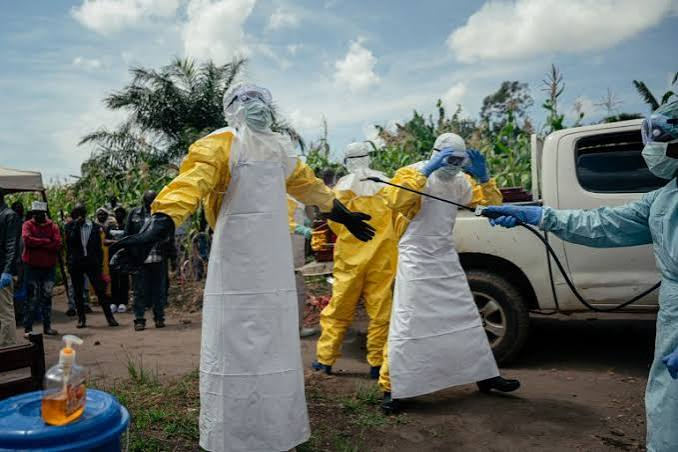
The outbreak, caused by the rare Bundibugyo strain, has already resulted in thousands of infections and more than 2,000 deaths, while conflict and limited access to affected communities are making efforts to contain the disease even more difficult.
Highlights
- The 2026 Ebola outbreak in DR Congo has recorded more than 4,300 cases.
- More than 2,000 deaths have been reported.
- WHO warns the outbreak could surpass the 2014–2016 Ebola crisis.
- The outbreak involves the rare Bundibugyo strain of Ebola.
- Scientists are working on a vaccine while trials of antiviral treatments are underway.
Main Story
WHO Warns of a Growing Ebola Crisis
The World Health Organization has raised the alarm over the worsening Ebola outbreak in the Democratic Republic of Congo, warning that the crisis could become the deadliest Ebola outbreak ever recorded.
WHO Director-General Tedros Adhanom Ghebreyesus said that if the virus continues spreading at its current pace, the number of deaths could exceed those recorded during the 2014–2016 West Africa outbreak, which killed at least 11,000 people.
The current outbreak was officially declared on May 15, although health officials believe transmission had already been taking place for several months.
More than 4,300 cases have been reported so far, with the death toll exceeding 2,000.
Virus Was Initially Mistaken for Other Diseases
Health officials believe the virus began circulating as early as February.
WHO Africa Director Dr Mohamed Janabi said some early cases were initially mistaken for diseases such as malaria and typhoid.
That delay has made the response more difficult, with health teams now working to identify cases, trace contacts and prevent further transmission.
“We are chasing the virus, the virus is ahead of us,” Janabi said while speaking in Bunia, one of the areas close to the centre of the outbreak.
The WHO hopes to bring transmission under control within three months, although officials have stressed that this would not necessarily mean the outbreak itself had completely ended.
A Rare Strain With No Approved Vaccine
The outbreak is being driven by the Bundibugyo species of Ebola, a relatively rare strain that has previously been linked to only two known outbreaks, in 2007 and 2012.
One of the biggest challenges is the lack of an approved vaccine or established therapeutic drugs specifically designed to treat this strain.
Researchers are now working to close that gap.
The UK’s Medicines and Healthcare products Regulatory Agency has authorised human trials of a potential Bundibugyo vaccine being developed by researchers at the University of Oxford.
The vaccine uses technology similar to that behind the Oxford-AstraZeneca Covid-19 vaccine.
Other research teams are also developing possible vaccines, although their candidates have not yet reached human trials.
Scientists Also Testing Treatments
Vaccine development is not the only area receiving attention.
The WHO is supporting a clinical trial in DR Congo to investigate whether two existing antiviral treatments can improve survival among people infected with the virus.
The aim is to determine whether medicines already available could offer an effective treatment option while researchers continue developing vaccines specifically for the Bundibugyo strain.
Conflict Makes the Response Harder
The health crisis is unfolding in eastern DR Congo, a region that has experienced prolonged insecurity and instability.
That situation is making it harder for health workers to reach people who may have been infected.
According to Janabi, response teams are currently reaching only about 30% of cases.
Limited access creates additional risks because patients may remain undiagnosed while people who have been exposed to the virus may not be identified quickly enough.
How Ebola Spreads
Ebola is a rare but potentially deadly viral disease.
Symptoms can appear between two and 21 days after infection. Early signs may include fever, headache and extreme tiredness, which can make the disease difficult to distinguish from other infections in its early stages.
As the illness progresses, patients may develop vomiting and diarrhoea, with severe cases potentially leading to organ failure.
The virus spreads through direct contact with infected bodily fluids, including blood and vomit.
This makes rapid identification of cases, isolation, contact tracing and infection-control measures critical during an outbreak.
The growing crisis has placed enormous pressure on health workers and emergency response teams operating in affected communities.
The WHO’s immediate goal is to slow transmission and bring the outbreak under control, while researchers work on longer-term tools such as vaccines and treatments.
However, officials face several obstacles, including delayed diagnosis, limited access to affected communities and the continuing instability in parts of eastern DR Congo.
The situation has once again highlighted the importance of strong disease surveillance systems and rapid international response when deadly infectious diseases emerge.
As DR Congo battles a rapidly spreading Ebola outbreak, the race is not only against the virus but also against time, limited resources and the barriers that can prevent lifesaving care from reaching those who need it most.

