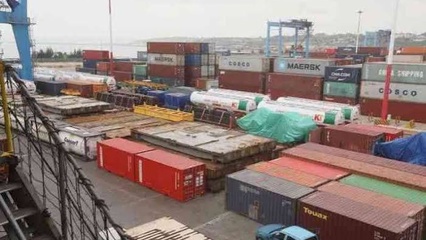
President William Ruto has directed the Kenya Revenue Authority (KRA) to review the customs clearance charge imposed on consolidated cargo, with the current Sh3.2 million threshold set to be reduced to Sh2 million. The President has also ordered an exemption for certain high-value goods from the proposed cap.
Highlights
- Ruto wants the consolidated cargo charge reviewed from Sh3.2 million to Sh2 million.
- KRA has been directed to implement the review.
- Some high-value items will be excluded from the cap.
- The move is expected to ease costs for businesses dealing with consolidated imports.
- Customs clearance charges have been a concern for importers and traders.
Main Story
Ruto Orders Review of Customs Charge
President William Ruto has directed the Kenya Revenue Authority to review the customs clearance charge applicable to consolidated cargo.
The President wants the existing Sh3.2 million charge brought down to Sh2 million, in a move aimed at reducing the cost burden faced by businesses involved in importing goods.
The directive places KRA at the centre of reviewing the current arrangement and determining how the lower threshold will be implemented.
High-Value Goods to Be Exempted
While calling for the reduction, President Ruto also directed that high-value items be excluded from the cap.
The exemption is intended to ensure that goods whose value warrants higher customs charges are treated differently rather than being subjected to the same limit applied to other consolidated cargo.
This distinction could be important for importers handling expensive goods, as their customs obligations may not necessarily be comparable to those dealing with lower-value consignments.
What It Means for Importers
Consolidated cargo allows goods belonging to different importers to be shipped together, helping businesses share transportation and handling costs.
However, customs-related charges can add significantly to the overall cost of bringing goods into the country.
Reducing the charge from Sh3.2 million to Sh2 million could therefore provide some relief to businesses that rely on consolidated shipments, particularly traders seeking to keep import and logistics expenses under control.
The move also comes as the government continues to balance revenue collection with efforts to make it easier and cheaper for businesses to operate.
KRA Expected to Act on Directive
KRA will now be expected to review the applicable customs framework in line with the President’s directive.
Further details on how the Sh2 million cap will be applied, including the categories of high-value goods that will be exempted, will be important for importers and clearing agents as implementation takes shape.
For businesses operating within Kenya’s import and logistics sector, the changes could have a direct impact on the cost of moving goods through the country’s customs system.
For Kenyan importers, a lower customs ceiling could translate into reduced costs but the real impact will depend on how KRA ultimately puts the President’s directive into practice.

