
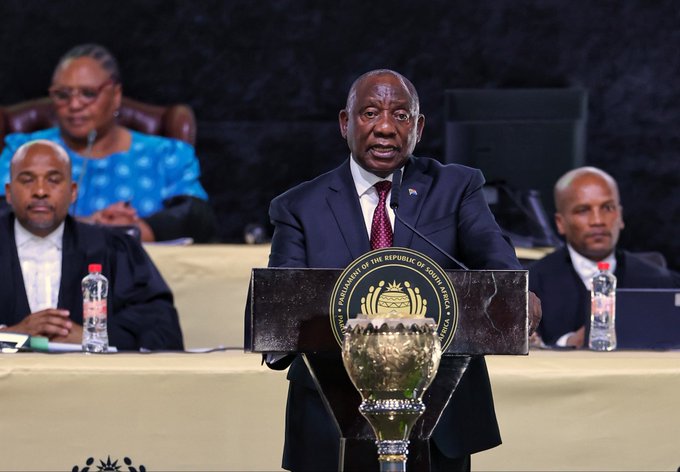
South Africa’s political landscape has been shaken after the Constitutional Court ruled that Parliament acted unlawfully when it blocked impeachment proceedings against President Cyril Ramaphosa over the controversial Phala Phala scandal. While the ruling does not accuse the president of wrongdoing, it reopens a politically sensitive chapter that could have major implications for his leadership.
Highlights
- Constitutional Court rules Parliament acted unlawfully in blocking impeachment process
- Case linked to 2020 Phala Phala farm foreign currency theft scandal
- Opposition parties had challenged Parliament’s decision in court
- Ruling revives possibility of a formal impeachment inquiry
- Ramaphosa not declared guilty; matter sent back for reconsideration
Main Story
Court Decision Reignites Political Debate
South Africa’s highest court has ruled that Parliament failed in its constitutional duty when it halted impeachment proceedings against President Cyril Ramaphosa. The decision effectively resets part of the legal process, requiring lawmakers to reconsider how the matter was handled.
The ruling has reopened intense national debate over accountability at the highest levels of government, with opposition leaders welcoming the decision as a win for constitutional oversight.
The Phala Phala Scandal at the Centre
The case originates from the 2020 incident at Ramaphosa’s Phala Phala game farm in Limpopo, where a significant amount of foreign currency was reportedly stolen. The scandal raised questions about how the money was handled and whether proper procedures were followed.
An independent parliamentary panel had earlier found there was prima facie evidence suggesting possible constitutional violations, recommending further investigation into the president’s conduct.
Parliament’s Earlier Decision Overturned
In 2022, South Africa’s National Assembly voted against adopting the panel’s findings, effectively stopping impeachment proceedings before a full inquiry could take place. This decision was later challenged in court by opposition parties, including the Economic Freedom Fighters (EFF) and the African Transformation Movement (ATM).
They argued that Parliament had failed to fulfill its constitutional responsibility by shutting down the process prematurely.
What the Court Ruled
In its Friday judgment, the Constitutional Court found that Parliament’s decision to block the impeachment process was unconstitutional. The court ordered that the matter be sent back for proper reconsideration under established impeachment procedures.
Importantly, the ruling does not determine guilt or innocence on the part of President Ramaphosa. Instead, it focuses on procedural fairness and whether Parliament acted within the law.
Political Implications Moving Forward
Analysts say the ruling could have far-reaching political consequences, especially for Ramaphosa’s leadership and the stability of South Africa’s governing coalition.
While a formal impeachment inquiry is now back on the table, the process is expected to be politically charged, with both ruling party members and opposition leaders preparing for renewed confrontation in Parliament.
Read Also
- How worried should we be about hantavirus?
- NPS Takes Action After Female Traffic Officer Harassed in Nakuru
- DR Congo president hints at extending his term and delaying polls

