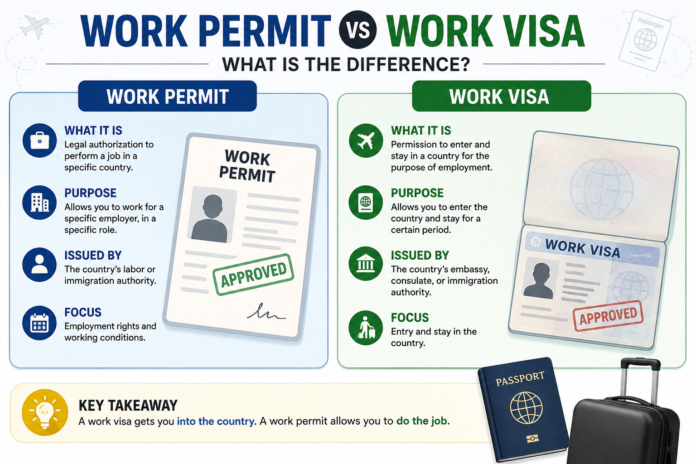
Planning to take up a job in another country? Before you start packing your bags, it is important to understand the difference between a work visa and a work permit. While the two are closely connected, they serve different purposes and getting one does not always mean you automatically have the other.
Highlights
- A work visa generally allows you to enter a country for employment purposes.
- A work permit gives you legal authorisation to work.
- Some countries combine the two processes.
- Requirements vary depending on the destination and type of job.
- Working without the required authorisation can lead to penalties or removal from the country.
Main Story
What Is a Work Visa?
A work visa is an immigration document that allows a foreign national to enter or stay in a country for employment-related purposes.
Depending on the country, a work visa may be issued before travelling or after another immigration approval has been granted.
For example, a country may require an employee to first secure a job offer and sponsorship before applying for the relevant visa.
The visa itself is primarily linked to your immigration status and permission to enter or remain in the country.
What Is a Work Permit?
A work permit, on the other hand, is generally the authorisation that allows a foreign national to legally perform work in that country.
It may specify the employer, occupation, location or duration of employment.
In some destinations, employers are required to obtain approval before the foreign worker can receive permission to work.
This means someone could potentially have permission to enter a country but still not be authorised to take up employment.
The Simple Difference
The easiest way to remember it is:
However, immigration systems differ significantly from one country to another. Some governments use the terms differently, while others combine work authorisation and immigration permission into a single application or document.
Why the Difference Matters
For Kenyans looking for opportunities abroad, understanding the distinction can help avoid costly mistakes.
Getting a job offer does not necessarily mean you can immediately travel and start working. You may still need employer sponsorship, immigration approval, a work authorisation or a specific visa.
The process can also depend on your profession.
A nurse, engineer, teacher, domestic worker or technology professional may face different requirements depending on the destination country and the type of employment.
Can You Work With a Tourist Visa?
Generally, a tourist or visitor visa does not give you permission to take up employment.
Using a visitor status to work illegally can result in serious immigration consequences, including fines, cancellation of your immigration status, deportation or restrictions on future applications.
Anyone planning to work abroad should therefore check the official immigration requirements of their destination before travelling.
Which One Do You Need?
There is no universal answer because immigration rules vary from country to country.
Some destinations require a separate work permit and visa, while others issue a combined work-authorisation or residence document.
Your nationality, employer, profession, contract and intended length of stay can all affect the process.
The safest approach is to confirm the requirements through the destination country’s official immigration or embassy website before paying an agent, booking travel or submitting documents.
A job offer may open the door, but understanding the right immigration documents is what helps you walk through it legally and confidently.

