
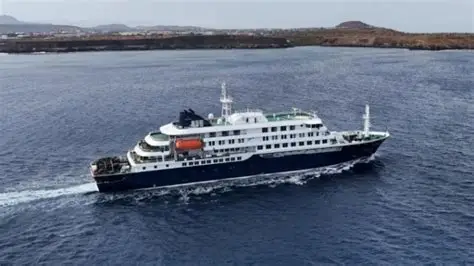
A luxury expedition cruise ship caught in the middle of a deadly hantavirus outbreak is now sailing toward Spain’s Canary Islands after three passengers were airlifted for emergency medical treatment. The situation aboard the MV Hondius has sparked international concern after the rare virus claimed three lives and triggered contact tracing efforts across multiple countries.
Highlights
- Three passengers were medically evacuated from the MV Hondius.
- Two confirmed hantavirus cases are reported to be in serious condition.
- The outbreak has already caused three deaths onboard.
- Authorities believe infections may have originated in Argentina before boarding.
- Spain has agreed to allow the ship to dock in Tenerife for screening and quarantine.
Main Story
The MV Hondius, a Dutch-flagged luxury expedition vessel, is currently heading toward Tenerife in Spain’s Canary Islands following a deadly hantavirus outbreak that has alarmed health authorities worldwide.
The ship had remained stranded near Cape Verde after concerns emerged over the spread of the rare Andes strain of hantavirus among passengers onboard.
Three Passengers Airlifted for Treatment
Health officials confirmed that three passengers were evacuated from the vessel for urgent medical care in Europe.
Two of the evacuees tested positive for hantavirus, while a third passenger was classified as a suspected case. Reports indicate that at least two patients were in serious condition during the emergency transfer.
The outbreak has already resulted in the deaths of three passengers, including a Dutch couple and a German traveler.
Investigators Trace Possible Source to Argentina
Authorities believe the infections may have occurred before passengers boarded the cruise ship.
Investigators are focusing on southern Argentina, where the Andes strain of hantavirus is known to circulate naturally. Some passengers are believed to have visited affected areas during earlier stages of their travels.
Unlike most hantavirus variants, the Andes strain is considered especially rare because it can spread through limited human-to-human transmission.
WHO Says Risk to Public Remains Low
Despite growing public concern, the World Health Organization has emphasized that the outbreak does not pose the same level of threat associated with global pandemics like COVID-19.
Health experts explain that hantavirus is primarily transmitted through exposure to infected rodent urine, saliva, or droppings. Human transmission remains uncommon and usually occurs only under close-contact conditions.
Symptoms of the disease can begin with fever, fatigue, headaches, and muscle pain before progressing into severe respiratory complications in critical cases.
Canary Islands Leaders Voice Concern
Spanish authorities have approved plans for the ship to dock in Tenerife, where passengers and crew are expected to undergo medical screening, quarantine procedures, and eventual repatriation.
However, the decision has triggered concern among some local leaders in the Canary Islands, who fear the arrival of the vessel could create unnecessary health risks for residents.
The MV Hondius is carrying nearly 150 passengers and crew members from over 20 countries, adding to the complexity of the international response.
Global Contact Tracing Underway
International health agencies are now coordinating contact tracing operations after several passengers reportedly disembarked earlier in the voyage before the outbreak was fully identified.
Authorities are monitoring potential exposures across multiple countries as investigations continue into how the virus spread among travelers onboard.
For now, the situation remains under close observation as health teams prepare for the ship’s arrival in Spain.
Read Also
- Tomatoes become a luxury: What Kenyans are using instead
- Why Talking Stages Might Be More Toxic Than Actual Relationships
- Inside the Met Gala: Strict Rules Celebrities Must Follow

