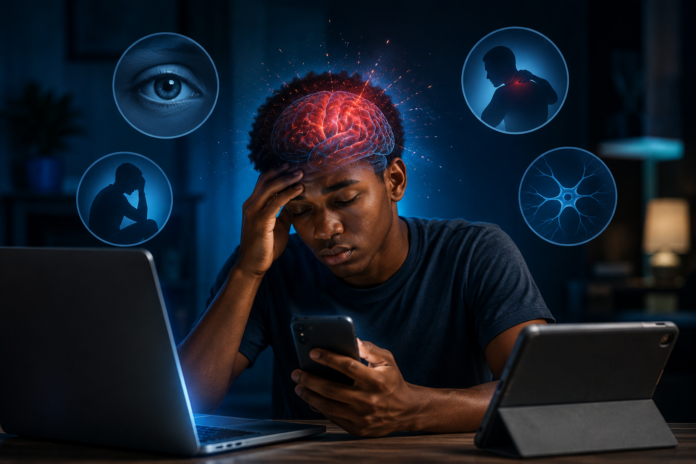
Whether it’s scrolling through social media, binge-watching your favorite series, or working on a computer all day, screens have become an unavoidable part of modern life. While technology offers many benefits, spending too much time in front of a screen can affect your brain, sleep, eyes, and overall well-being. Health experts recommend balancing screen use with regular breaks and healthy habits.
Highlights
- Excessive screen time can affect focus and concentration.
- Blue light from screens may interfere with sleep.
- Long periods of screen use can contribute to eye strain and headaches.
- Constant digital stimulation may increase stress and anxiety in some people.
- Taking regular breaks and limiting screen time can support better health.
Main Story
1. It Can Reduce Your Ability to Focus
Constant notifications, endless scrolling, and rapidly changing content can train your brain to expect continuous stimulation. Over time, this may make it more difficult to concentrate on tasks that require sustained attention, such as reading, studying, or working.
2. It Can Disrupt Your Sleep
Phones, tablets, and computers emit blue light, which can suppress the production of melatonin—the hormone that helps regulate sleep. Using screens late at night may make it harder to fall asleep and reduce sleep quality, leaving you feeling tired the next day.
3. It Can Cause Digital Eye Strain
Staring at screens for long periods can lead to dry eyes, blurred vision, headaches, and eye fatigue. Many people blink less often while using digital devices, which contributes to eye discomfort.
4. It May Affect Mental Well-Being
Research suggests that excessive screen time especially on social media may be linked to increased stress, anxiety, or low mood in some people. Constant comparisons, negative news, and information overload can all contribute to emotional fatigue.
5. It Encourages a Sedentary Lifestyle
Long hours spent sitting with a phone, computer, or television can reduce physical activity. A sedentary lifestyle is associated with an increased risk of obesity, heart disease, type 2 diabetes, and other health problems.
How to Protect Yourself
You don’t have to eliminate screens completely. Instead, develop healthier habits:
- Follow the 20-20-20 rule: Every 20 minutes, look at something about 20 feet (6 metres) away for at least 20 seconds.
- Avoid screens for at least 30–60 minutes before bedtime.
- Take regular breaks to stretch and walk around.
- Turn off unnecessary notifications to reduce distractions.
- Spend time outdoors and engage in offline activities such as exercise, reading, or socializing.
Screens are an essential part of everyday life, but balance is key. While there is no strong evidence that normal screen use directly damages the brain, excessive screen time can affect attention, sleep, mood, and physical health. Making small changes to your daily routine can help you enjoy technology while protecting your overall well-being.
Your brain works best when it gets a healthy balance of screen time, quality sleep, physical activity, and real-world connections.

