
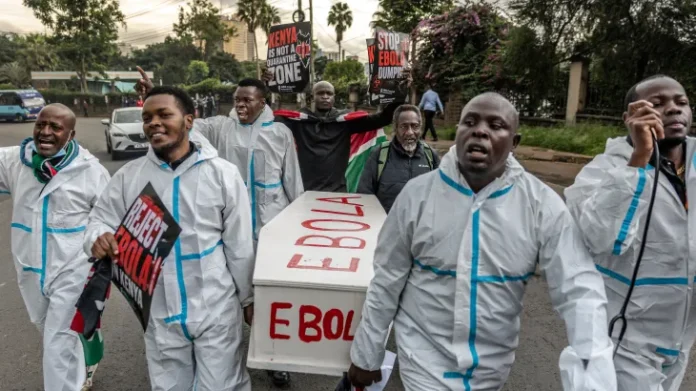
Kenya’s nurses have joined the growing resistance against plans to host individuals exposed to the Ebola virus, arguing that the country’s healthcare system lacks the capacity needed to safely manage such a high-risk undertaking. Their concerns have intensified an already heated national debate surrounding a proposed quarantine facility in Nanyuki that has attracted legal challenges, public protests, and questions about transparency.
Highlights
- Nurses say Kenya lacks adequate Ebola response infrastructure.
- Concerns raised over shortages of personnel, equipment, and critical care resources.
- Proposed quarantine facility in Nanyuki has sparked nationwide debate.
- High Court has temporarily halted the project pending further review.
- Government insists the plan would strengthen emergency preparedness.
Main Story
Healthcare Workers Raise Alarm
Kenya’s nursing fraternity has voiced strong opposition to a proposal that would see the country host individuals who may have been exposed to the Ebola virus.
Union officials argue that while protecting global public health is important, Kenya must first address longstanding weaknesses within its own healthcare system. They warn that introducing Ebola-related quarantine operations without sufficient safeguards could expose healthcare workers and nearby communities to unnecessary danger.
Among the concerns highlighted are shortages of trained personnel, limited access to protective equipment, inadequate isolation facilities, and gaps in specialized infectious disease management.
Nanyuki Facility Sparks Controversy
At the center of the debate is a proposed quarantine facility in Nanyuki, Laikipia County, reportedly backed through collaboration with the United States. The facility is intended to accommodate Americans who may have been exposed to Ebola during outbreaks affecting parts of Uganda and the Democratic Republic of Congo.
The proposal has triggered strong reactions from residents, civil society organizations, healthcare professionals, and legal groups. Critics have questioned why exposed individuals would be transferred to Kenya instead of being monitored and managed within their own countries.
Many opponents argue that such an arrangement could create avoidable public health risks and place additional strain on an already stretched healthcare sector.
Calls for Transparency Grow
The controversy has now moved into the courts, where petitioners are demanding greater transparency from authorities.
The High Court recently ordered the government to provide details relating to the proposed facility, including biosafety assessments, health impact studies, operational guidelines, and agreements linked to the project.
The court also extended temporary orders preventing the admission of Ebola-exposed individuals into the facility until the matter is fully heard and determined.
Government Defends the Plan
Despite mounting criticism, government officials have maintained that the proposal is designed to enhance Kenya’s emergency response capabilities and strengthen preparedness for future disease outbreaks.
Authorities insist that strict safety measures would be implemented and have urged the public to remain calm as discussions continue.
However, healthcare unions and community groups say assurances alone are not enough, emphasizing the need for full disclosure and public participation before any decision is made.
A National Public Health Debate
What began as a public health proposal has evolved into a wider conversation about Kenya’s healthcare readiness, biosecurity measures, and the government’s approach to managing infectious disease threats.
With healthcare workers, residents, legal advocates, and policymakers now weighing in, the outcome of the ongoing court process could have significant implications for how Kenya handles future international health partnerships and outbreak response initiatives.
Read Also
- What To Know As Tommy Smith Chases One Last World Cup Dream with New Zealand
- What You Need to Know About the Biggest FIFA World Cup Ever
- Ceasefire Hopes Fade After New US-Iran Attacks Shake Region

