
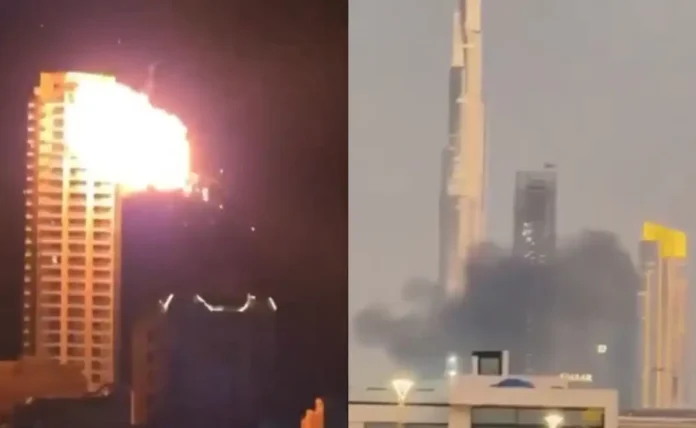
The skyline of Dubai, long defined by its architectural defiance of gravity, is now shadowed by the grim reality of ballistic kinetics. Following a series of sophisticated Iranian reprisal strikes targeting key infrastructure across the United Arab Emirates, the veil of “neutral ground” has been violently lifted.
The casualties, confirmed by state-controlled media and verified by independent hospital sources, mark a catastrophic turning point for the Gulf’s most successful economic experiment. For decades, the UAE positioned itself as the “Switzerland of the Middle East”—a sanctuary where capital could hide from regional volatility. That illusion has disintegrated.
## The End of the ‘Safe Haven’ Premium
The immediate economic fallout has been surgical. Within 24 hours of the strikes, the Dubai Financial Market (DFM) and the Abu Dhabi Securities Exchange (ADX) recorded their sharpest single-day contractions since the 2008 financial crisis.
The UAE’s economy is built on a foundation of perceived safety. When that safety is compromised, the cost of doing business does not merely rise—it becomes prohibitive for the international elite who have fueled the nation’s growth.
> “The UAE’s primary export was never oil; it was stability,” says Marcus Thorne, a senior geopolitical risk analyst. “If a missile can hit a logistics hub in Jebel Ali or a residential district in Abu Dhabi, the ‘safety premium’ that investors pay for vanishes. We are looking at a potential capital flight that could reach hundreds of billions of dollars.”
—
## Wealth Management: A Mass Exodus in Motion
Dubai’s “Golden Visa” program and its aggressive courting of Russian, Indian, and European wealth are now under extreme pressure. Private equity firms and family offices, which handle the fortunes of the world’s ultra-high-net-worth individuals (UHNWIs), are reportedly activating contingency protocols.
The risks are three-fold:
– **Insurance Premiums:** Maritime and aviation insurance rates for the Gulf have surged by 400%, making the UAE a “high-risk zone” for global logistics.
– **Physical Security:** High-profile expatriates are reconsidering the viability of maintaining primary residences in a theater of active conflict.
– **Liquidity Concerns:** Banking sources report a significant uptick in wire transfers out of the country as institutional investors seek to de-risk their portfolios.
Data from regional financial monitors suggests that if the tension does not de-escalate within the next 72 hours, the UAE could see a 15% drawdown in private wealth deposits—a move that would destabilize the local banking sector’s liquidity ratios.
## The Real Estate Bubble Meets a Hard Ceiling
The real estate sector, particularly in Dubai, is the most visible casualty. The market was already teetering on the edge of oversupply; the threat of kinetic warfare has now paralyzed the secondary market.
Foreign buyers, who make up over 70% of luxury property transactions in the UAE, have hit the pause button. Preliminary data indicates that ongoing construction projects may face massive delays as international contractors reassess the safety of their labor force.
“Real estate in the UAE is an asset class built on confidence,” notes an anonymous source within a major Abu Dhabi sovereign wealth fund. “Without the guarantee of physical security, these skyscrapers are just expensive liabilities. We are seeing a complete freeze in the off-plan market.”
—
## Tourism and Aviation: The Hub Model Under Siege
Emirates and Etihad, the twin engines of the UAE’s soft power and economic diversification, are facing an existential crisis. The closure of various flight corridors and the proximity of the strikes to transit hubs have forced mass cancellations.
Dubai International Airport (DXB), the world’s busiest for international travel, is no longer just a transit point; it is a potential target. The “hub-and-spoke” model of global aviation relies on the absolute reliability of the hub. If passengers fear a layover in Dubai, the entire network collapses.
### Critical Impact Metrics:
– **Tourism Revenue:** Projected to drop by $2.5 billion in the current quarter if the conflict persists.
– **Occupancy Rates:** Luxury hotels in the Downtown and Palm Jumeirah districts report a 60% spike in booking cancellations.
– **Retail Contraction:** The high-end retail sector, dependent on “tourism spending,” is bracing for a total loss of the peak seasonal traffic.
## Geopolitical Realignment
The UAE’s foreign policy of “zero problems with neighbors” is in tatters. By attempting to balance relations between Western powers, Israel, and regional rivals, Abu Dhabi has found itself in the direct line of fire.
The Iranian strikes are not just military actions; they are economic messages. They signal that no amount of financial shielding can protect a nation from the geographical reality of the Persian Gulf.
> “The strategy was to be the region’s boardroom,” says a regional security consultant. “But you can’t hold a board meeting in a bunker. The UAE must now decide if it can maintain its economic model while being a frontline state in a proxy war.”
—
## The Path Forward: Economic Retrenchment
The UAE government is expected to announce a massive stimulus package to shore up the markets, but analysts remain skeptical. No amount of sovereign wealth can compensate for a fundamental loss of confidence in physical safety.
If the death toll continues to rise and the strikes persist, the UAE faces a period of forced de-globalization. The world’s most ambitious project in desert urbanism is now facing its harshest test: proving it can survive as a fortress, rather than just a playground for the global elite.
The coming weeks will determine if the UAE remains a global financial center or becomes a cautionary tale of the fragility of wealth in a volatile geopolitical landscape. For now, the “City of Gold” is trading at a heavy discount.

