
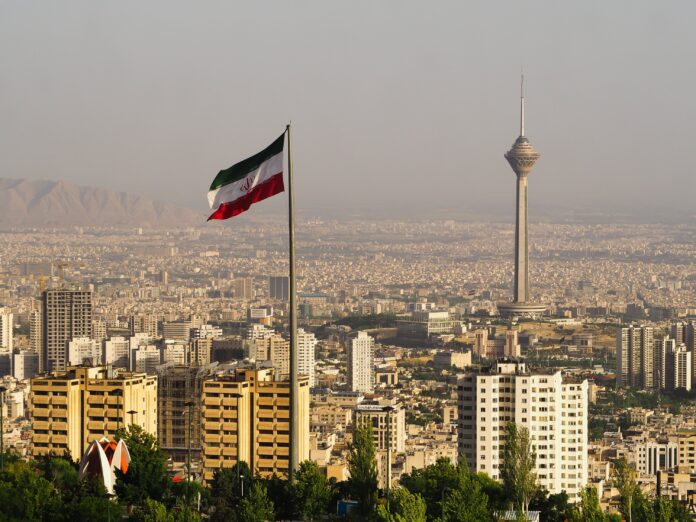
As the Middle East slides toward a localized regional war, an estimated 1,200 Kenyans—comprising students, medical professionals, and technical consultants—find themselves abandoned in the crosshairs of a brewing conflict between Iran, Israel, and the United States.
While Western powers and several African counterparts have initiated emergency evacuation protocols for their citizens in Tehran, Nairobi remains eerily silent. Internal sources within the Ministry of Foreign Affairs (MFA) suggest there is currently no funded extraction plan for Kenyans trapped behind the escalating tensions.
—
## Crisis in the Capital
In Tehran, the atmosphere is defined by “calculated panic.” Kenyan students at the University of Tehran and Shiraz University report that while local life appears functional on the surface, the threat of incoming Israeli retaliatory strikes and US-backed interventions has led to a run on essential supplies.
Data obtained by SPM BUZZ indicates that approximately **450 Kenyan students** are currently enrolled in Iranian institutions on both government and private scholarships. Additionally, an estimated **750 Kenyan professionals** work in Iran’s healthcare and engineering sectors.
> “We are seeing other embassies issuing color-coded exit advisories and chartering flights,” says a Kenyan doctoral student in Tehran who requested anonymity for fear of diplomatic reprisal. “Our embassy told us to ‘stay indoors and monitor the news.’ That isn’t a strategy; it’s an abdication of duty.”
—
## The Strategic Vacuum
The Kenyan government’s lack of urgency stands in stark contrast to the aggressive posture of the US and its allies. With Israel vowing a “significant and severe” response to recent Iranian ballistic missile salvos, the risk to civilian infrastructure—and by extension, foreign nationals—is at an all-time high.
Security analysts argue that Kenya’s silence is a byproduct of a strained diplomatic budget and a lack of logistical readiness in the Gulf region.
– **Financial Constraints:** The MFA has recently faced budget cuts affecting its consular services.
– **Logistical Hurdles:** Unlike the 2023 Sudan evacuation, the Iranian theater involves complex airspace restrictions that require high-level diplomatic clearance.
– **Policy Paralysis:** There is a documented lack of a “Crisis Task Force” specifically for Kenyans in the Middle East.
“The Ministry is playing a dangerous game of wait-and-see,” says Dr. Silas Nyameino, a regional geopolitical consultant. “By the time the bombs fall, the window for civilian aviation will be closed. Nairobi is behaving as if it has no skin in the game, despite having over a thousand citizens in the blast zone.”
—
## Following the Money: The Scholarship Trap
A significant number of those trapped are beneficiaries of the Iran-Kenya bilateral education exchange programs. These students often lack the financial means to purchase emergency commercial tickets, which have spiked from an average of KSh 90,000 to over KSh 250,000 in the last 72 hours.
Investigation reveals that the Kenyan Embassy in Tehran consists of a lean staff that is currently overwhelmed. Phone lines to the consular desk have reportedly gone unanswered for three days, leaving families in Nairobi in a state of distress.
In Nairobi’s Eastleigh and CBD areas, families of those in Iran have begun organizing informal lobbying groups to pressure the government. They cite the 2020 COVID-19 repatriations and the Sudan crisis as proof that the state can act when political will is present.
—
## The Silent Ministry
SPM BUZZ reached out to the Ministry of Foreign Affairs for a statement regarding the number of registered Kenyans in Iran and the status of evacuation charters. The response was a boilerplate referral to “ongoing monitoring of the situation.”
An internal memo leaked from the Diaspora Affairs department suggests that the government is leaning on “host country protection,” a diplomatic stance that assumes Iran will protect foreign nationals. Critics argue this is a naive assessment given the nature of modern aerial warfare.
### Comparative Action:
– **India:** Has issued high-level travel bans and established a 24-hour emergency helpline.
– **South Africa:** Currently coordinating with regional partners for potential sea-route extractions.
– **Kenya:** No updated travel advisory has been posted on official social media channels since the escalation.
—
## Impact: The Human Cost of Diplomacy
The psychological toll on Kenyans in Iran is mounting. Professionals in the medical sector report that if they leave, they forfeit their residency permits; if they stay, they risk becoming collateral damage in a war they have no stake in.
Beyond the immediate physical danger, there is the issue of economic displacement. Many of these professionals are the primary breadwinners for families in Kenya. A disorganized exit would mean the total loss of assets and professional standing.
> “The government only cares about the diaspora when they are sending remittances,” says an engineering consultant based in Isfahan. “When we need the protection of the passport we carry, we are told to watch the news like everyone else.”
—
## What Happens Next?
If Israel follows through with its promised strikes on Iranian energy or military hubs, the Tehran International Airport (IKA) will likely shutter immediately. This would leave Kenyans with only two options: a perilous overland journey to the Turkish or Iraqi borders, or remaining in a conflict zone without state support.
The Kenyan government has less than 48 hours to coordinate with regional airlines or military transport before the tactical window closes. The question remains: Is the life of a Kenyan in Tehran worth the cost of a fuel tanker and a diplomatic flight path?
As it stands, the silence from Nairobi is the loudest sound in the ears of its trapped citizens.

