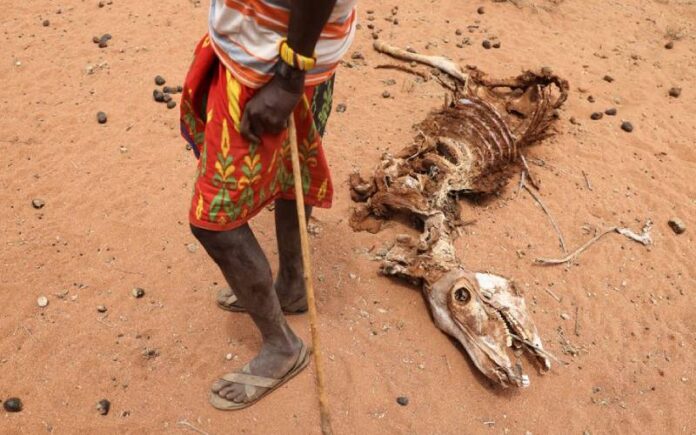
While the arid plains of Marsabit, Turkana, and Garissa endure the most brutal drought cycle in a decade, Kenya’s digital landscape remains a curated oasis of luxury.
An investigation into the activity of the country’s top 50 influencers over the past 30 days reveals a staggering disconnect. As the government declares the hunger crisis a national disaster, the collective feed of Kenya’s “digital elite” remains focused on skincare launches, liquor brand partnerships, and manufactured relationship drama.
The silence is not just a lack of empathy; it is a calculated business decision. In the high-stakes world of Kenyan “clout culture,” humanitarian crises are viewed as “brand-unsafe” content that risks depressing engagement metrics.
## The Data of Indifference
Analysis of social media metrics across Instagram and TikTok shows that while hashtag visibility for local “socialite” feuds reached a peak of 4.2 million impressions last week, mentions of the Northern Kenya food crisis by top-tier creators hovered near zero.
According to digital strategist Marcus Omondi, this is a structural failure of the influencer economy. “The Kenyan influencer model is built almost entirely on aspirational aesthetic,” Omondi says. “Images of carcass-strewn fields in Wajir do not pair well with a paid partnership for a luxury scotch brand.”
The numbers tell a grim story of misplaced priorities:
– **0.5%:** The percentage of top-tier Kenyan influencers who have shared verified donation links for drought relief.
– **85%:** The increase in “lifestyle” posting frequency among the same group during the peak of the current fiscal quarter.
– **$2,500 – $5,000:** The estimated daily loss an influencer faces if their feed aesthetic is disrupted by “heavy” social issues, leading to lower reach.
—
## Brand Safety vs. Human Survival
The silence is often mandated by the very brands that fund these creators. Insider sources within Nairobi’s top talent agencies suggest that many “blue-chip” contracts contain clauses discouraging creators from engaging in “depressing or politically sensitive” content.
> “There is a silent agreement between agencies and talent,” says a former account manager at a leading PR firm. “The goal is to keep the audience in a state of consumption. If you remind a follower that 4.4 million people are facing starvation, they are less likely to click a link to buy a designer handbag.”
This “brand safety” excuse is increasingly under fire. Critics argue that during the COVID-19 pandemic, these same influencers were quick to pivot to advocacy because there was a direct financial incentive to do so via government-sponsored public health awareness campaigns.
Without a direct paycheck from NGOs or the Ministry of Interior, the motivation to amplify the Northern crisis simply does not exist for the modern content creator.
—
## The Rise of ‘Aesthetic Activism’
When influencers do speak, it often falls into the category of “performative aesthetics.” This usually involves a single Instagram story with a generic “Pray for Kenya” graphic that disappears in 24 hours, requiring zero effort and providing zero utility to aid organizations on the ground.
The disparity between influencer reach and humanitarian impact is widening. While a single “tea” video about a celebrity breakup can mobilize thousands of comments within minutes, actual humanitarian appeals from organizations like the Red Cross struggle to go viral because the “gatekeepers of the algorithm”—the influencers—refuse to share them.
### Why the ‘Clout’ Economy is Failing the Vulnerable
1. **The Engagement Trap:** High-quality imagery of famine “kills” the algorithm, leading to shadow-banning of subsequent promotional posts.
2. **The Bubble Effect:** Influencers are increasingly shielded from national realities by a feedback loop of luxury events and high-net-worth circles.
3. **Monetization of Outrage:** Creators find it more profitable to spark “wars” with one another than to spark a national conversation on resource allocation.
—
## A Crisis of Accountability
The Kenyan public is beginning to notice. On platforms like X (formerly Twitter), a growing movement is calling for a “follow-for-follow” audit, where users are encouraged to unfollow creators who remain silent during national emergencies.
“We have made these people millionaires by giving them our attention,” says social commentator Sarah Mwangi. “If that attention cannot be leveraged to save lives in Wajir or Mandera, then what is the point of their influence? It is hollow power.”
The Northern hunger crisis is not an “act of God” that should be ignored for the sake of a clean Instagram grid. It is a logistical and political failure that requires loud, sustained public pressure—the exact kind of pressure influencers are uniquely positioned to provide.
## The Impact: What Happens Next?
Social media has replaced traditional media as the primary source of information for Gen Z and Millennials. When influencers ignore a crisis, they effectively erase that crisis for an entire generation.
Unless the influencer industry moves away from “clout for the sake of clout” and adopts a model of corporate social responsibility, the gap between the “Digital Nairobi” and the “Real Kenya” will continue to widen.
The current silence isn’t just a lack of content; it’s a lack of character. As the death toll of livestock rises and the nutrition levels of children in the North plummet, the bright, filtered lights of the Kenyan influencer scene have never looked more dim.

