
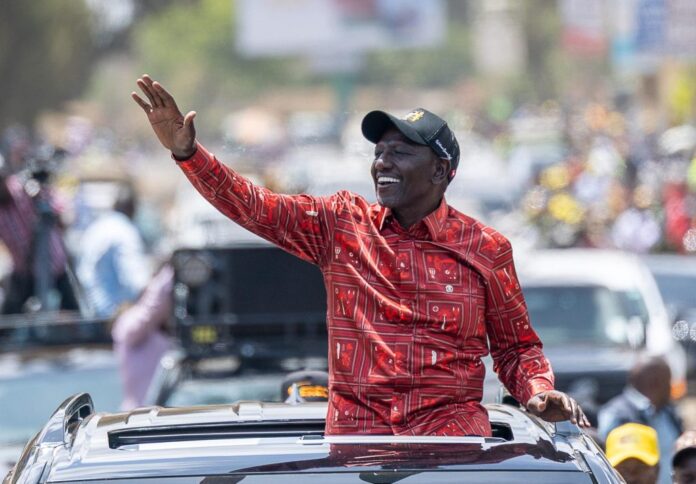
President William Ruto has explained the meaning behind his popular phrase “Usawa Ni Sawa,” linking it to his administration’s efforts to reduce economic inequality and expand opportunities for Kenyans. The President says the government’s approach involves supporting citizens at the bottom of the economic ladder while creating opportunities for more people to earn a living through jobs, housing, agriculture and improved access to essential services.
Highlights
- Ruto says Kenya must address the economic gap between wealthy and low-income citizens.
- The President cites housing, digital employment and overseas jobs as sources of income for Kenyans.
- He points to improved earnings for coffee, tea, dairy and sugarcane farmers.
- His administration says healthcare and education reforms are intended to reduce the financial burden on households.
- Ruto describes equality and equity as central to the meaning of “Usawa Ni Sawa.”
Main Story
Ruto Explains What “Usawa Ni Sawa” Means
President William Ruto has offered an explanation of the phrase “Usawa Ni Sawa,” saying it reflects his administration’s stated goal of narrowing the economic divide between different groups in Kenyan society.
Speaking about the country’s economic challenges, Ruto highlighted disparities between wealthy and poorer households, as well as the difference between people who have jobs and those who remain unemployed.
He argued that addressing these inequalities requires an approach that expands opportunities for lower-income citizens while allowing those who are economically better off to contribute to the wider development of society.
The President’s message centres on equality and equity, with the government presenting its economic programmes as ways to increase household incomes and make essential services more accessible.
The phrase, which translates roughly to “equality is fairness,” has become part of Ruto’s broader political messaging on economic inclusion and opportunity.
Government Points to Jobs, Agriculture and Public Services
Ruto cited several programmes that he says are helping Kenyans earn incomes and improve their livelihoods.
He pointed to opportunities linked to affordable housing, digital employment and jobs abroad, giving figures of one million people in housing, 400,000 in digital work and 700,000 Kenyans working overseas.
The President also highlighted agriculture, saying coffee, tea, dairy and sugarcane farmers were receiving better earnings following reforms intended to reduce the role of middlemen.
On healthcare and education, he cited efforts to lower medical costs, recruit more teachers, construct additional classrooms and implement a new education funding model.
These are the administration’s stated achievements. Their broader impact depends on how many households experience lasting improvements in income, access to services and living standards.
What “Usawa Ni Sawa” Means for Ordinary Kenyans
At the centre of Ruto’s explanation is the argument that economic progress should benefit people across different income groups, rather than being concentrated among those who are already financially secure.
The President maintains that lifting lower-income households and expanding access to opportunities can help create a society where more citizens participate in economic growth.
However, the effectiveness of that approach can be assessed through practical outcomes, including whether jobs provide sustainable incomes, farmers receive fair prices, healthcare becomes affordable and learners can access quality education.
For many Kenyans, the meaning of economic fairness ultimately comes down to whether these policies make everyday life more manageable.
For Kenyans, “Usawa Ni Sawa” will ultimately be measured not only by the words leaders use, but by whether economic opportunities and essential services become more accessible to the people who need them most.

