
The Shakahola tragedy has reached a major legal milestone after the High Court in Malindi convicted self-proclaimed pastor Paul Nthenge Mackenzie and 28 others over 191 counts of murder linked to the deaths of followers in Kilifi County. In a judgment delivered on October 19, 2026, Justice Diana Kavedza found that the prosecution had proved its case beyond reasonable doubt, citing evidence of enforced fasting, religious radicalisation and an organised system that contributed to the deaths of victims, including children.
Highlights
- Paul Mackenzie and 28 co-accused have been convicted over 191 murder counts linked to the Shakahola tragedy.
- The court found evidence of a system involving enforced fasting, isolation and the concealment of bodies.
- Forensic examinations identified starvation as the cause of death in 72 cases, while other deaths had different or undetermined causes.
- The court ruled that children could not legally consent to being starved to death under religious instructions.
- Sentencing for the convicted accused persons is scheduled for November 6, 2026.
Main Story
High Court Delivers Major Ruling in Shakahola Case
The long-running Shakahola case has reached a significant turning point following the conviction of Paul Nthenge Mackenzie and 28 other accused persons over 191 murder counts.
In its ruling on Monday, October 19, 2026, the High Court in Malindi determined that the prosecution had established the guilt of the accused beyond reasonable doubt. Justice Diana Kavedza found that their actions were connected to an organised religious system that encouraged extreme fasting and contributed to the deaths of followers.
The verdict follows a lengthy trial in which prosecutors called 120 witnesses, while the defence presented nine witnesses. The court examined events that occurred in Shakahola Forest, Kilifi County, between January 2021 and September 2023.
The case has drawn national attention because of the scale of the deaths and questions surrounding religious influence, the protection of vulnerable followers and the responsibility of those who exercised authority over them.
How Mackenzie’s Religious Teachings Led to the Tragedy
According to the judgment, Mackenzie, who led Good News International Ministries, promoted teachings that encouraged followers to reject formal education, modern healthcare and government institutions.
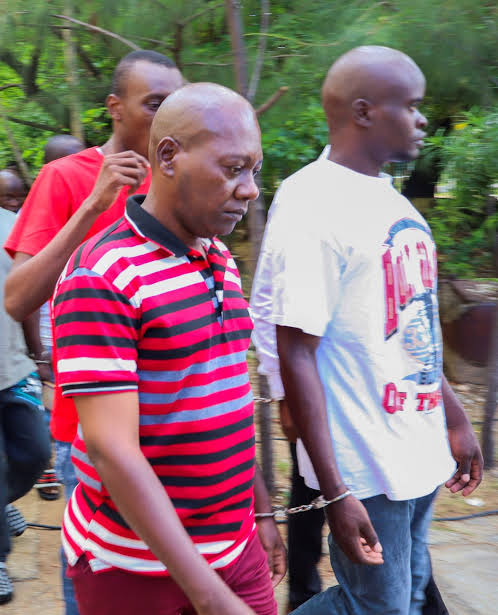
The court identified a pattern of radicalisation that included isolating followers from wider society, moving them to Shakahola Forest and enforcing fasting that ultimately proved fatal.
Prosecutors argued that biblical teachings had been misrepresented to persuade followers that starving themselves would allow them to meet Jesus.
The court also heard that the fasting was organised according to a prescribed sequence, with children expected to die first, followed by young people, women and men. Mackenzie and his family were allegedly to die last.
Justice Kavedza found that the evidence established Mackenzie’s intention to cause death through the instructions he issued. The court further found that others who enforced the fasting regime understood the likely fatal consequences of their actions.
Children Were Denied Food and Water
Some of the most disturbing evidence came from children who survived the ordeal.
According to testimony presented in court, some children were deprived of food and water even when supplies were available. Others described witnessing their brothers and sisters die after prolonged starvation.
The judgment also detailed allegations that children and other followers were restrained, beaten or locked inside houses to prevent them from escaping or obtaining food.
The court rejected the argument that children could consent to such treatment on religious grounds. It stressed that parents have a legal responsibility to protect their children’s lives and welfare.
The ruling made clear that parental authority does not permit anyone to subject a child to potentially fatal practices in the name of religion.
The findings place the protection of children at the centre of the case, highlighting the legal responsibilities of adults who exercise control over vulnerable individuals.
Court Examines Hidden Graves and Forensic Evidence
Investigations into the Shakahola deaths uncovered numerous graves across the forest, prompting extensive recovery and forensic examination operations.
During the trial, the court heard that some burial ceremonies were referred to as harusi, the Swahili word for weddings, while deceased followers were described as shujaa wa imani, meaning heroes of faith.
The judgment also addressed evidence that graves were concealed or flattened to make the discovery of bodies more difficult. Mackenzie was said to have presided over some burials.
Forensic findings established starvation as the cause of death in 72 cases. Other victims died from asphyxia, compression of the neck or traumatic head injuries.
In 110 cases, the condition of the remains meant that investigators could not conclusively establish the cause of death.
However, the court found that the wider circumstances, including witness accounts, the fasting practices and the condition of the burial sites, supported the prosecution’s case.
Justice Kavedza also rejected challenges to the reliability of the forensic investigations, finding that the recovery, documentation and examination of the remains had followed a sufficiently organised process.
Mackenzie Was Not Acting Alone, Court Finds
The judgment described an organised structure in which different individuals allegedly played roles in maintaining the fasting system and preventing followers from leaving.
The responsibilities identified during the trial included guarding fasting areas, transporting followers, apprehending escapees, withholding food and water, digging graves and concealing deaths.
Among those convicted was Smart Deri Mwakalama, identified as the church secretary and Mackenzie’s second-in-command. The court found that he had transported followers, passed on instructions, helped apprehend people attempting to escape and supervised burials.
Stephen Sanga Muye, described as the head of security, was also found to have participated in assaults, grave digging and the reburial of victims.
Other accused persons were linked to activities that supported the fasting regime and restricted followers’ movements.
The court concluded that the alleged conduct went beyond isolated individual actions, pointing to a coordinated system in which several people had defined responsibilities.
It also found that the conduct met the definition of an extreme belief system under Section 12D of the Prevention of Terrorism Act.
How the Shakahola Tragedy Came to Light
The case first attracted widespread attention in March 2023 after Humphrey Ngono reported concerns about two children who were allegedly being starved to death. The report was made at Lango Baya Police Station and triggered investigations.
A subsequent multi-agency operation uncovered graves in Shakahola Forest, leading to a major recovery and forensic examination exercise.
Between April and July 2023, authorities recovered 429 bodies during four phases of exhumation. The 191 deaths addressed in the murder case formed part of the wider tragedy.
Investigators heard that followers had left their homes, sold property, quit employment, withdrawn children from school and destroyed identification documents before moving to the forest.
The settlement covered approximately 4,860 acres within Chakama Ranch and was divided into areas bearing biblical names, including Galilaya, Judea, Bethlehem, Sidoni and Samaria.
Mackenzie established Good News International Church in 2003, and the organisation was formally registered in September 2010. It later expanded to approximately 35 branches across Kenya.
The preacher had previously faced law enforcement action over radicalisation allegations in 2017 but was subsequently acquitted in that case.
What Happens Next in the Shakahola Case?
Mackenzie and his associates had denied the 191 murder charges when they were brought before the court in 2024.
Of the original 31 accused persons, two died during the proceedings. Another accused, Enos Amanya Ngala, pleaded guilty to all 191 counts and is awaiting sentencing.
The remaining 29 defendants were convicted in the judgment delivered on October 19, 2026, according to the supplied case details.
Sentencing is scheduled for November 6, 2026. Mackenzie also faces separate manslaughter and terrorism proceedings, to which he has pleaded not guilty.
The latest verdict marks a major development in a case that has raised difficult questions about religious extremism, the accountability of religious leaders and the state’s responsibility to protect people from harmful practices.
The tragedy has also intensified national debate about how religious organisations should be monitored without undermining lawful religious freedom.
The Shakahola case stands as a sobering reminder of the consequences that can arise when vulnerable people are subjected to extreme control in the name of faith. As the convicted individuals await sentencing, the country faces a wider question: how can Kenya protect religious freedom while ensuring that no belief system is used to justify the loss of innocent lives?

