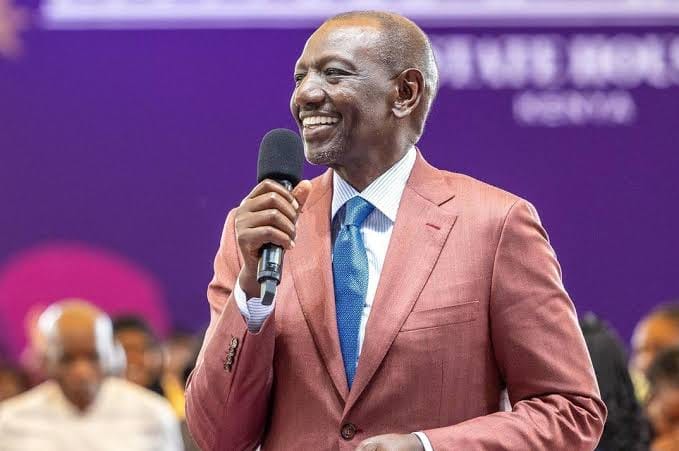
The 2024 anti-Finance Bill protests became one of the biggest turning points of President William Ruto’s presidency, forcing his administration to rethink how it makes policy, communicates with citizens, raises taxes and responds to demands for accountability.
What began as opposition to proposed tax increases quickly grew into a wider debate about the relationship between Kenyans and their government — from how public money is spent to how policies are explained and how much say citizens should have in decisions affecting them.
Two years later, the effects of the protests can still be seen in how the presidency and government operate.
A different approach to taxation
The most immediate impact was on the government’s taxation agenda.
President Ruto withdrew the Finance Bill 2024 following widespread protests, abandoning a package of proposed revenue measures. The government then turned to expenditure cuts and alternative ways of raising revenue.
However, the withdrawal did not mean that the government abandoned its plans to increase domestic revenue.
By December 2024, Parliament had passed the Tax Laws (Amendment) Act, introducing changes affecting income tax, VAT, excise duty and other levies.
The difference was in the approach. Instead of relying on one large and politically contentious Finance Bill, the government increasingly moved towards smaller, more targeted tax changes.
There was also a stronger emphasis on tax administration and enforcement rather than simply increasing headline tax rates.
The Kenya Revenue Authority has increasingly used digital systems, third-party information and data matching to identify taxable income and improve compliance.
By 2026, Kenyans were regularly receiving digital notifications asking them to file returns, clarify income or address outstanding tax obligations, with some linked to discrepancies identified through eTIMS and other third-party data.
KRA also expanded its digital engagement by introducing the Shuru chatbot on WhatsApp in April 2026, allowing taxpayers to file returns, check obligations and access assistance.
The shift points to a more technology-driven strategy for increasing compliance without relying entirely on introducing new taxes.
The communication lesson
The protests also exposed a major weakness in the government’s communication strategy.
During the protests, Ruto admitted that his administration had failed to adequately explain the Finance Bill to Kenyans.
The problem was particularly significant because while the government relied largely on conventional communication channels, young Kenyans were using social media to analyse the Bill, explain its provisions and share information among themselves.
This effectively created an alternative information network that was faster and, in many cases, more influential among young people than official government messaging.
Since then, the government has placed greater emphasis on continuous engagement and explanation of fiscal policies.
Treasury Cabinet Secretary John Mbadi has become one of the most visible government officials explaining taxation and budget proposals through television appearances, public forums and meetings with citizens.
In February 2025, Mbadi engaged members of Bunge la Mwananchi at Jeevanjee Gardens over the budget process, signalling a more direct approach to public engagement.
Public participation has also become more prominent.
For the 2026 Finance Bill, Parliament’s Finance and National Planning Committee said it received memoranda from more than 100,000 respondents and held public hearings in 13 counties.
The significance goes beyond the numbers. Consultation is increasingly being presented as part of the policy-making process rather than something that happens only after a controversial proposal has already generated public anger.
From taxes to accountability
The Gen Z protests also changed the national conversation around accountability.
The question was no longer simply whether taxes were too high. Kenyans increasingly wanted to know what the government was doing with the money already being collected.
Public spending, government travel, procurement, corruption and the country’s debt became part of the wider debate.
Ruto responded with several major administrative and political decisions.
He withdrew the Finance Bill, dissolved almost the entire Cabinet and ordered reductions in government expenditure.
A subsequent supplementary budget cut KSh145.7 billion from national government spending, including KSh139.81 billion from the Executive.
The administration has also increasingly linked accountability to digital systems.
One example is the Electronic Government Procurement system, or e-GP, which is designed to automate government procurement from bid submission through tendering and awarding.
The government has argued that reducing human interaction in procurement can help limit opportunities for corruption, favouritism and solicitation of facilitation fees.
Addressing the protesters’ grievances
Accountability has also extended to how the State responds to people affected by protests.
In August 2025, Ruto established a framework for compensating victims of protests and riots, later supported by a KSh2 billion allocation.
The initiative was subsequently incorporated into a broader reparations framework developed by the Kenya National Commission on Human Rights.
By June 2026, KNCHR had received 1,937 claims and verified 1,101 cases, with compensation framed as part of a wider process of justice, accountability and national healing.
The political consequences
Perhaps the biggest long-term change has been political.
Before the protests, Ruto’s political identity was strongly associated with the “hustler” narrative and the contest between Kenya Kwanza and the Azimio opposition.
The 2024 protests presented a different kind of challenge.
They were largely youth-driven and operated outside traditional political party structures. There was no single opposition leader who could simply negotiate on behalf of the protesters.
Ruto’s response was to broaden his political base.
In July 2024, opposition figures were brought into the Cabinet, including John Mbadi, as the administration began promoting the idea of a “broad-based” government.
That relationship later developed into a formal Kenya Kwanza-ODM cooperation framework in 2025 involving the late former Prime Minister Raila Odinga.
The political shift became even more significant following the deterioration of Ruto’s relationship with his former deputy Rigathi Gachagua, who was impeached in October 2024.
Ruto subsequently rebuilt alliances with a broader collection of political parties and leaders, while his allies expanded their political outreach into regions traditionally associated with opposition politics, including Nyanza, Western Kenya, the Coast and Ukambani.
The language of the presidency also changed.
The “hustler versus dynasty” message that dominated the 2022 campaign increasingly gave way to themes of national unity, inclusion and development.
Roads, healthcare, housing, agriculture, jobs and infrastructure have become increasingly central to the administration’s political messaging as it seeks support ahead of 2027.
A presidency shaped by Gen Z
The 2024 protests therefore did more than force the withdrawal of one Finance Bill.
They changed the relationship between government and citizens.
On taxation, the government has placed greater emphasis on compliance, digital systems and tax administration.
On policymaking, public participation has become more prominent.
On communication, government officials have had to explain policies more directly and continuously.
On accountability, the focus has expanded to government spending, procurement, corruption, redress and performance.
And politically, Ruto has moved from a more clearly defined government-versus-opposition model towards a broader coalition focused on national unity and the 2027 political contest.
The bigger question now is whether these changes will translate into lasting public trust.
The Gen Z protests showed that a generation armed with smartphones, social media and access to information could force the government to reconsider major policy decisions.
Two years later, the presidency appears to have learned that lesson.
Whether the changes are enough to rebuild trust, however, remains a question Kenyans will ultimately answer for themselves.

