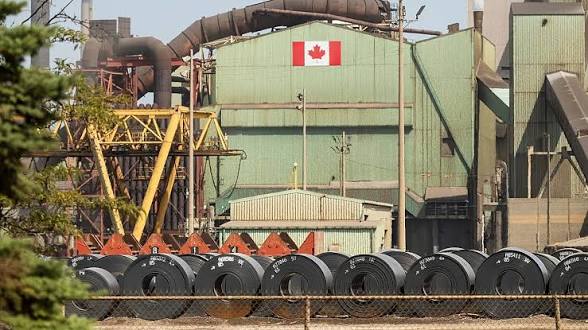
Canada has announced retaliatory tariffs of up to 50% on a wide range of American products, escalating a growing trade dispute with the United States. The measures will target nearly C$28 billion worth of US goods after President Donald Trump’s administration imposed fresh tariffs on Canadian imports.
Highlights
- Canada will impose tariffs on nearly C$28 billion worth of US goods.
- Some products will face duties as high as 50%.
- The measures are scheduled to take effect on September 8.
- Ottawa has set aside an additional C$7.5 billion to support affected businesses and workers.
- Both countries risk higher costs as long-established supply chains come under pressure.
Main Story
Canada Responds to US Tariffs
Canada has announced a new round of tariffs on American products following the latest escalation in trade tensions between the two neighbouring countries.
The measures will cover a broad range of goods, including steel, furniture, fresh tuna and cotton clothing.
Canadian officials said the targeted products were selected to correspond with Canadian goods affected by Washington’s latest tariffs.
The new Canadian duties are scheduled to take effect on September 8.
Ottawa Calls Response ‘Proportionate’
Finance Minister François-Philippe Champagne defended the decision, arguing that Canada had little choice but to respond after the United States introduced tariffs of up to 50% on selected Canadian products.
He described Canada’s countermeasures as both strategic and proportionate.
The government will also provide an additional C$7.5 billion in support programmes aimed at helping workers and businesses deal with the economic impact of the trade dispute.
The funding is intended to limit job losses and help companies remain operational during a period of uncertainty.
Trade Talks Collapse
The latest measures follow the breakdown of trade negotiations between Washington and Ottawa.
Talks collapsed late last week, with both sides accusing the other of making unreasonable demands during the final stages of negotiations.
The Canadian government has faced pressure to explain why an agreement was not reached, with the Conservative opposition calling for the full draft agreement with the United States to be made public.
Businesses are also concerned that a prolonged dispute could create significant economic challenges.
Businesses and Consumers Face Higher Costs
The United States and Canada have deeply connected economies, with companies on both sides relying on supply chains that have developed over decades.
New tariffs could increase the cost of moving goods across the border, forcing businesses to absorb higher expenses or pass some of those costs on to consumers.
Manufacturers, retailers, farmers and other businesses could all face disruptions if the dispute continues for an extended period.
For consumers, the impact could eventually appear through higher prices for imported products.
Washington Pushes Back
The White House rejected Canada’s decision to impose retaliatory tariffs.
In a statement, the administration said the United States had been prepared to offer Canada highly favourable access to the American market during recent negotiations.
Washington accused Ottawa of making unreasonable demands and ultimately rejecting the proposed arrangement.
President Trump also took aim at Canada in posts on Truth Social, accusing the country of taking advantage of the United States over several decades and criticising tariffs imposed on American agricultural products.
Public Support for Ottawa
Despite concerns within the business community, polling indicates that many Canadians support their government’s decision to stand firm against Washington.
That public backing could give Prime Minister Mark Carney’s government greater room to negotiate with the United States.
However, maintaining that support could become more difficult if the dispute persists and businesses and consumers begin feeling the economic consequences more sharply.
A Difficult Balancing Act
Canada’s latest move demonstrates how quickly relations between two historically close trading partners can deteriorate when negotiations fail.
Both governments now face the challenge of protecting domestic industries without causing unnecessary damage to businesses and consumers that depend heavily on cross-border trade.
Whether the latest tariffs push Washington and Ottawa back to the negotiating table or trigger a longer trade confrontation remains to be seen.
For companies operating across the border, however, the immediate reality is greater uncertainty and potentially higher costs.
As the world’s two close neighbours trade tariffs instead of concessions, businesses on both sides of the border may ultimately pay the price for the growing standoff.

