
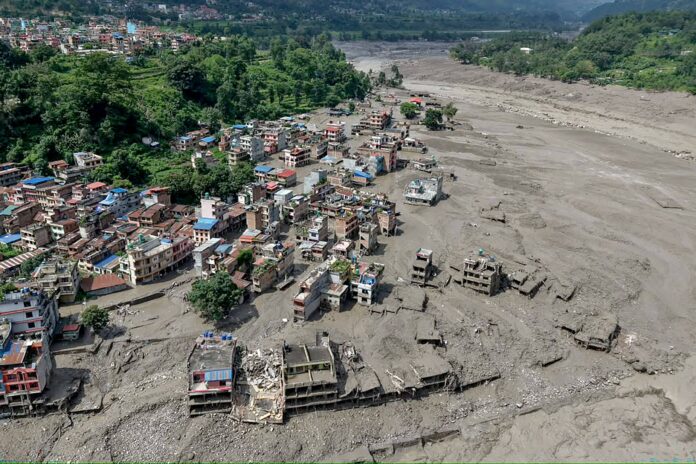
A devastating flash flood has swept through parts of northern Nepal near the Tibet border, leaving hundreds of people missing and causing widespread destruction. The disaster has killed at least 31 people, according to the latest figures in the supplied report, while hundreds of travellers including 291 foreign tourists remain unaccounted for. The situation is still developing, with rescue teams facing major challenges reaching affected areas.
Highlights
- At least 31 people have been reported dead in Nepal.
- Hundreds of travellers remain missing, including 291 foreign tourists.
- More than 100 Indians and 12 Britons are reportedly among those missing.
- Floodwaters have destroyed bridges, homes and other infrastructure.
- Authorities are investigating whether an earthquake-triggered avalanche caused the flooding.
Main Story
Massive Flood Sweeps Through Nepal
Northern Nepal has been hit by a powerful flash flood that has devastated communities along the Bhotekoshi and Trishuli river systems.
The disaster has swept away homes, roads and bridges, leaving several areas difficult to access as emergency teams attempt to locate missing people and assess the full scale of the destruction.
Authorities have reported at least 31 deaths, while dozens more people have been injured.
The situation remains fluid, with officials warning that the number of casualties could rise as rescue teams gain access to isolated areas.
Hundreds of Travellers Missing
One of the biggest concerns is the large number of people who remain unaccounted for.
Nepal’s Tourism Board has reported hundreds of missing travellers, including 291 foreign nationals. The preliminary list includes people from several countries who were travelling through the region.
More than 100 Indians and 12 people from the United Kingdom are reportedly among those missing.
The affected area is an important route for travellers heading towards the Tibet region, making tourists particularly vulnerable to the sudden disaster.
Villages and Infrastructure Destroyed
The force of the floodwaters has caused extensive damage.
Videos verified from the affected areas show bridges being swept away by rapidly moving water, while buildings have collapsed under the pressure of the flooding.
Other images show houses partially submerged in thick, muddy water.
The destruction has also affected roads and other infrastructure, making it harder for rescue teams to reach communities that may still be cut off.
Possible Avalanche Trigger
Officials are investigating what caused the sudden surge of water.
Nepal’s foreign minister has said preliminary reports suggest an earthquake may have triggered an avalanche, which then caused a massive release of water downstream.
The suspected chain of events highlights the dangers posed by Nepal’s mountainous terrain, where earthquakes, landslides, avalanches and sudden flooding can quickly combine to create devastating conditions.
Authorities are still working to establish the exact cause.
Rescue Efforts Underway
Search and rescue teams have been deployed as authorities attempt to locate survivors and determine the whereabouts of those reported missing.
However, the operation has been complicated by damaged roads, swollen rivers and unstable conditions.
Rescue helicopters have also faced difficulties reaching some of the worst-hit areas because of the conditions on the ground and in the air.
A video filmed from inside a bus in the Trishuli area showed people desperately trying to escape as floodwaters surged through the valley.
Concerns Across the Border
The disaster has also affected areas on the Chinese side of the Nepal-Tibet border.
Chinese state media has reported major casualties in Tibet after a mudslide struck the Gyirong area.
The incident has disrupted transport and communications, adding to the difficulty of establishing the full extent of the disaster.
Authorities on both sides of the border are now working to assess damage and respond to those affected.
A Developing Disaster
The full scale of the tragedy is still emerging.
With hundreds of people missing and entire settlements affected, officials face a race against time to locate survivors while restoring access to isolated communities.
Families of missing travellers are also waiting for information as authorities work through preliminary lists and verify the identities and locations of those who have been accounted for.
The disaster has left Nepal facing a major humanitarian and rescue operation, with the possibility of further casualties as assessments continue.
The search for survivors continues as Nepal confronts the devastating human cost of a disaster that struck with little warning.

