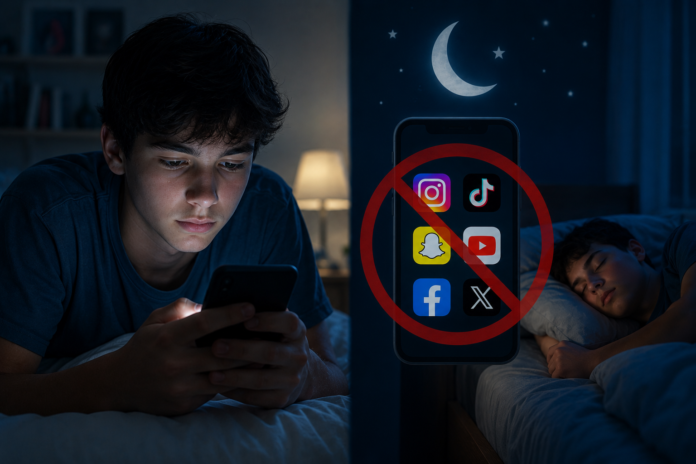
Teenagers aged 16 and 17 in the United Kingdom could soon find themselves automatically logged out of popular social media platforms overnight under new government proposals aimed at improving mental health, sleep quality and overall wellbeing. The plan would make late-night scrolling a thing of the past unless teenagers choose to change their account settings.
Highlights
- UK proposes an overnight social media curfew for 16 and 17-year-olds.
- Apps such as TikTok, Instagram and YouTube would be unavailable by default between midnight and 6 a.m.
- The government also wants autoplay and infinite scrolling turned off.
- A recent trial found overnight restrictions improved mood, sleep and energy levels.
- Some experts argue stronger age verification should happen on devices instead of social media apps.
Main Story
Midnight Curfew for Social Media
The UK government has unveiled plans to introduce a default overnight social media curfew for teenagers aged between 16 and 17.
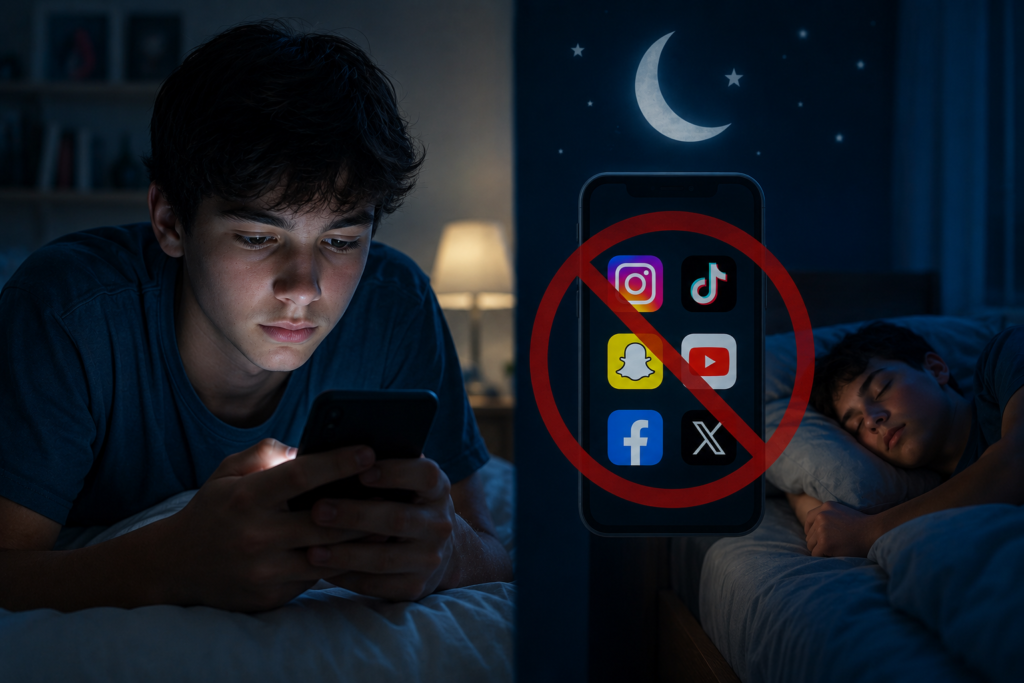
If approved, platforms including Instagram, TikTok and YouTube would automatically become inaccessible from 12:00 a.m. to 6:00 a.m., although users would still be able to disable the restriction through their account settings.
Officials say the move is designed to encourage healthier sleeping habits, improve concentration during the day and strengthen family relationships by reducing excessive late-night screen time.
Targeting Addictive Features
Beyond the curfew, the government also wants social media companies to disable features often blamed for keeping users online for longer.
These include:
- Infinite scrolling
- Auto-play videos
- Other design features that encourage prolonged screen use
The aim is to reduce excessive social media consumption, particularly among young people whose mental health and sleep patterns can be affected by extended online activity.
Research Supports Overnight Restrictions
The proposal follows a month-long study involving more than 300 teenagers and parents across the UK.
Researchers tested three different approaches:
- Limiting social media to 15 minutes per day
- Introducing an overnight curfew between 9 p.m. and 7 a.m.
- Completely removing access to certain social media platforms
Participants reported several benefits, including:
- Better sleep quality
- Improved mood
- Lower stress levels
- Increased daytime energy
However, many also admitted that social media plays a major role in staying connected with friends, making a total ban less appealing. As a result, the overnight curfew emerged as the preferred option because it balanced health benefits with teenagers’ social lives.
Debate Over Age Verification
The proposal has also revived debate over who should be responsible for verifying users’ ages.
Meta, the parent company of Facebook, Instagram and WhatsApp, has previously argued that age checks should be handled by smartphone manufacturers rather than individual apps.
Apple has already introduced device-level age verification on newer versions of its iPhone and iPad software, allowing users’ ages to be confirmed before accessing certain online services.
Meanwhile, internet safety campaigner Baroness Beeban Kidron believes device-based protections offer a more effective way of keeping young users safe online.
Part of a Bigger Push for Online Safety
The latest proposal follows wider efforts by the UK government to strengthen protections for children and teenagers online.
Earlier this year, then-Prime Minister Keir Starmer announced plans for a broader social media ban for children under the age of 16. The move came after Australia became the first country to introduce a nationwide legal ban on social media access for younger teenagers.
If implemented, the UK restrictions would affect major platforms including Snapchat, TikTok, Instagram, Facebook, YouTube and X.
Read Also
- The Real Risks of Artificial Intelligence: What You Should Know
As governments around the world grapple with the impact of social media on young people, the UK believes that getting teenagers offline at night could be a simple step toward healthier minds, better sleep and a more balanced digital life.

