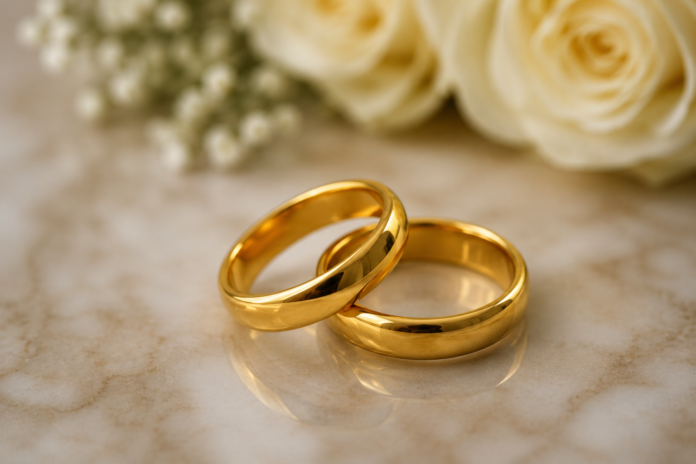
Wedding rings are among the most recognizable symbols of love and commitment, but few people know that the tradition dates back more than 5,000 years. From braided reeds in ancient Egypt to sparkling diamond bands worn today, the wedding ring has evolved through centuries while maintaining its powerful message of eternal love.
Highlights
- Wedding rings originated in ancient Egypt over 5,000 years ago.
- Egyptians believed the fourth finger of the left hand connected directly to the heart.
- The Catholic Church officially adopted wedding rings in marriage ceremonies during the Middle Ages.
- Diamond engagement rings became globally popular after a 1947 advertising campaign.
- Men began widely wearing wedding bands during World War II.
Main Story
The Ancient Origins of Wedding Rings
The tradition of exchanging wedding rings can be traced back to ancient Egypt around 3000 BCE, making it one of the oldest marriage customs still practiced today.
Early Egyptians crafted rings from natural materials such as reeds, hemp and leather, weaving them into perfect circles. The circular shape represented eternity because it has no beginning or end, while the empty space in the middle symbolized the future shared by two people.
For the Egyptians, the ring was more than jewellery it was a lifelong promise of devotion and unity.
Why the Ring Is Worn on the Fourth Finger
Ancient Egyptians believed that a special vein connected the fourth finger of the left hand directly to the heart.
Later, the Romans embraced this belief and named it the “Vena Amoris,” meaning the “Vein of Love.” Although modern anatomy has shown that no such vein exists, the romantic tradition has endured for thousands of years.
Today, millions of couples around the world continue wearing their wedding rings on that finger as a symbol of everlasting love.
How the Romans Changed the Tradition
As the Roman Empire expanded, it adopted and transformed the Egyptian custom.
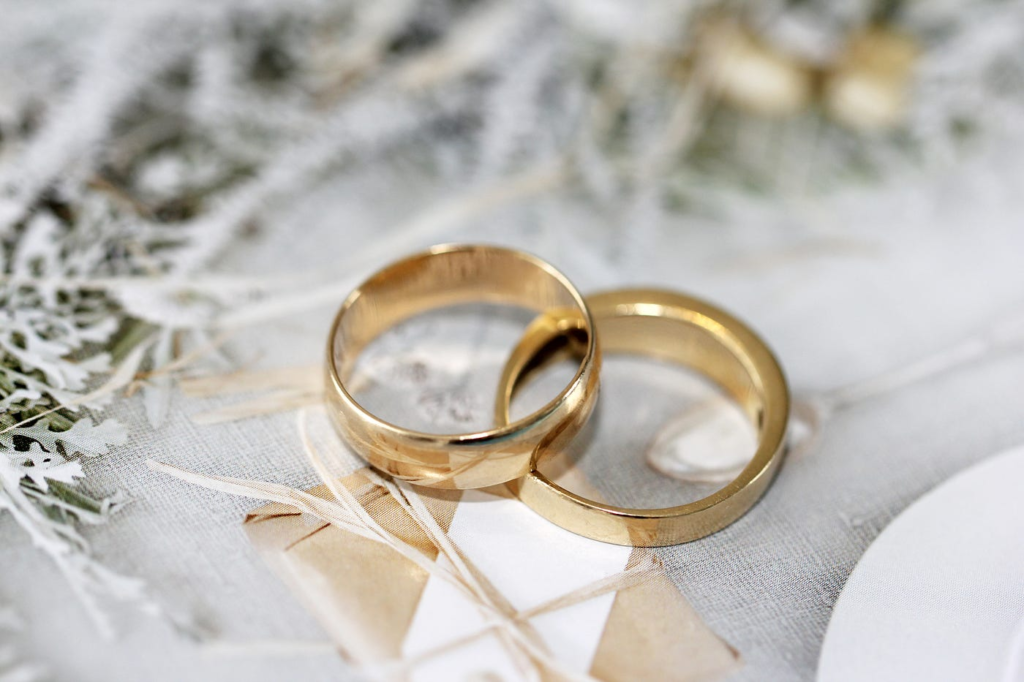
Instead of delicate plant materials, Romans introduced rings made from iron and bronze, representing strength, loyalty and permanence. Wealthier families later embraced gold bands, a tradition that remains popular in modern weddings.
During this period, wedding rings also became a public symbol of marriage and commitment.
Wedding Rings Enter Religious Ceremonies
By the 12th century, the Catholic Church had officially incorporated the exchange of wedding rings into Christian marriage ceremonies.
During the Renaissance, couples began exchanging beautifully engraved “posy rings,” featuring romantic poems, promises and heartfelt messages carved inside the bands.
These personalized inscriptions reflected the growing belief that marriage was built not only on commitment but also on affection and companionship.
Why Men Started Wearing Wedding Rings
For much of history, wedding rings were traditionally worn only by women.
This changed significantly during World War II, when many soldiers began wearing wedding bands while serving overseas as a reminder of their wives and families waiting for them back home.
The practice gradually became common across the United States and many other countries, leading to today’s tradition where both spouses exchange and wear wedding rings.
A Symbol That Has Stood the Test of Time
Despite changing fashions and cultural differences, the wedding ring remains one of humanity’s most enduring symbols.
Whether crafted from gold, platinum, silver or adorned with diamonds, its circular shape continues to represent endless love, unity, trust and lifelong commitment between two people.
A wedding ring may be small enough to fit on a finger, but its story spans thousands of years reminding us that true love, commitment and lasting promises never go out of style.

