

Digital learning is rapidly transforming how children access education, replacing traditional classrooms with screens, apps, and virtual lessons. While it offers flexibility and endless resources, concerns are growing about its long-term impact on young minds.
Highlights
- Digital learning uses technology like apps, videos, and online platforms to teach
- It offers flexibility and access to global educational resources
- Challenges include screen addiction and reduced social interaction
- It is reshaping how children think, learn, and interact
- Balance is key to making it effective for young learners
Main Story
What Is Digital Learning and How Does It Work?
Digital learning refers to education delivered through electronic devices such as smartphones, tablets, and computers. Instead of relying solely on textbooks and physical classrooms, students access lessons through online platforms, recorded videos, virtual classrooms, and interactive apps.
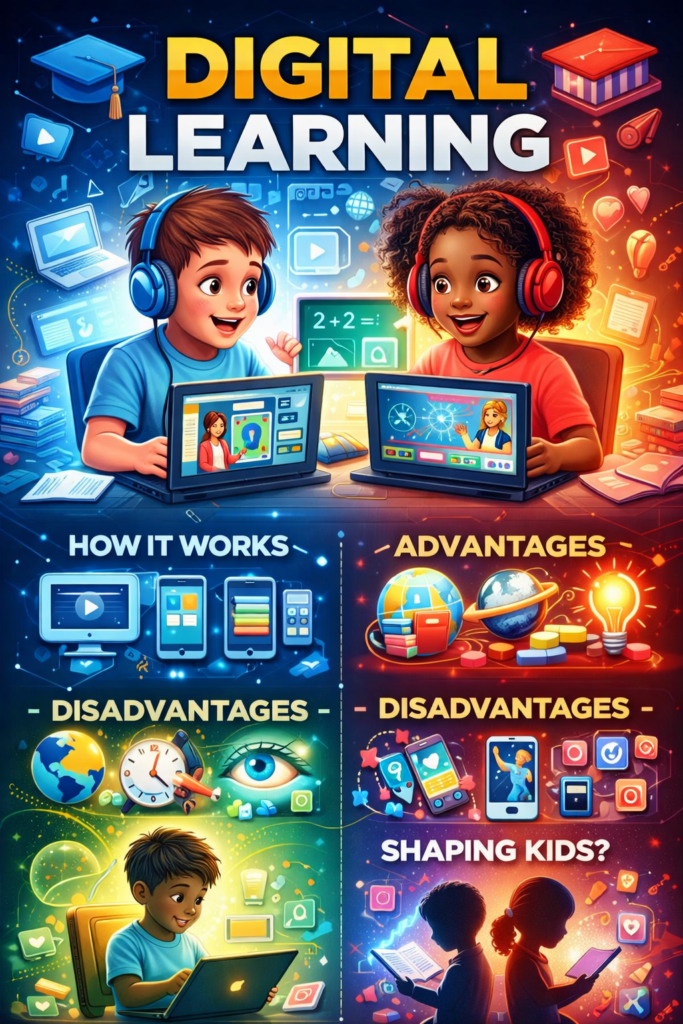
Teachers can conduct live classes, assign digital tasks, and track progress remotely. Students, on the other hand, can learn at their own pace, revisit lessons, and explore a wide range of subjects beyond the traditional curriculum.
The Advantages of Digital Learning
One of the biggest strengths of digital learning is accessibility. Students can learn from anywhere, making education more inclusive, especially for those in remote areas.
It also allows personalized learning. Children can move at their own speed, revisit difficult topics, and explore subjects they are passionate about. Interactive tools like videos, quizzes, and simulations make learning more engaging and less rigid.
Additionally, digital learning exposes children to global knowledge, helping them develop tech skills early a key advantage in today’s digital world.
The Disadvantages and Concerns
Despite its benefits, digital learning comes with serious downsides. Too much screen time can affect children’s eyesight, sleep patterns, and overall health.
There is also the issue of reduced social interaction. Traditional classrooms help children build friendships, communication skills, and emotional intelligence — something that online learning cannot fully replicate.
Another concern is distraction. With access to games, social media, and entertainment, students may struggle to stay focused during lessons.
Inequality is also a challenge, as not all children have access to reliable internet or digital devices.
Is Digital Learning Shaping Kids?
Digital learning is undeniably influencing how children grow and think. It is creating a generation that is more tech-savvy, independent, and adaptable.
However, it may also be shortening attention spans and reducing patience for traditional learning methods. Children are becoming more accustomed to fast, interactive content, which can make slower-paced environments feel less engaging.
Experts suggest that while digital learning is beneficial, it should not completely replace physical classrooms. A blended approach combining online tools with in-person interaction is considered the most effective way forward.
As digital learning continues to evolve, the real challenge isn’t whether it works but how we use it to shape smarter, healthier, and more balanced future generations.

