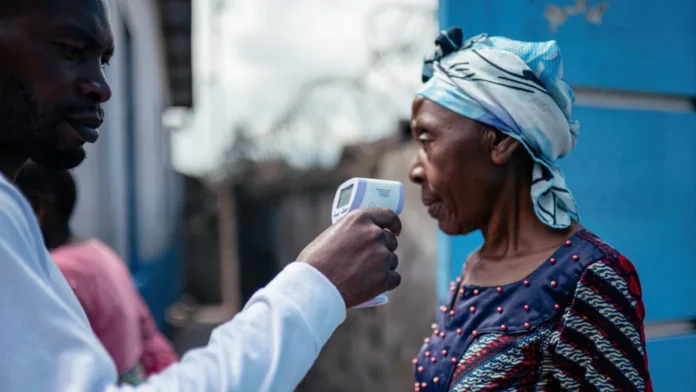
The World Health Organization (WHO) has declared the Ebola outbreak affecting the Democratic Republic of Congo (DRC) and Uganda a Public Health Emergency of International Concern (PHEIC), its highest level of global alert. The decision comes after rising infections and deaths linked to the rare Bundibugyo strain, raising fears of cross-border spread in the region.
Highlights
- WHO declares Ebola outbreak a global health emergency (PHEIC).
- Over 80 deaths and more than 300 suspected cases reported.
- Outbreak linked to rare Bundibugyo strain of Ebola virus.
- Cases confirmed in eastern DRC and parts of Uganda.
- International response and funding efforts expected to be activated.
Main Story
WHO Raises Highest Global Alarm
The World Health Organization has officially classified the Ebola outbreak in the Democratic Republic of Congo and Uganda as a Public Health Emergency of International Concern.
This classification represents the highest level of global alert issued by WHO and is reserved for outbreaks that pose a serious risk to multiple countries and require coordinated international response.
Rising Cases Across DRC and Uganda
Health authorities report that the outbreak has already led to an estimated 80 to 88 deaths, with more than 300 suspected infections recorded so far.
Most of the cases have been reported in eastern DRC’s Ituri Province, with additional infections confirmed across the border in Uganda, raising concerns about regional transmission.
The outbreak has been linked to the rare Bundibugyo strain of the Ebola virus, which is known to be less frequently encountered but still highly dangerous.
Concerns Over Treatment and Spread
Health experts have raised concerns over the limited availability of approved vaccines and treatments specifically effective against this strain.
The WHO noted that uncertainty over the true scale of infections, combined with cross-border movement in affected regions, increases the risk of wider spread if containment measures are not strengthened.
What the Emergency Declaration Means
By declaring a PHEIC, WHO is urging countries around the world to enhance surveillance, strengthen health systems, and coordinate response efforts.
The declaration also allows for faster mobilization of international funding, medical teams, and emergency resources to affected regions.
Despite the seriousness of the alert, WHO has emphasized that the situation should not be confused with a global pandemic, but rather a contained emergency requiring urgent action to prevent escalation.
Read Also
- Matatus stay off roads as nationwide strike takes effect
- Ruiru Bypass Chaos as Police Clash With Protesters During Matatu Strike
- Kenya’s Urban Growth Model Earns International Recognition at Global Summit

