
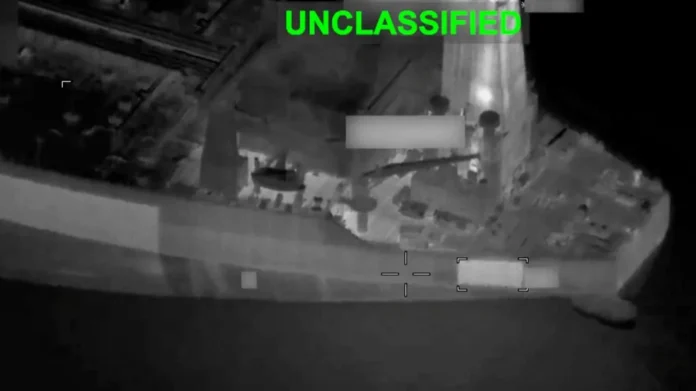
The fragile ceasefire that had offered hope for stability in the Gulf is facing its biggest test yet after Iran and the United States launched fresh military strikes against each other. The latest escalation comes as Kuwait says Iranian drones struck its main international airport, causing casualties and raising fears of a wider regional conflict with global implications.
Highlights
- Kuwait says Iranian drones struck Kuwait International Airport.
- At least one person was killed while dozens were reported injured.
- Iran allegedly launched additional missiles and drones toward Kuwait and Bahrain.
- The United States responded with strikes targeting military sites on Qeshm Island.
- Concerns are growing over security in the Strait of Hormuz and global energy supplies.
Main Story
Kuwait Airport Comes Under Attack
Regional tensions intensified after Kuwaiti authorities reported that several drones targeted Kuwait International Airport, one of the country’s most critical transport hubs.
Officials said the attack damaged sections of a passenger terminal, resulting in at least one fatality and multiple injuries. Airport operations were temporarily halted as emergency teams assessed the situation and conducted safety inspections.
Although some flight services later resumed, the incident has heightened concerns over the vulnerability of civilian infrastructure amid escalating military confrontations in the Gulf.
Missiles and Drones Target Gulf States
The airport attack was part of a broader wave of military activity that has further strained relations between Tehran and Washington.
According to the U.S. military’s Central Command, Iran launched missiles and drones toward locations in both Kuwait and Bahrain. American and allied air defense systems reportedly intercepted several threats before they could reach their targets.
Officials also indicated that some projectiles malfunctioned during flight, limiting the overall impact of the attacks.
Washington Responds with Military Strikes
In response, the United States carried out strikes against Iranian military assets on Qeshm Island, located near the strategically vital Strait of Hormuz.
American officials described the operation as a defensive action aimed at protecting U.S. personnel, regional allies, and commercial maritime traffic. The targets were reportedly linked to Iran’s drone and missile capabilities.
Washington maintains that the strikes were necessary to deter further attacks and preserve security in one of the world’s most sensitive geopolitical regions.
Iran Defends Retaliatory Operations
Iran’s Islamic Revolutionary Guard Corps claimed responsibility for attacks against what it described as U.S.-associated military targets across the Gulf.
Tehran framed the operations as retaliation for recent American military actions and warned that additional responses could follow if the United States continues its military activities in the region.
The exchange marks another chapter in the long-running confrontation between the two countries, which has repeatedly threatened regional stability.
Global Concerns Over Energy Security
The latest hostilities have renewed fears about the security of the Strait of Hormuz, a crucial shipping corridor through which a significant share of the world’s oil exports passes.
Any disruption to traffic through the narrow waterway could have far-reaching consequences for international energy markets, shipping costs, and economic stability.
Analysts warn that continued military escalation could increase uncertainty across global markets and place additional pressure on diplomatic efforts aimed at preventing a broader conflict.
Diplomacy Faces New Challenges
Despite the latest violence, officials in both Washington and Tehran have continued to express support for negotiations.
However, the renewed military exchanges have cast doubt on the effectiveness of previous de-escalation efforts and highlighted the fragile nature of existing ceasefire arrangements.
With tensions rising and military activity continuing across the Gulf, the international community is closely watching whether diplomacy can regain momentum before the situation deteriorates further.
Read Also
- Court Finds No Evidence Linking State Agencies to Mbijiwe’s Disappearance
- How Overcrowded Hospitals Force Patients to Share Beds
- Nurses Union reject plan to host Ebola-exposed patients, warns Kenya is not Ready

