
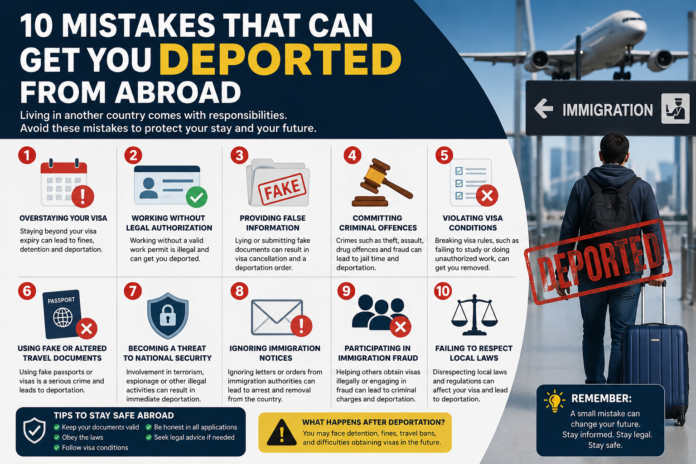
Moving abroad for work, school, business, or a better life is a dream for many people. However, living in another country comes with responsibilities. Every nation has immigration laws that foreigners are expected to follow, and breaking those rules can lead to detention, fines, visa cancellation, or even deportation. Understanding these laws can help you avoid costly mistakes and protect your future.
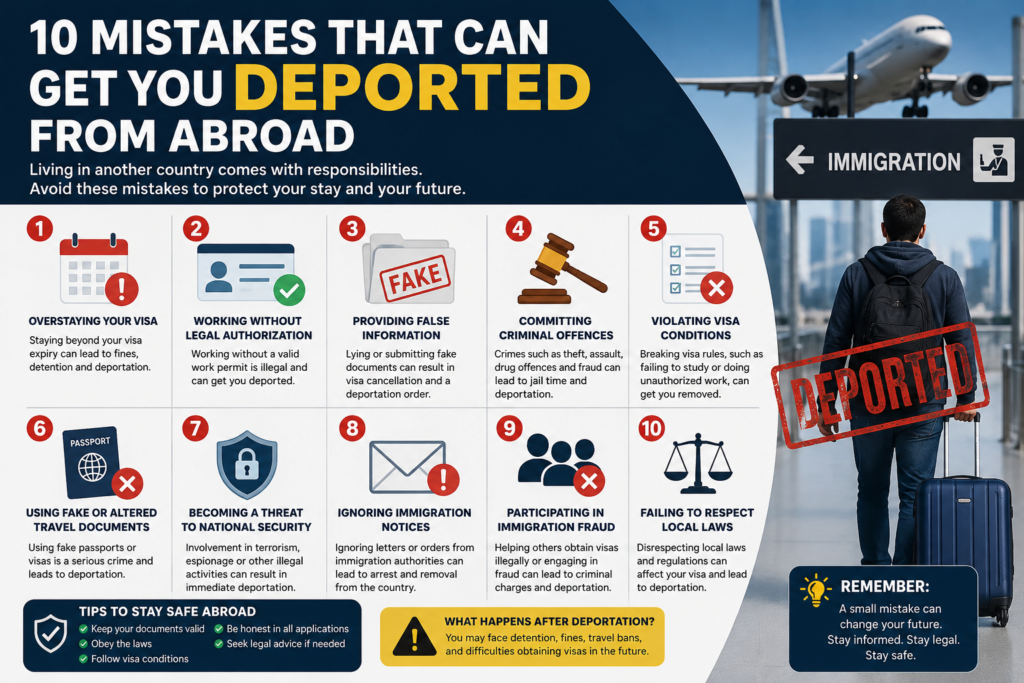
Highlights
- Overstaying your visa is one of the most common reasons for deportation.
- Working without the correct permit can violate immigration laws.
- Criminal offences can result in immediate removal from a country.
- Providing false information during immigration processes carries serious consequences.
- Following local laws and visa conditions helps you remain in good legal standing.
Main Story
1. Overstaying Your Visa
One of the leading reasons people are deported is remaining in a country after their visa or residence permit has expired.
Many countries impose penalties for overstaying, including fines, deportation, and bans that can prevent you from returning for several years.
2. Working Without Legal Authorization
A tourist or visitor visa usually does not allow you to work.
Taking a job without the appropriate work permit or employment authorization can lead to arrest, deportation, and restrictions on future visa applications.
3. Providing False Information
Submitting fake documents, lying during visa interviews, using forged academic certificates, or entering into fraudulent marriages to obtain immigration benefits are serious immigration offences.
If discovered, authorities can cancel your visa and deport you.
4. Committing Criminal Offences
Foreign nationals who are convicted of crimes such as drug trafficking, theft, assault, fraud, domestic violence, or human trafficking may face deportation after serving their sentence.
In some countries, even relatively minor offences can affect your immigration status.
5. Violating Visa Conditions
Every visa has specific conditions.
For example, a student visa requires you to remain enrolled in your studies, while some visas prohibit certain types of employment or business activities.
Ignoring these conditions can result in the cancellation of your immigration status.
6. Using Fake or Altered Travel Documents
Travelling with counterfeit passports, forged visas, or altered immigration documents is a serious offence in almost every country.
Authorities may detain, prosecute, and deport anyone found using fraudulent travel documents.
7. Becoming a Threat to National Security
Governments may deport individuals suspected of involvement in terrorism, violent extremism, espionage, organized crime, or activities considered a threat to national security.
8. Ignoring Immigration Notices
If immigration authorities request additional documents, ask you to attend interviews, or issue removal notices, failing to respond can worsen your legal situation.
Seeking legal advice early can sometimes help resolve immigration issues before they escalate.
9. Participating in Immigration Fraud
Helping others obtain visas illegally, arranging sham marriages, or engaging in human smuggling can result in criminal charges and deportation.
10. Failing to Respect Local Laws
Every country has its own laws and cultural expectations.
Repeatedly violating local regulations even for offences that seem minor can negatively affect your immigration record and, in some cases, lead to removal from the country.
What Happens After Deportation?
Depending on the country and the reason for deportation, a person may:
- Be detained before removal.
- Have their visa or residence permit cancelled.
- Receive a temporary or permanent ban from re-entering the country.
- Face difficulties obtaining visas for other countries in the future.
- Be recorded in immigration databases that may affect future travel.
How to Avoid Deportation
- Keep your visa and immigration documents valid.
- Work only if your visa allows it.
- Obey the laws of your host country.
- Renew your immigration status before it expires.
- Be honest in all immigration applications.
- Seek legal advice if you encounter immigration problems.
Living abroad can open doors to incredible opportunities, but respecting the immigration laws of your host country is essential to protecting your future and ensuring your stay remains legal.

