
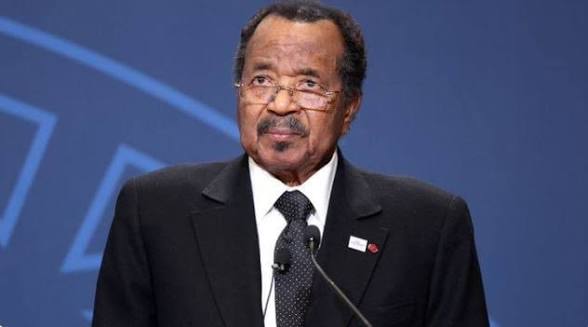
Cameroon’s long-serving President Paul Biya has spent more than two months outside the country, fuelling fresh debate about his health, leadership and who is effectively steering the nation in his absence. At 93, Biya is the world’s oldest serving president and has dominated Cameroon’s political landscape since taking power in 1982.
Highlights
- Paul Biya has been outside Cameroon since June 7.
- His government says he is in Geneva, Switzerland, and not hospitalised.
- Biya has ruled Cameroon for more than four decades.
- His extended absence has renewed concerns about his health and governance.
- For many young Cameroonians, Biya is the only president they have ever known.
Main Story
A Long Absence From Cameroon
President Paul Biya’s prolonged stay outside Cameroon has once again put the veteran leader under intense public scrutiny.
Biya left the Central African country on June 7, with his office describing the trip as a private and temporary stay in Europe. More than two months later, he has yet to return, making the absence one of the longest uninterrupted periods he has spent away from Cameroon in recent years.
The government has offered limited information about his situation.
Last week, government spokesman René Emmanuel Sadi told French broadcaster RFI that Biya was in Geneva, Switzerland, while dismissing reports that the president had been admitted to hospital. No further details about his activities or expected return were provided.
Four Decades at the Helm
Biya has been Cameroon’s president since 1982, making him one of Africa’s longest-serving leaders.
He initially came to power after the resignation of Cameroon’s first president, Ahmadou Ahidjo, and later won successive presidential elections, including under the country’s multiparty political system.
His latest election victory, which secured another term in office, was heavily disputed by opponents amid clashes between protesters and security forces.
If he completes the term, Biya could remain in power until he is close to a century old.
A President Rarely Seen in Public
Biya’s limited public appearances have long been a subject of discussion in Cameroon.
Over the years, speculation about his health and whereabouts has repeatedly circulated, forcing officials to issue denials about reports that he was seriously ill or had died.
The government went as far as restricting media discussion of the president’s health in 2024, arguing that such reports could have national security implications.
His latest absence has therefore revived an old question: how much information should citizens receive about the condition and activities of a president who has spent decades at the centre of national affairs?
A Generation That Knows Only Biya
For many Cameroonians, the president’s lengthy rule is not simply a chapter in history — it is the political reality they grew up with.
Nformi Bime was 23 and still a student when Biya first won the presidency. Today, Bime is 65 and retired from teaching, while Biya remains in office.
The same is true for younger generations.
Abit Riassai Acha, a 26-year-old doctoral student and youth leader at the University of Yaoundé II, grew up knowing no other president.
Acha voted for the first time in the most recent presidential election, supporting 38-year-old opposition candidate Samuel Hiram Iyodi.
His experience reflects a wider generational divide in Cameroon, where a youthful population is living under leadership that began its political journey decades before many of today’s young adults were born.
Questions Over the Future
Biya’s extended stay abroad has also reignited broader conversations about ageing leadership across Africa.
The continent has one of the youngest populations in the world, yet several countries continue to be led by political figures whose careers began during earlier eras of independence, liberation struggles and one-party politics.
In Cameroon, the central question now extends beyond Biya’s age.
It is about transparency, succession and what happens when a president who has shaped the country for more than 40 years is no longer regularly present.
For a generation that has never known another leader, Biya’s absence could become an important moment in considering what Cameroon’s political future might look like.
After more than four decades with one man at the centre of power, Cameroon’s biggest political question may no longer be how long Paul Biya can remain president, but what comes next.

