
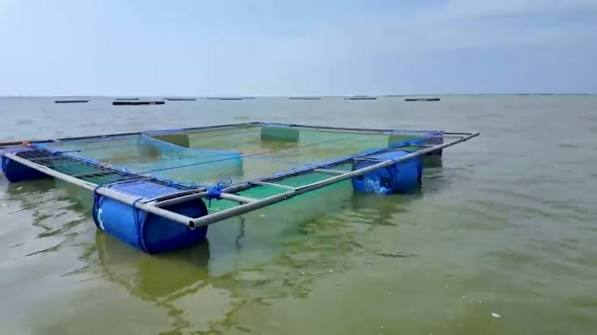
Cage fish farming is giving Dunga Beach in Kisumu a new economic boost, creating jobs, increasing fish supply and opening up bigger markets for local farmers and traders. What was once a community heavily dependent on declining wild catches is now seeing more investment as cage farming continues to expand.
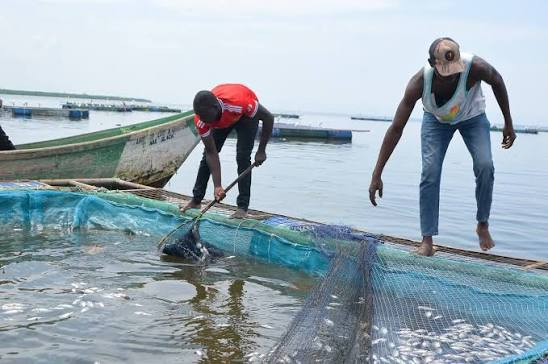
Highlights
- Fish cages at Dunga have grown from about 10 to nearly 250.
- Young people and investors are increasingly joining cage fish farming.
- Increased production has created jobs and expanded local trade.
- Fish buyers are travelling from as far as Nairobi to source fish.
- More reliable supply is helping traders grow their businesses and support their families.
Main Story
Cage Farming Changes Dunga’s Fish Business
Dunga Beach is experiencing a major shift in its fishing economy as cage fish farming continues to gain popularity among residents, young people and investors.
Victor Ochieng DD, a cage fish farmer at Dunga, says the number of fish cages in the area has increased dramatically, rising from roughly 10 to nearly 250.
According to him, the growth has created new opportunities for people who previously depended mainly on traditional fishing for their livelihoods.
The expansion has also helped create employment while increasing the amount of fish available in the market.
Ochieng says the growing number of farmers has helped improve fish availability and contributed to more competitive prices.
The market has expanded beyond the local community, with buyers travelling from different parts of the country, including Nairobi, to purchase fish from Dunga.
For young people looking for income-generating opportunities, the sector is becoming an increasingly attractive option.
However, farmers still face challenges, particularly the cost of acquiring fingerlings.
Ochieng says access to more affordable fingerlings through organisations such as the Lake Basin Development Authority (LBDA) and AquaRech, supported through partnerships with government and local stakeholders, is helping ease some of the pressure.
Fish Traders Are Also Benefiting
The impact of increased fish production is also being felt by traders at Dunga Beach.
Pamela Omolo, a fish trader, says her business has grown as more farmers have entered cage farming and the supply of fish has improved.
She says the change has enabled her to expand her workforce from one employee to five.
For Omolo, continued growth in fish production could have an even wider impact on families and the local economy.
More fish means more food for the community, more income for farmers and traders, and greater purchasing power for households that depend on the sector.
She also hopes that a stronger supply chain will bring more customers to her business and improve her ability to provide for her family.
Dunga’s growing interest in cage farming comes against the backdrop of challenges facing traditional fishing.
For years, the community relied heavily on wild fishing, but declining catches and the reduction of some fish species made it increasingly difficult for many families to depend solely on the lake.
Cage farming is now providing an alternative by allowing farmers to raise fish in controlled environments while maintaining a connection to the lake’s wider fishing economy.
The model is also creating opportunities beyond farming itself, including employment in fish handling, transportation, trading and other businesses connected to the supply chain.
A Growing Opportunity for the Community
As cage farming continues to expand, Dunga Beach could become an even more important centre for fish production and trade in the region.
For farmers, the priority will be maintaining reliable production, accessing affordable inputs and reaching larger markets. For traders, increased supply could mean more customers and stronger businesses.
The experience at Dunga shows how adapting to changing economic realities can create new opportunities for communities whose traditional livelihoods are under pressure.
For Dunga Beach, the rise of cage fish farming is more than an increase in fish production it is a sign that new ideas can create fresh opportunities where traditional livelihoods are becoming harder to sustain.

