
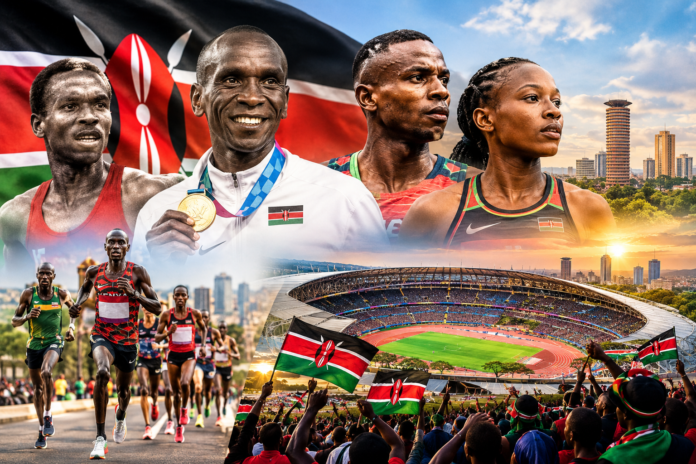
Kenya’s journey from producing world-beating runners to securing the right to host the 2029 World Athletics Championships has been decades in the making. Speaking on JK Live with Jeff Koinange, athletics legends and sports officials reflected on the country’s rich history, the role of legendary athletes and the plans now taking shape to ensure Nairobi delivers when the world comes calling.
Highlights
- Kenya will host the 2029 World Athletics Championships in Nairobi.
- Athletics legends say their achievements helped build Kenya’s global sporting identity.
- Officials say preparations, infrastructure and a multi-agency organising structure are already being developed.
- The championship is expected to create opportunities for young athletes and non-traditional athletics disciplines.
- Kenyan sports leaders are already looking beyond 2029, including ambitions of eventually hosting the Olympics.
Main Story
From Winning Medals to Hosting the World
For decades, Kenya has been known globally for producing exceptional distance runners. From the pioneering generation of athletes to modern stars such as Eliud Kipchoge, David Rudisha and Beatrice Chebet, the country’s athletics story has grown into part of its international identity.
Former world marathon champion Douglas Wakihuri believes the 2029 hosting opportunity is the result of several generations contributing to that legacy.
He noted that Kenyan athletes had already shown the world what the country could achieve, while a team working on major sporting bids since 2018 helped push the country towards the latest milestone.
For Wakihuri, hosting the championships represents the continuation of a journey that began long before Kenya started pursuing major international hosting rights.
A Special Moment for Kenyan Fans
Wakihuri also highlighted the role of Kenyan athletics supporters, describing their backing as an important part of the country’s sporting culture.
The 2029 championships will give local fans the opportunity to watch some of the world’s biggest athletics stars compete on Kenyan soil.
He also pointed to running as something deeply connected to Kenya’s identity, making the championships particularly significant for the country’s supporters.
Nairobi to Host Africa’s First Senior World Athletics Championships
Kenya’s successful bid has already been described as historic because the 2029 edition will be the first senior World Athletics Championships staged on African soil.
World Athletics announced Nairobi as the host after considering bids from Munich, Rome and London, while Munich was selected to host the 2031 edition. (Spm Buzz)
The decision builds on Kenya’s previous experience hosting global athletics events, including the 2017 World U18 Championships and the 2021 World U20 Championships. (Spm Buzz)
Government Says Preparations Are Underway
Sports officials say preparations for 2029 are already being aligned with existing stadium development projects.
According to officials involved in the process, the Ministry of Sports and other government agencies are working towards meeting the timelines contained in the agreement with World Athletics.
A Local Organising Committee is expected to bring together various government agencies, including sports, security and immigration officials, while World Athletics technical representatives will also be involved.
The structure is intended to ensure that preparations are coordinated well ahead of the championships.
Kenyan Legends Played a Role in the Bid
Officials also credited Kenyan athletics legends with helping strengthen the country’s presentation.
Former champions including Ibrahim Hussein, Tecla Chemabwai, Kipchoge Keino and Eliud Kipchoge were highlighted for their contribution to the story Kenya presented during the bid process.
Their experiences helped communicate the depth of Kenya’s athletics heritage and the emotional connection between the sport and the country.
The involvement of retired and active athletes is expected to continue as preparations for the championships move forward.
Wakihuri Remembers Breaking Barriers
Wakihuri also reflected on his own career and the significance of becoming one of Kenya’s early marathon stars.
He recalled winning the London Marathon and competing successfully on the international stage at a time when Kenyan athletes were still establishing themselves as global forces.
His generation went on to create major milestones, including Kenya’s first World Championship marathon gold in 1987 and the country’s first Olympic marathon medal in 1988.
He also pointed to victories in major races including London and New York, as well as success at the Commonwealth Games and World Cup.
For the former champion, seeing the World Athletics Championships finally come to Kenya represents another chapter in that long journey.
The Doping Debate
The discussion also touched on doping, an issue that has frequently featured in conversations around Kenyan athletics.
Sports officials pointed to the country’s anti-doping testing systems and argued that individual cases should not automatically be treated as evidence of an organised national programme.
They also discussed the challenges athletes face around medication and anti-doping regulations, noting that substances found in some ordinary medicines can create complications for athletes.
Claims about blood-related findings were also discussed, with officials pointing to Kenya’s high-altitude training environment as an important scientific consideration.
The broader debate remains a sensitive subject, particularly as Kenya prepares to welcome the international athletics community.
Building a Better Future for Young Athletes
Beyond hosting a major championship, officials believe the 2029 event could leave behind infrastructure and systems that benefit young Kenyans for years.
Gabriel Muthama pointed to the development of sports facilities across the country and argued that children growing up with access to quality fields and stadiums could have opportunities that previous generations did not.
The vision is to identify talent earlier and give young athletes better facilities, coaching and support as they progress through school.
A New Approach to Talent Identification
Sports officials are also looking at ways of making talent development more scientific.
Bernard Ouma spoke about plans involving the Kenya Academy of Sports and a new research function aimed at identifying athletic potential through structured research rather than relying solely on athletes being discovered by chance.
The programme is expected to explore scientific markers of talent, while planned research and medical testing could contribute to a better understanding of athlete development.
Kenya is also seeking partnerships with international institutions to strengthen sports science and technical capacity.
Beyond Distance Running
While Kenya remains famous for middle- and long-distance running, the 2029 championships could provide an opportunity to grow disciplines where the country has traditionally had less global presence.
Officials believe seeing elite sprinters and field-event athletes compete in Nairobi could inspire young Kenyans to explore different areas of athletics.
The emergence of sprinters such as Ferdinand Omanyala has already demonstrated the potential for Kenya to build a broader athletics identity beyond the marathon and middle-distance events.
Supporting Athletes After Retirement
The conversation also highlighted the welfare of retired athletes.
Athletics Kenya has established an endowment fund intended to provide assistance to former athletes facing financial difficulties. The organisation has also been running financial literacy programmes to help athletes better manage their earnings during and after their careers.
Wakihuri argued that supporting legends should go beyond ceremonies and trophies, suggesting that retired athletes can continue contributing through roles in sports administration, mentorship and access to sporting facilities.
Making Stadiums Financially Sustainable
The discussion also turned to how Kenya can ensure its stadiums remain useful and financially sustainable beyond major sporting events.
Bernard Ouma suggested that facilities could generate additional revenue by hosting concerts, conferences, offices and other activities when sporting events are not taking place.
The idea is to develop stadiums into multipurpose facilities rather than leaving them dependent solely on sporting fixtures.
2029 Could Be a Stepping Stone
For Wakihuri, securing the World Athletics Championships is not necessarily the final destination.
He suggested that hosting the global athletics showpiece could eventually encourage Kenya to pursue an even bigger sporting ambition: hosting the Olympic Games.
The idea follows Kenya’s progression from hosting junior World Athletics championships to securing the senior global event.
A Legacy That Goes Beyond One Championship
The 2029 World Athletics Championships will ultimately be judged not only by what happens during competition but also by what Kenya builds around it.
Better facilities, stronger sports science, improved athlete welfare, expanded talent identification and greater opportunities for younger athletes could form part of the event’s longer-term legacy.
Kenya has spent decades proving that its athletes can compete with the world’s best. The next challenge is to create an environment where the next generation can build on that history.
Kenya has spent generations winning on the world’s biggest stages; in 2029, the world will come to Kenya to witness the next chapter of that story.

