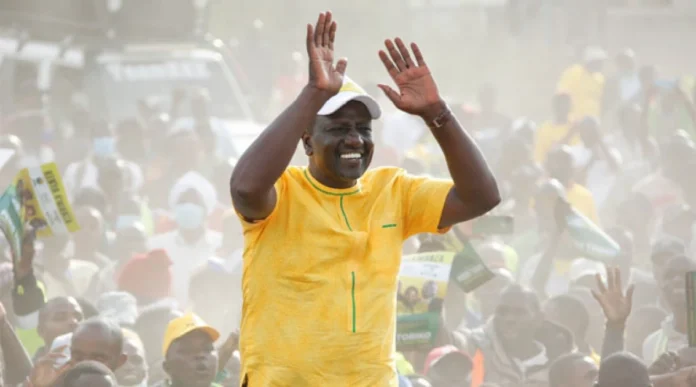
The United Democratic Alliance (Alliance) is projecting an image of electoral invincibility following a string of recent by-election victories. Behind the scenes, however, the ruling party is battling a deepening internal crisis that threatens to compromise President William Ruto’s grip on the 2027 political trajectory.
High-ranking sources within the party suggest that the leadership’s public dismissal of a consolidating “**United Opposition**” is not a sign of strength, but a calculated distraction from structural rot. While the President’s strategists maintain that the opposition is fragmented and toothless, veteran political analysts warn that arrogance in the face of shifting ground realities could be the administration’s undoing.
## The Illusion of Hegemony
On paper, Ruto’s political machinery is a juggernaut. By securing narrow wins in contested wards and parliamentary seats, the UDA has maintained a narrative of national dominance. Yet, these victories have been achieved through massive resource mobilization and the co-opting of local influencers, rather than genuine grassroots fervor.
“The numbers are misleading,” says **Dr. Silas Nyongesa**, a senior policy analyst focusing on East African governance. “When you look at voter turnout in these strongholds, it is plummeting. The apathy is a silent protest against the high cost of living and unimplemented campaign promises. Dismissing the opposition now ignores the fact that a vacuum is being created.”
Within the party’s inner sanctum, friction is mounting between the ‘**technocrats**’—who favor policy-driven optics—and the ‘**politicians**’—who demand traditional patronage. This divide has stalled critical party elections and led to public spats between high-ranking officials in the Rift Valley and Mt. Kenya regions.
### The Mt. Kenya Calculus
The most significant threat to the UDA’s stability remains the growing restlessness in the **Mt. Kenya region**. Historically the kingmaker in Kenyan politics, the region is beginning to perceive itself as sidelined in the executive power-sharing agreement. The President’s dismissal of opposition figures who are actively courting the Central Kenya vote is being viewed by some insiders as a tactical blunder.
> “There is a growing sentiment that the UDA is a one-man show. If the opposition manages to consolidate around a singular economic grievance, the President’s ‘hustler’ narrative will be countered by a ‘betrayal’ narrative. You cannot win a second term while fighting on two fronts—one internal and one external.”
> — Source within the UDA National Executive Committee
The emergence of a more disciplined opposition coalition, which is currently moving away from street protests toward legislative and legal challenges, has caught the UDA off guard. By focusing on the **Finance Act** and social welfare failures, the opposition is hitting the government where it is most vulnerable: the pocketbooks of the common citizen.
### Data Points: The Shrinking Margin
Internal polling data allegedly circulated among UDA’s top brass underscores the risk. While the party remains the most popular single entity, its approval ratings in urban centers have dipped significantly since 2022. Key metrics indicate:
* **Approval Rating**: A **14% drop** in favorability among voters aged 18-30 compared to the election month.
* **Economic Trust**: Over **60% of respondents** across party lines express “extreme concern” regarding debt management.
* **Voter Retention**: Only **45% of surveyed UDA voters** say they are “certain” to vote for the party if elections were held today.
Despite these figures, the official party line remains one of bravado. Party spokespeople continue to characterize the opposition as “remnants of a failed era,” a messaging strategy that critics argue is increasingly out of touch with the hardships faced by the electorate.
### The Risk of Over-Centralization
President Ruto’s governing style—characterized by intense centralization of decision-making—has further alienated mid-level party operatives. In many regions, the UDA’s “**grassroots**” structures exist only on paper. This lack of organic organization makes the party susceptible to a sudden surge in opposition sentiment.
The danger for Ruto is that a “**United Opposition**” doesn’t need to be popular to be effective; it only needs to be a viable alternative for the disgruntled. By publicly mocking the opposition’s attempts to unify, the UDA is inadvertently providing the very catalyst needed for that unity: a common enemy that appears indifferent to the plight of the people.
## Impact: What Happens Next
If the UDA continues to ignore the undercurrents of dissent, the first casualty will be its legislative agenda. As internal tensions rise, disgruntled MPs from within the **Kenya Kwanza** alliance will find it politically lucrative to vote with the opposition on sensitive bills to appease their constituents.
The next twelve months are critical. Should the opposition finalize a formal coalition framework, the UDA will be forced into a defensive posture. The administration’s ability to pivot from “**campaign mode**” to “**delivery mode**” is currently being hampered by its own internal power struggles.
For Ruto, the by-election wins are a tactical success, but the strategic landscape is darkening. The history of Kenyan politics is littered with dominant parties that collapsed under the weight of their own hubris. The UDA, if it is not careful, is on track to repeat history.

