
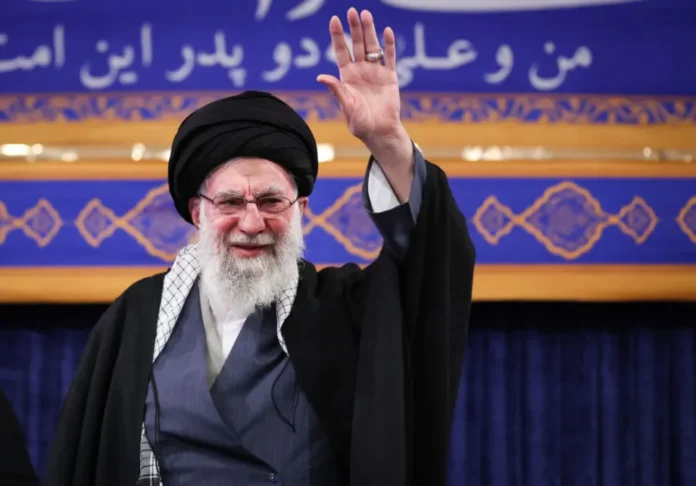
The geopolitical landscape of the Middle East shifted on its axis this morning following explosive allegations from Jerusalem. Prime Minister Benjamin Netanyahu, addressing a closed-door session of the Knesset’s Foreign Affairs and Defense Committee, reportedly claimed that Supreme Leader Ayatollah Ali Khamenei was a casualty of recent precision strikes.
While Tehran maintains a calculated silence, the ripples of this claim are tearing through global intelligence agencies. If true, the decapitation of the Islamic Republic’s leadership marks the most significant shift in regional power dynamics since the 1979 Revolution.
—
## The Fog of War and Tunnel Intelligence
The assassination claims center on a specific series of “bunker-buster” strikes targeting the Isfahan province and the high-security suburbs of North Tehran. Israeli intelligence suggests these strikes were not merely aimed at missile production facilities, but at a specific subterranean command-and-control node.
According to deep-cover sources within the Israeli Defense Forces (IDF), the operation relied on “human intelligence” placed deep within the Islamic Revolutionary Guard Corps (IRGC). This intelligence pointed to a relocation of Khamenei into a fortified bunker system following the escalation of regional hostilities.
> “We are not looking at a random strike. We are looking at a surgical removal of the ideological heart of the regime,” says a veteran regional intelligence analyst. “The silence from the official IRNA news agency is the loudest piece of evidence we have. Usually, a living Khamenei would have appeared on state television within hours to dispel such rumors.”
—
## The Secret Tunnels of Tehran
For decades, the Islamic Republic has invested billions into a “passive defense” infrastructure. This involves thousands of miles of tunnels carved into the Alborz Mountains and beneath the streets of Tehran. These tunnels serve as the nerve center for the regime’s leadership and its nuclear ambitions.
Netanyahu’s claims suggest that these tunnels, long thought impregnable, were breached using new-generation kinetic penetrators. Military analysts point to the use of GBU-57 Massive Ordnance Penetrators, weaponry that suggests a high level of logistical coordination between Washington and Tel Aviv.
**Key Data Points on the Strike:**
– **Primary Target:** The “Beit Rahbari” (House of Leadership) subterranean annex.
– **Weaponry Used:** Reportedly 2,000lb reinforced bunker-busters and cyber-disruption of air defense systems.
– **Confirmed Damage:** Satellite imagery shows significant ground collapse in areas previously identified as exit points for the regime’s elite transport fleet.
—
## Power Vacuum: The Succession Crisis
The death of Khamenei would trigger a constitutional and existential crisis within Iran. Under the Iranian constitution, the Assembly of Experts must convene immediately to elect a new Supreme Leader. However, the internal factionalism within the IRGC and the clerical establishment makes a smooth transition nearly impossible.
Potential successors are already under scrutiny:
– **Mojtaba Khamenei:** The Supreme Leader’s son, long groomed for power but viewed with suspicion by those who oppose hereditary rule in a supposedly revolutionary republic.
– **Alireza Arafi:** A high-ranking cleric with strong ties to the religious establishment in Qom, but lacking the military backing of the IRGC.
Historically, the Supreme Leader acts as the ultimate arbiter between the various branches of the Iranian state. Without his hand on the wheel, the IRGC—which controls the majority of Iran’s shadow economy and its proxy network—may move to seize absolute control, effectively turning the country into a military junta.
—
## Global Impact and Middle East Stabilization
The immediate threat is a “lashing out” effect. Intelligence reports indicate that Iranian proxies—Hezbollah in Lebanon and the Houthis in Yemen—have entered a state of maximum alert. If the head of the “Axis of Resistance” has been severed, these groups may act independently, leading to uncoordinated and unpredictable violence across the Levant.
> “A leaderless Iran is more dangerous in the short term than a stable one,” warns a former UN security consultant. “There is no one left to give the order for restraint. We are looking at a potential regional wildfire if the IRGC decides to burn it all down in their final act.”
In Washington, the White House has remained tight-lipped, neither confirming nor denying involvement in the specific strike that allegedly killed Khamenei. However, Pentagon sources indicate that U.S. assets in the Persian Gulf have been repositioned to protect shipping lanes and regional allies from retaliatory strikes.
—
## What Happens Next?
The world now waits for a “proof of life” video from Tehran. In the absence of one, the markets are already reacting. Oil prices have surged 7% in early trading, and several European embassies in the region have begun evacuations of non-essential personnel.
**The immediate indicators to watch:**
– **State Media:** Any announcement regarding “martyrdom” or national mourning.
– **The Assembly of Experts:** Whether an emergency session is officially convened in Qom.
– **Cyber Activity:** An expected surge in retaliatory cyberattacks against Israeli and Western infrastructure.
If Netanyahu’s claims are substantiated, the “Islamic Republic” as we know it has ended. The question that remains is whether what follows will be a democratic awakening for the Iranian people or a descent into a scorched-earth military dictatorship that takes the rest of the world with it.

