
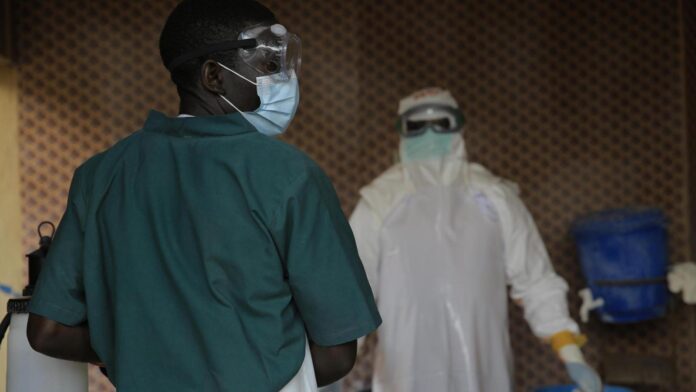
The Democratic Republic of Congo is facing its most severe Ebola outbreak on record, with more than 8,000 cases and nearly 4,000 deaths reported. While the number of new infections has begun to stabilise, health authorities say the outbreak remains uncontrolled, with conflict, weak healthcare infrastructure and growing public mistrust making containment increasingly difficult.
Highlights
- DR Congo has reported 8,067 Ebola cases and 3,901 deaths.
- The outbreak has a reported fatality rate of 48.4 per cent.
- Public mistrust is complicating efforts to contain the virus.
- The Bundibugyo strain has no approved vaccine or treatment.
- Conflict and weak health infrastructure continue to hamper the response.
Main Story
Ebola Crisis Reaches New Milestone
The Ebola outbreak in the Democratic Republic of Congo has crossed another grim milestone, with government figures showing 8,067 reported cases and 3,901 deaths.
The figures, released by the country’s public health institute on Monday, translate to a case fatality rate of 48.4 per cent.
Although infections are no longer rising as rapidly as they were earlier in the outbreak, Africa CDC says the situation is still not under control.
The outbreak was officially declared on May 15 and has since become the largest Ebola crisis recorded in the country.
Public Mistrust Becomes a Major Challenge
Beyond the medical response, health authorities are facing another difficult problem — a lack of trust among some communities.
Suspicion and anger over government health measures have made it harder for response teams to persuade residents to cooperate with prevention and treatment efforts.
The tension was highlighted by the death of Marie-Celestin Karondwa, an acting federal leader of the ruling UDPS party in Butembo.
According to authorities, Karondwa had appeared on a radio programme to discuss Ebola prevention measures before he was attacked by local residents on Sunday. He was reportedly beaten to death.
Butembo, in North Kivu, is among the areas heavily affected by the outbreak.
Conflict Makes Containment Harder
The outbreak is unfolding in parts of eastern DR Congo that have struggled with insecurity, poor infrastructure and difficult terrain.
Ongoing conflict around areas bordering South Sudan, Uganda and Rwanda has made it harder for medical teams to reach communities and respond rapidly to suspected cases.
Health authorities have also reported major shortages in some areas.
In Ituri province, officials have pointed to limited capacity at treatment centres, while Tshopo province has experienced a severe shortage of an experimental vaccine being considered for the Bundibugyo strain.
Rare Ebola Strain Adds to Pressure
The current outbreak is being driven by the Bundibugyo strain of Ebola, for which there is currently no approved vaccine or specific treatment.
Researchers are therefore testing potential vaccines and medicines in an effort to find effective tools against the virus.
The lack of established medical options has added another layer of difficulty as health workers try to reduce transmission and improve survival.
WHO Warns Crisis Is Far From Over
The World Health Organization has warned that the outbreak remains a serious threat and could eventually surpass the scale of the 2014–2016 Ebola crisis in West Africa.
That earlier outbreak, which mainly affected Guinea, Liberia and Sierra Leone, killed more than 11,000 people.
The US has also announced additional funding of about KSh34.63 billion to support the Ebola response, while efforts are underway to mobilise a wider international package worth approximately KSh259.4 billion.
The Challenge Ahead
For DR Congo, controlling the outbreak will require more than medical supplies and funding.
Health workers also need access to affected communities, functioning treatment facilities and cooperation from residents.
Restoring public confidence could prove just as important as developing vaccines and treatments, particularly in areas where conflict and years of weak public services have deepened distrust of authorities.
As the number of infections levels off, health officials face a critical task: turning that slowdown into sustained control before the virus gains ground again.
In an outbreak this deadly, winning public trust may be just as crucial as finding the next medical breakthrough.

