
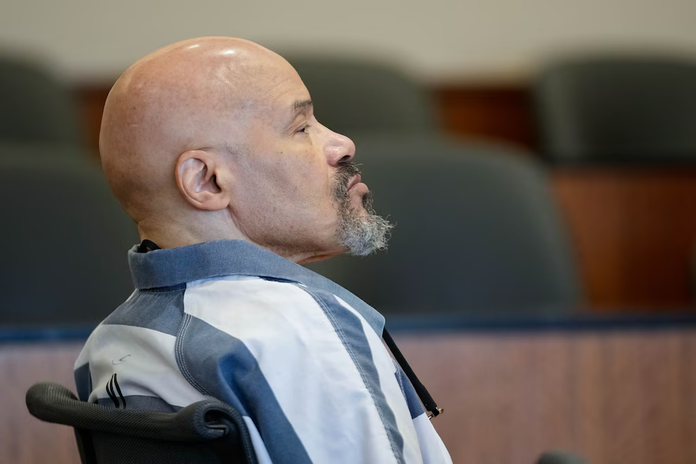
Douglas Stewart Carter, a 71-year-old American who spent 41 years behind bars, including decades on death row, has been released on bail after newly analysed DNA evidence failed to match him to key evidence from the 1985 murder that led to his conviction. A Utah judge granted his release as prosecutors reassess the case ahead of a planned retrial.
Highlights
- Carter spent 41 years in custody after being convicted of murder.
- New DNA testing excluded him from genetic material recovered at the crime scene.
- Utah’s Supreme Court previously ordered a new trial over investigative misconduct.
- Two prosecution witnesses later said police pressured and rewarded them to testify.
- Carter will remain under strict bail conditions while prosecutors reassess the case.
Main Story
From Death Row to Bail
Carter was convicted in 1985 over the killing of Eva Olesen in Provo, Utah.
Olesen was found dead at her home after being stabbed and shot. Carter, who was living in Utah with his mother at the time, was identified by investigators as a suspect in what police believed was a robbery-related killing.
He was eventually arrested in Nashville, Tennessee, after leaving Utah. During police questioning, Carter signed a confession, but he has consistently maintained that the statement was obtained through coercion.
Despite the absence of physical evidence directly connecting him to the crime scene, a jury convicted him and he was sentenced to death.
Witness Testimony Later Challenged
Two witnesses who testified that Carter had spoken about the killing later changed their accounts.
In 2011, the witnesses said they had been pressured by police to implicate Carter and alleged that they received money and other incentives. They also claimed they faced threats of deportation if they refused to cooperate.
The developments became part of a lengthy legal battle over the validity of Carter’s conviction.
The Utah Supreme Court subsequently ordered a new trial after findings of misconduct involving investigators and a prosecutor.
DNA Evidence Changes the Case
A fresh development came after investigators subjected previously collected crime-scene evidence to new DNA analysis.
The testing excluded Carter as a possible contributor to blood recovered from a doorknob and genetic material found on the handle of the knife believed to have been used in the killing.
The results prompted prosecutors to withdraw their earlier notice that they intended to seek the death penalty in Carter’s retrial. However, prosecutors have not declared him innocent and are continuing to review the remaining evidence.
Judge Grants Bail
On Monday, September 28, 2026, Fourth District Judge Derek Pullan ordered Carter’s release on bail despite objections from members of Olesen’s family.
Carter will wear a GPS monitoring device and is prohibited from contacting the victim’s family.
The judge noted that the new DNA findings weakened the case against Carter, while also finding that the evidence did not by itself resolve every question surrounding the killing.
Family Still Seeking Answers
Olesen’s family has expressed concerns about Carter’s release and maintains that the latest DNA results do not establish what happened on the night of the murder.
Theresa Olesen, the victim’s daughter-in-law, said the family had hoped for evidence that would definitively identify who was responsible.
The family has continued to seek answers about Olesen’s death while prosecutors review the case.
Defence Points to Other Suspects
Carter’s lawyers have argued that investigators failed to properly pursue other possible suspects.
They have pointed to claims that witnesses saw a white man leaving the crime scene and allegations that evidence potentially implicating Olesen’s husband, Orla Olesen, was not adequately pursued.
Orla Olesen died in 2009. Carter’s defence has argued that prosecutors had at one point been considering him as a possible suspect, although those allegations remain disputed.
Retrial Still Ahead
Carter is expected to face a new trial in 2027, although prosecutors are reassessing the case following the latest DNA findings.
His defence lawyer Neal Hamilton has called for the murder case to be dismissed, arguing that Carter’s decades behind bars followed investigative and prosecutorial misconduct.
After four decades behind bars, Carter’s release opens a new chapter in a case where the search for justice now includes answering a difficult question: who really killed Eva Olesen?
The piece distinguishes the new DNA findings from an exoneration, since prosecutors are still reviewing the evidence and Carter remains accused pending the retrial.

