
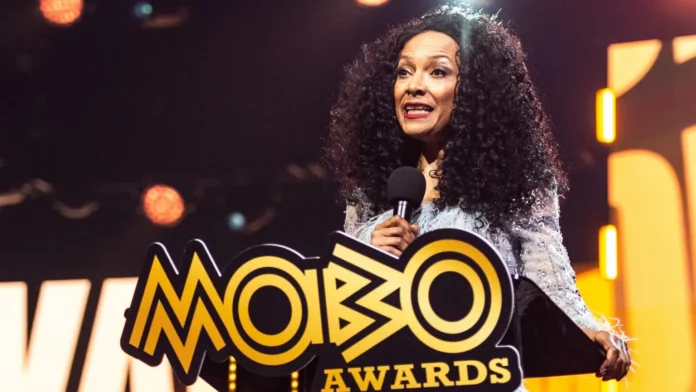
The music world is paying tribute to Kanya King, the groundbreaking entrepreneur who transformed the landscape of Black British music through the creation of the MOBO Awards. King, who died at the age of 57 following a battle with colon cancer, leaves behind a legacy of empowerment, representation, and opportunity that reshaped the UK’s entertainment industry for nearly three decades.
Highlights
- Kanya King has died at the age of 57 after battling colon cancer.
- She founded the MOBO Awards in 1996 to celebrate Black music and culture.
- King helped launch and elevate the careers of numerous British artists.
- She was awarded a CBE in 2018 for her contributions to music and diversity.
- Tributes have poured in from across the global music industry.
Main Story
The Woman Behind a Cultural Movement
Kanya King, the founder of the renowned MOBO Awards, has passed away at the age of 57, marking the end of a remarkable chapter in British music history.
For decades, King stood at the forefront of efforts to ensure Black artists received the recognition they deserved. Her vision gave rise to one of the UK’s most influential music platforms, helping to spotlight talent that was often overlooked by mainstream award ceremonies.
Turning an Idea Into a Legacy
In 1996, King launched the MOBO Awards after recognizing a major gap in the music industry. Determined to create a platform that celebrated Black music and culture, she took a significant personal risk by remortgaging her home to fund the first ceremony.
What started as an ambitious idea soon grew into a respected institution that celebrated genres including hip-hop, R&B, grime, reggae, UK garage, drill, soul, and African music.
Over the years, the awards became a launchpad for many artists who would go on to become household names.
Championing New Generations of Talent
King’s influence extended far beyond hosting an annual awards ceremony. Through the MOBO platform, she helped create opportunities for emerging musicians and opened doors for artists who would later dominate charts and stages around the world.
Her work contributed significantly to the rise and recognition of Black British music, helping shape the cultural identity of an entire generation.
Artists, executives, and industry leaders frequently credited her determination and leadership for creating space where talent could thrive regardless of background.
A Voice for Representation and Change
Born in North London to a Ghanaian father and an Irish mother, King became one of the UK’s most respected advocates for diversity within the creative sector.
Her contributions were formally recognized in 2018 when she was appointed a Commander of the Order of the British Empire (CBE), honoring her impact on music, culture, and inclusion.
Even after revealing that she had been diagnosed with stage four bowel cancer in 2024, King continued to use her platform to raise awareness about early screening and the importance of timely diagnosis.
Tributes Pour In
Following news of her death, messages of condolence and appreciation have flooded social media and the wider music industry.
Many have described King as a visionary who not only transformed the music business but also empowered countless artists to believe in their potential.
As the MOBO Awards approaches its 30th anniversary in 2026, many expect the celebration to serve as a powerful tribute to the woman whose determination helped redefine British music culture.
Read Also
- Everest Guide Defies the Odds, Survives Alone in Death Zone for Six Days
- US Actor James Handy Stabbed to Death, With Girlfriend’s Son Arrested
- Matatu Driver and Conductor Sentenced to 10 Years Over Student’s Death on Thika Road

