
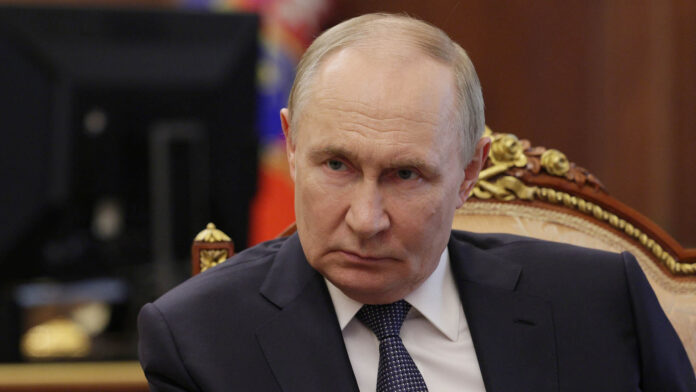
Russia has carried out another test launch of its nuclear-capable Sarmat intercontinental ballistic missile, with President Vladimir Putin declaring it the “most powerful missile in the world.” The latest move is expected to heighten international security concerns as global powers continue investing heavily in advanced military technology.
Highlights
- Russia successfully tested its Sarmat intercontinental ballistic missile
- Vladimir Putin described the weapon as the world’s most powerful missile
- Missile reportedly has a range exceeding 35,000 kilometres
- Moscow claims the weapon can bypass modern defence systems
- Development of the Sarmat programme has faced years of delays and setbacks
Main Story
Russia Conducts Major Missile Test
Russian state media aired footage showing the country’s strategic missile commander, Sergei Karakayev, briefing President Vladimir Putin after what officials described as a successful missile launch.
The missile tested was the Sarmat, a nuclear-capable intercontinental ballistic missile designed to replace Russia’s ageing Soviet-era systems. According to the Kremlin, the weapon is expected to officially enter military service before the end of the year.
Putin used the moment to praise the missile’s capabilities, describing it as unmatched by any Western weapon currently in operation.
Putin Claims Missile Is “Unstoppable”
Speaking during televised remarks, the Russian leader claimed the Sarmat missile carries an extremely powerful warhead capable of causing destruction far beyond existing Western missile systems.
He also said the missile can travel using suborbital flight paths, allowing it to cover distances exceeding 35,000 kilometres. According to Putin, the weapon is designed to evade both current and future missile defence shields.
Military analysts have long viewed the Sarmat project as one of Russia’s most ambitious strategic weapons programmes.
Years of Delays and Failed Tests
Despite the strong claims from Moscow, the Sarmat programme has faced multiple technical challenges over the years.
Development first began in 2011, but progress has reportedly been slower than expected. Before the latest launch, the missile had only one publicly known successful test.
Reports also indicated that a previous test attempt in 2024 ended in a major explosion, raising questions about the project’s reliability and readiness.
Growing Global Military Competition
The missile test arrives at a time when tensions between major world powers remain high, with countries increasingly investing in nuclear deterrence and long-range weapons technology.
Russia has repeatedly promoted the Sarmat missile as a symbol of its military strength and strategic influence on the global stage.
The latest test is likely to draw close attention from NATO allies and defence experts worldwide, especially as discussions around global security continue to intensify.
As nations continue showcasing military power through advanced weapons systems, the bigger question remains whether diplomacy can keep pace with rapidly evolving global tensions.
Read Also
- UK Deploys Fighter Jets and Warship as Hormuz Tensions Escalate
- Hantavirus Cases Rise to 11 with 3 Deaths in Cruise Ship Outbreak, WHO Confirms
- US Inflation Hits 3.8% as Iran War Drives Fuel Prices Higher

