
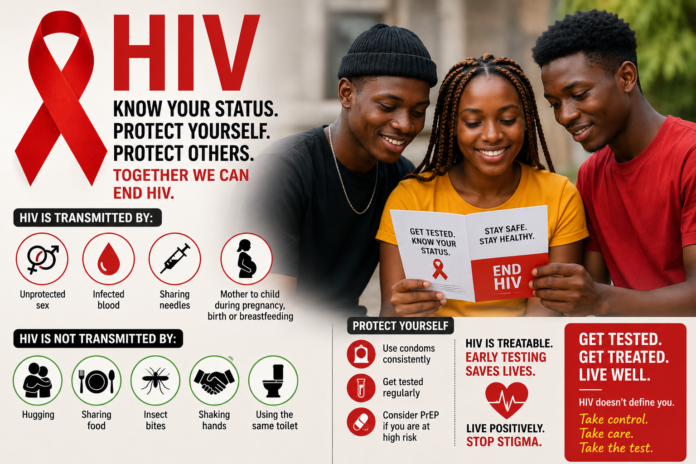
Despite decades of awareness campaigns and advances in HIV prevention and treatment, young people remain one of the groups most affected by new HIV infections. Health experts say a combination of risky sexual behaviour, misinformation, social pressures, and unequal access to healthcare continues to fuel HIV transmission among adolescents and young adults.
Highlights
- Young people account for a significant share of new HIV infections in many countries.
- Unprotected sex remains the leading route of transmission.
- Low HIV testing rates mean some people unknowingly spread the virus.
- Stigma and misinformation continue to discourage prevention and treatment.
- Early testing, condom use, and preventive medicines can significantly reduce the risk of HIV.
Main Story
Adolescence and young adulthood are periods when many people begin exploring relationships and sexuality. Without accurate information, access to healthcare, and the confidence to make informed decisions, young people may be more vulnerable to HIV infection.
1. Unprotected Sex
Having sex without a condom is one of the main ways HIV is transmitted. Inconsistent condom use increases the risk, particularly when partners do not know each other’s HIV status.
2. Multiple Sexual Partners
Having multiple sexual partners raises the likelihood of coming into contact with someone living with HIV, especially if protective measures are not used consistently.
3. Low HIV Testing
Many young people do not test regularly for HIV. Someone living with HIV may not have symptoms for years, meaning they can unknowingly transmit the virus if they are not diagnosed and treated.
4. Stigma and Fear
Fear of discrimination or judgment prevents some young people from seeking HIV testing, treatment, or accurate sexual health information. Reducing stigma is essential to improving access to care.
5. Alcohol and Drug Use
Alcohol and drug use can impair judgment, making it more likely that someone will engage in risky sexual behaviour, such as having unprotected sex.
6. Limited Access to Sexual Health Services
In some communities, young people face barriers to accessing condoms, HIV testing, counselling, or preventive medication due to cost, distance, or concerns about confidentiality.
How HIV Can Be Prevented
Health experts recommend several effective ways to reduce the risk of HIV infection:
- Use condoms correctly and consistently during sex.
- Get tested for HIV regularly, especially if you are sexually active.
- Consider pre-exposure prophylaxis (PrEP) if you are at higher risk of HIV. PrEP is a medication that can greatly reduce the risk of acquiring HIV when taken as prescribed.
- Ensure that anyone living with HIV starts and continues treatment. Effective treatment can suppress the virus to undetectable levels, preventing sexual transmission a concept known as Undetectable = Untransmittable (U=U).
- Avoid sharing needles or other injecting equipment.
- Seek accurate sexual health information from healthcare providers or trusted public health sources.
The Importance of Education
Comprehensive sexual health education, open conversations between parents and children, youth-friendly healthcare services, and community support all play a critical role in reducing new HIV infections among young people.
HIV is preventable, and early diagnosis saves lives. By combining education, regular testing, safer sexual practices, and access to prevention and treatment services, young people can better protect themselves and help reduce the spread of HIV.

