
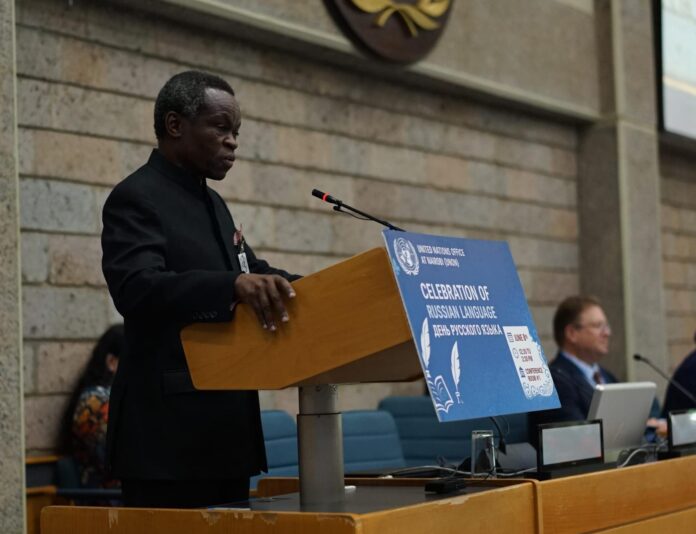
Patrick Loch Otieno Lumumba has once again championed the global recognition of Kiswahili, urging the United Nations to adopt it as one of its official languages. The renowned Pan-African scholar argues that the language has grown beyond regional borders and now represents Africa’s cultural identity on the international stage.
Highlights
- PLO Lumumba has renewed calls for Kiswahili to become an official UN language.
- He says the move would strengthen Africa’s voice in global diplomacy.
- Kiswahili is spoken by more than 200 million people across Africa.
- The language is already official within the AU, EAC and SADC.
- The UN currently operates with six official languages only.
Main Story
Lumumba Pushes for Greater Recognition
Patrick Loch Otieno Lumumba has revived his long-standing campaign for Kiswahili to receive official language status at the United Nations, saying the move would acknowledge Africa’s linguistic and cultural contribution to the world.
According to Lumumba, elevating Kiswahili would go beyond language policy. He believes it would symbolize respect for African heritage while giving the continent stronger representation in global conversations and decision-making forums.
More Than a Regional Language
Over the years, Kiswahili has expanded far beyond East Africa, becoming one of the continent’s most widely spoken languages with more than 200 million speakers across Eastern, Central and parts of Southern Africa.
Its influence has also grown institutionally, serving as an official language of the African Union, the East African Community and the Southern African Development Community. The language also made history as the first African language to receive its own United Nations-recognized international celebration through World Kiswahili Language Day observed every July 7.
The Challenge at the United Nations
Despite its growing prominence, the United Nations currently recognizes only six official languages: Arabic, Chinese, English, French, Russian and Spanish.
Introducing another official language would require approval from member states and substantial financial investment to support interpretation, translation and multilingual documentation across the UN system.
A Broader African Agenda
Lumumba’s latest appeal aligns with wider efforts by African scholars and leaders advocating for indigenous languages to play a greater role in education, governance and international affairs.
Supporters argue that promoting African languages internationally strengthens cultural identity while reducing reliance on colonial languages that have historically dominated diplomacy and administration.
Read Also
- FIFA World Cup Dream Ends for Somali Referee Omar Artan After US Entry Denial
- Demonstrations Rock Nanyuki as Residents Reject Planned US-Linked Quarantine Centre
- Why Bare Nails Are Becoming Beauty’s Biggest Statement in 2026

