
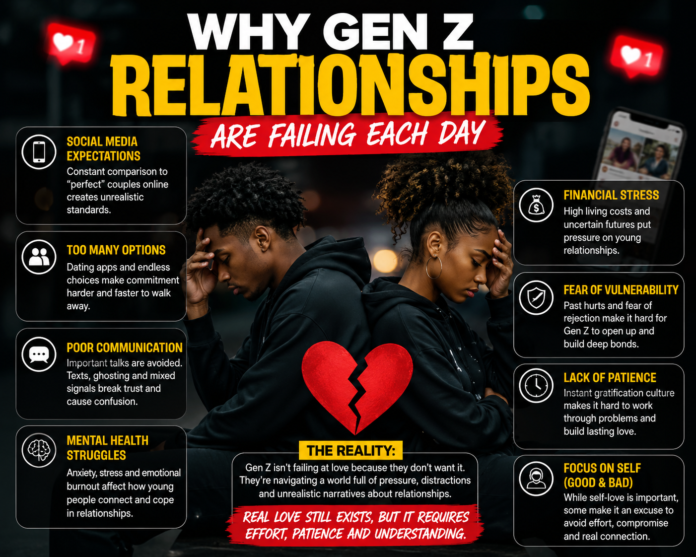
Love has never been more accessible. With dating apps, social media, and instant communication, Gen Z has more ways to connect than any generation before them. Yet despite being constantly connected, many young people say finding and maintaining a healthy relationship feels harder than ever. From unrealistic expectations to digital distractions, experts believe several modern challenges are putting pressure on Gen Z relationships.
Highlights
- Social media is shaping unrealistic expectations about love.
- Many young people struggle with communication and conflict resolution.
- Dating apps have created an endless cycle of options and comparisons.
- Financial stress is affecting relationship stability.
- Emotional burnout and mental health challenges are influencing modern dating.
Main Story
The Social Media Effect
For many Gen Z couples, social media has become an uninvited third party in relationships.
Platforms like Instagram, TikTok, and Snapchat constantly expose users to carefully curated images of “perfect” couples, luxury lifestyles, and fairytale romances. While these posts often represent only highlights, they can create unrealistic expectations about what healthy relationships should look like.
As a result, some young people find themselves comparing their real-life relationships to online fantasies, leading to dissatisfaction and unnecessary pressure.
Too Many Options, Too Little Commitment
Dating apps have transformed how people meet, but they have also changed how people view relationships.
With a seemingly endless supply of potential partners available at the swipe of a screen, many users develop what psychologists call a “grass is greener” mindset. Instead of working through challenges, some individuals move on quickly in search of someone better.
This culture of endless options can make commitment feel less attractive and more difficult to sustain.
Communication Is Becoming Harder
Ironically, the generation that communicates the most digitally is often struggling with face-to-face conversations.
Many relationship conflicts today play out through text messages, voice notes, or social media posts. Important discussions about emotions, boundaries, and expectations are sometimes avoided altogether.
This has contributed to the rise of behaviors such as ghosting, breadcrumbing, and soft-launch breakups, where relationships end without meaningful closure.

Financial Pressure Is Taking a Toll
Love does not exist in isolation from economic realities.
High unemployment rates, rising living costs, expensive housing, and uncertain career paths are creating stress for many young adults. Financial insecurity can delay major milestones such as moving in together, getting married, or starting a family.
For some couples, money-related stress becomes a major source of conflict.
Mental Health Challenges
Gen Z is more open about mental health than previous generations, but they are also navigating unprecedented levels of anxiety, loneliness, and emotional exhaustion.
When individuals are struggling personally, maintaining a healthy relationship can become more difficult. Emotional burnout may lead to withdrawal, misunderstandings, or reduced capacity to invest in a partner.
Healthy relationships require emotional availability, something many young people are still learning to balance alongside personal growth.
The Fear of Vulnerability
Many Gen Z daters desire deep connections but are simultaneously afraid of getting hurt.
Past heartbreaks, online exposure, trust issues, and fear of rejection have made some young people cautious about fully opening up. As a result, relationships sometimes remain superficial, making it harder for genuine intimacy to develop.
Experts argue that vulnerability remains one of the most important foundations of lasting relationships.
Are Relationships Really Failing?
While headlines often focus on breakups and dating struggles, the reality may be more nuanced.
Gen Z is redefining relationships on its own terms. Many young people are prioritizing emotional compatibility, mental well-being, personal growth, and healthy boundaries over staying in relationships that no longer serve them.
This may mean more breakups, but it could also mean fewer unhappy relationships in the long run.
Perhaps the challenge facing Gen Z isn’t that they don’t believe in love it’s that they’re trying to find genuine connection in a world filled with distractions, pressure, and endless choices.

