
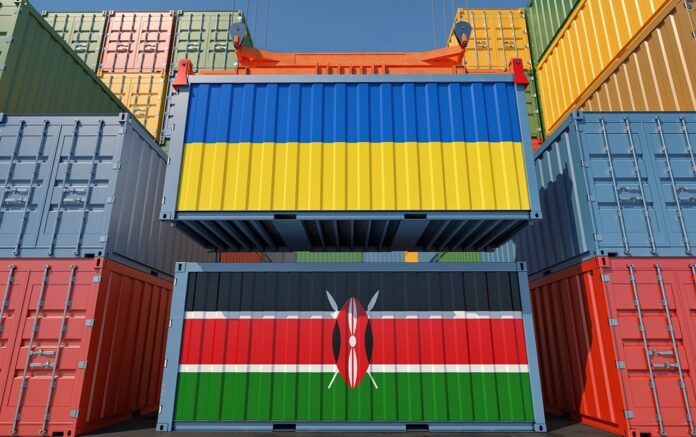
The Ministry of Foreign Affairs has finally shattered months of strategic silence, confirming that **Kenyan nationals** are actively engaged in **combat operations** on the frontlines of the **Russia-Ukraine conflict**. The admission, delivered by the Principal Secretary for Foreign Affairs, exposes a high-stakes pipeline of **private military recruitment** that has been quietly draining Kenya’s elite security reserves.
For months, rumors of “**Kenyan legionnaires**” circulated on **encrypted messaging apps** and **private security forums**. This week, those rumors solidified into a grim reality as the State acknowledged the presence of Kenyan citizens in the conflict zone, while simultaneously distancing itself from their **legal protection** or eventual repatriation.
## The Shadow Pipeline: From KDF to the Donbas
Investigation into the recruitment networks reveals a sophisticated operation targeting **former Kenya Defence Forces (KDF) personnel** and **retired specialized police units**. These operatives, often bored by civilian life or squeezed by Kenya’s soaring cost of living, are being lured by **shadowy private military companies (PMCs)** with the promise of “**consultancy**” roles that rapidly devolve into **trench warfare**.
Recruitment usually begins in Nairobi’s high-end suburbs or through private networks in military towns like **Lanet** and **Gilgil**. Sources indicate that recruiters offer contracts ranging from **$2,000 to $5,000 per month**—a fortune compared to the average pension of a retired NCO. However, those figures rarely account for the “**death clauses**” embedded in the fine print.
> “They aren’t being recruited as soldiers of the state; they are being hired as **disposable assets**,” says Dr. Aris Kemei, a regional security analyst. “Once they sign those private contracts, they effectively become **’stateless’ combatants**. They lose the protection of the **Geneva Convention** as legitimate prisoners of war if captured by Russian forces.”
## The “Ghost” Casualty List
The true cost of this **mercenary trade** is measured in bodies that may never return home. While the Kenyan government remains tight-lipped on specific casualty figures, intelligence leaks suggest that at least **fifteen Kenyans** have been killed or remain missing in action since the start of the **2024 offensive**.
– The Disappeared: **Families in Nakuru and Kakamega** have reported losing contact with relatives who claimed to be working “**security jobs**” in Poland or Germany.
– The Captured: Recent footage circulated by Russian state media purportedly shows at least one East African man in the custody of the **Wagner Group** or its successors, though his identity remains unverified by the Ministry.
– The Deserted: Reports suggest several Kenyans have attempted to flee their units in the **Kharkiv region**, citing “**suicidal**” missions and a lack of promised equipment.
The Foreign Affairs PS was blunt in his assessment: Kenyans who choose to join foreign wars do so **at their own peril**. The State’s position is that these individuals are **private citizens** acting outside the mandate of the Kenyan government, effectively absolving Nairobi of any **diplomatic obligation** to intervene when things go wrong.
## A Regulatory Vacuum
The surge in mercenary recruitment highlights a **dangerous legislative loophole** in Kenya’s security laws. While the Constitution prohibits citizens from joining foreign militaries without **state Approval**, the definition of “**private security contracting**” remains dangerously fluid. Recruiters exploit this ambiguity, framing combat roles as “**risk management**” or “**logistics support**.”
“We are seeing a **total failure of oversight**. These men are walking out of our elite units and into the **meat grinder** of Eastern Europe, and the state is watching it happen because they don’t want to jeopardize diplomatic ties with either side,” says a retired Colonel who requested anonymity.
Data from **regional migration monitors** suggests that the recruitment is not limited to Ukraine. The same networks are reportedly eyeing conflicts in the **Sahel** and the **Middle East**, viewing Kenya’s disciplined and English-speaking veteran population as a **prime resource** for global conflict marketplaces.
## The Diplomatic Tightrope
Nairobi’s admission comes at a **sensitive time**. Kenya has maintained a policy of “**non-alignment**” regarding the Russia-Ukraine war, balancing its historical ties to the West with its growing trade interests with Moscow. The presence of Kenyan boots on the ground—even if they are private mercenaries—threatens to tilt this **delicate balance**.
If Kenyan Nationals are confirmed to be fighting for the **International Legion of Ukraine**, Moscow could interpret this as **tacit state support** for Kyiv. Conversely, the lack of Russian transparency regarding the treatment of **captured foreign fighters** leaves Nairobi with little leverage to protect its citizens.
## Impact: What Happens Next?
The **immediate impact** is a chilling realization for the families of those abroad. Without state backing, there is **no mechanism** for the recovery of remains or the processing of insurance claims. Private contractors rarely provide the “**hero’s burial**” afforded to those who fall under the Kenyan flag.
Moving forward, the Kenyan government faces **mounting pressure** to crack down on the domestic recruitment agencies facilitating these departures. However, as long as the **economic disparity** between a KDF pension and a mercenary paycheck remains vast, the pipeline to the Donbas is unlikely to dry up.
The bottom line: Kenya’s “**silent**” soldiers are finding out that in the world of **high-stakes mercenary warfare**, the pay is high, the life is short, and the state—your state—will **not be coming to save you**.

