
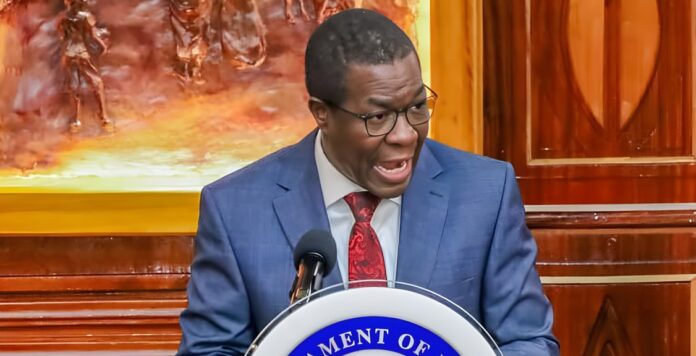
Energy Cabinet Secretary Opiyo Wandayi has launched a sharp attack on former Deputy President Rigathi Gachagua following allegations that President William Ruto is planning fuel price increases to finance political activities ahead of the 2027 General Election. Wandayi defended Kenya’s fuel pricing framework, insisted that the Energy and Petroleum Regulatory Authority (EPRA) determines pump prices under the law, and accused Gachagua of previously extorting oil marketing companies, a claim he did not substantiate in his remarks.
Highlights
- Wandayi has dismissed Gachagua’s allegations over proposed fuel price increases.
- The Energy CS says EPRA is legally responsible for setting pump prices.
- Gachagua had alleged that petrol could rise by KSh12 per litre and diesel by KSh9.
- Wandayi accused the former Deputy President of extorting oil companies but provided no evidence in his remarks.
- The government has cited international petroleum costs and a proposed VAT extension in discussions about fuel prices.
Main Story
Wandayi Responds to Gachagua’s Fuel Price Allegations
Energy Cabinet Secretary Opiyo Wandayi has responded forcefully to former Deputy President Rigathi Gachagua amid a growing dispute over the cost of petroleum products in Kenya.
Speaking during President William Ruto’s tour of West Pokot on Wednesday, October 14, 2026, Wandayi rejected Gachagua’s allegations that the President had ordered increases of KSh12 per litre for petrol and KSh9 for diesel to raise money for political inducements ahead of the 2027 elections.
The Energy CS questioned Gachagua’s understanding of the petroleum industry and argued that fuel pricing follows an established legal framework rather than being determined by an individual political leader.
Wandayi also maintained that Kenya had continued receiving petroleum supplies despite international disruptions linked to tensions in the Middle East.
His remarks come amid heightened public attention to fuel prices, which have a direct impact on transport costs, household spending and the prices of goods across the country.
Wandayi Says EPRA Determines Pump Prices
A central part of Wandayi’s response focused on the role of the Energy and Petroleum Regulatory Authority.
The Cabinet Secretary maintained that EPRA is responsible for determining retail fuel prices in accordance with the law, challenging the suggestion that the President could simply direct a specific increase at will.
Gachagua, however, has insisted that the anticipated adjustments are politically motivated and has questioned the government’s explanations for possible price changes.
The competing claims place renewed attention on how Kenya’s petroleum pricing framework operates, including the influence of international oil prices, shipping expenses, taxes and other costs involved in bringing fuel into the country.
Wandayi attributed the pressure on petroleum prices to rising international costs associated with disruptions in the Middle East. He also cited an increase in the landed cost of petrol and diesel in September compared with August.
The claims about politically motivated price increases remain unverified, and establishing the reasons for any adjustment would require examining the relevant EPRA pricing calculations and official announcements.
Government Considers Extending Reduced Fuel VAT
Wandayi’s remarks followed an announcement that the National Assembly was considering a proposal to extend the reduced eight per cent Value Added Tax (VAT) on petroleum products for a further 90 days from October 15, 2026.
The reduction lowered VAT from the standard 16 per cent rate to eight per cent as part of efforts to cushion consumers against rising fuel costs.
An extension would maintain the reduced tax rate for the proposed period, subject to the applicable legislative and approval processes.
Fuel taxation is an important component of retail pump prices, meaning changes to the applicable rates can affect what motorists and other consumers pay.
The proposed extension comes as policymakers weigh the impact of international petroleum market conditions on the domestic economy.
Wandayi Accuses Gachagua of Extortion
Beyond the fuel pricing dispute, Wandayi turned his attention to Gachagua’s political record, questioning his contribution during his time in Parliament.
The Energy CS argued that the former Deputy President lacked the expertise to make authoritative pronouncements about the petroleum sector.
He then accused Gachagua of having extorted oil marketing companies before his removal from office as Deputy President.
Wandayi did not provide supporting evidence for the accusation in his public remarks. The allegation should therefore be treated as a claim made by the Cabinet Secretary, rather than an established fact.
The personal nature of the exchange reflects the continuing political confrontation between the government and Gachagua, who has repeatedly criticised the administration over the cost of living, public spending and economic management.
Wandayi ended his response by challenging Gachagua to raise any concerns about energy policy directly with him.
Fuel Prices Become a Political Flashpoint Ahead of 2027
The exchange comes as political leaders increasingly focus on economic issues ahead of the August 2027 General Election.
For many Kenyans, fuel prices remain a major concern because changes at the pump can affect public transport fares, agricultural production, distribution expenses and the cost of essential goods.
Gachagua has argued that the proposed increases are connected to political financing, while Wandayi maintains that petroleum prices are determined through the statutory regulatory framework and are affected by international market conditions.
Neither the allegation of planned political bribery nor Wandayi’s separate accusation of extortion was substantiated by evidence in the statements described.
As the dispute continues, official pricing announcements, published cost calculations and independently verifiable evidence will be important in separating political accusations from the economic factors influencing fuel prices.
With fuel prices affecting millions of households, the debate goes beyond political exchanges: Kenyans need transparent pricing decisions, clear explanations of rising costs and evidence-based answers from the leaders responsible for economic policy.

