
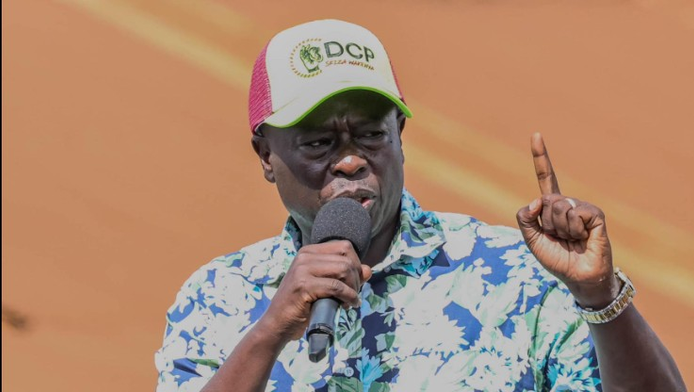
Former Deputy President Rigathi Gachagua has accused President William Ruto of allegedly using proposed fuel price increases to finance voter inducements ahead of the August 2027 General Election. Gachagua claims the additional revenue could be channelled through Gulf Energy, but his allegations remain unverified as Kenyans await the latest fuel price review.
Highlights
- Gachagua alleges petrol could increase by KSh12 per litre and diesel by KSh9.
- He claims the additional revenue could be used to influence voters ahead of the 2027 elections.
- Gulf Energy and Energy Cabinet Secretary Opiyo Wandayi feature in his accusations.
- The former Deputy President links his claims to public dissatisfaction over economic and governance issues.
- The allegations have not been independently substantiated.
Main Story
Gachagua Raises Questions Over Proposed Fuel Price Changes
Former Deputy President Rigathi Gachagua has reignited his political dispute with President William Ruto, alleging that proposed increases in fuel prices could be connected to preparations for the 2027 General Election.
In a statement criticising the administration, Gachagua claimed that petrol prices could rise by KSh12 per litre, while diesel could increase by KSh9 per litre. He alleged that the additional money would be used to influence voters as political competition intensifies ahead of the next polls.
Gachagua further claimed that Gulf Energy would be involved in handling the funds. However, he did not provide evidence to support the accusation, and the alleged link between fuel pricing and political financing has not been independently verified.
Economy and Governance at the Centre of His Criticism
The former Deputy President also questioned the government’s standing among Kenyans, arguing that dissatisfaction with the cost of living, governance and security could create challenges for the President as the election approaches.
He cited concerns surrounding alleged abductions, extrajudicial killings and corruption, alongside what he considers shortcomings in government policy.
Gachagua also claimed that public reactions during the President’s engagements increasingly reflected demands for financial assistance. He suggested that this trend extended to the Rift Valley, a region widely associated with Ruto’s political support.
These remarks represent Gachagua’s assessment of the political climate rather than independently established evidence of declining support for the President.
Wandayi Drawn Into the Fuel Price Dispute
Gachagua also brought Energy and Petroleum Cabinet Secretary Opiyo Wandayi into the controversy, alleging that he had been directed to explain the anticipated price adjustments by pointing to movements in international oil prices.
The former Deputy President rejected that explanation in advance, maintaining that the proposed changes were driven by domestic political considerations.
His claims come amid continuing debate over Kenya’s petroleum importation arrangements, including the government-to-government fuel supply framework and Gulf Energy’s involvement in the sector.
Nevertheless, establishing whether any proposed price adjustment is justified requires examining the official pricing calculations, applicable taxes and levies, international petroleum costs, and other components used by regulators.
Fuel Prices and the 2027 Election Question
Gachagua’s accusations come as the country approaches another monthly fuel pricing announcement by the Energy and Petroleum Regulatory Authority (EPRA).
Under the pricing period running from September 15 to October 14, the stated retail prices in Nairobi were KSh214.03 per litre for super petrol, KSh217.86 for diesel and KSh191.38 for kerosene.
Fuel costs remain an important economic concern because they influence transport expenses, distribution costs and the prices consumers pay for goods and services.
The proposed increases cited by Gachagua, however, should not be treated as confirmed pump-price changes without an official announcement from EPRA.
His allegations also add another dimension to the political debate ahead of the August 10, 2027 General Election. He suggested that the approaching contest was becoming an increasingly important consideration for the President.
For now, the claims connecting fuel prices to alleged voter bribery remain unproven. Official pricing information and independently verified evidence would be needed to establish whether the accusations have any factual basis.
As Kenya heads towards the 2027 elections, the key question is whether fuel pricing decisions will be explained through transparent economic data and whether political allegations will be backed by verifiable evidence.

