
US President Donald Trump has signed an executive order declaring the White House Oval Office a national monument, in a move aimed at protecting the historic room from major structural changes by future presidents. The decision comes after Trump introduced several renovations to the iconic space and follows controversy surrounding his wider White House redevelopment projects.
Highlights
- Trump has signed an executive order designating the Oval Office a national monument.
- The move seeks to protect the room’s historic structure and architectural character.
- Future presidents will still be allowed to change furniture and decorations.
- The order comes amid legal challenges surrounding Trump’s White House East Wing demolition project.
- Questions remain over whether a future president or court could reverse the designation.
Main Story
Trump Moves to Protect Oval Office Through Executive Order
US President Donald Trump has taken a new step to preserve the White House Oval Office by signing an executive order declaring the presidential workspace a national monument.
Trump announced the decision on Thursday, arguing that the famous room represents an important part of America’s national identity and should not be subjected to major structural alterations by future administrations.
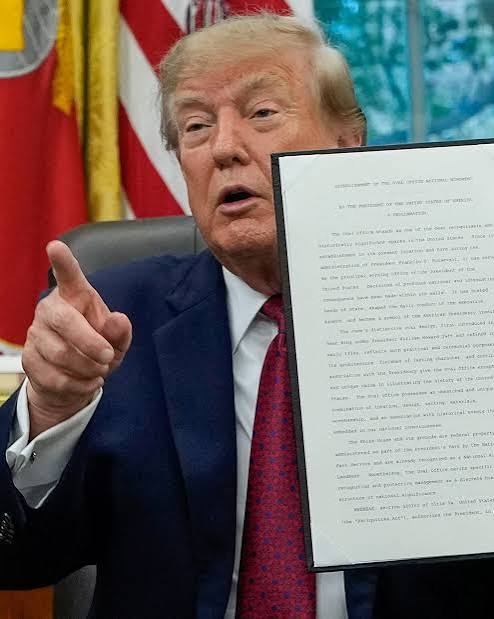
The president said the designation would prevent future leaders from demolishing or substantially changing the room’s architectural design.
He also expressed confidence that the move would protect the space from major redevelopment projects that could alter its historic appearance.
Future Presidents Can Still Change the Decor
Despite the new designation, the executive order does not completely prevent future presidents from making changes to the Oval Office.
The document allows sitting presidents to select furniture, change decorations and carry out routine operational or security improvements.
However, such changes must not significantly damage the room’s historic structure or architectural character.
This means future administrations could still personalise the office, although substantial structural modifications would face additional preservation considerations.
The order also directs the National Park Service to maintain the Oval Office in a way that safeguards its historical and architectural significance.
What Happens if a Future President Reverses the Order?
Despite Trump’s announcement, questions remain over how permanent the new designation will be.
Executive orders can generally be reversed by subsequent presidents. However, the legal position surrounding the removal of a national monument designation has not been fully tested in court.
Trump himself previously reduced the size of several national monuments in Utah in 2017, raising further questions about the durability of such protections.
The White House grounds already hold National Historic Landmark status, which provides a framework for preserving the property’s historical significance.
The new order argues that the Oval Office deserves separate recognition because of its unique connection to the American presidency.
Oval Office Has a Long Presidential History
The current Oval Office design dates back to the early 1930s, when it was established under President Franklin D. Roosevelt.
Although presidents have traditionally been allowed to personalise the room, significant construction projects involving the White House can require congressional approval.
Legal expert Greg Werkheiser, from Cultural Heritage Partners, noted that temporary changes involving furniture and decorations generally remain within a president’s discretion.
The distinction between cosmetic improvements and substantial structural alterations is therefore central to understanding Trump’s latest executive order.
For now, the designation adds another layer to the ongoing debate about presidential authority, historical preservation and how much freedom future occupants of the White House should have to reshape America’s most recognisable political residence.
Trump’s decision raises an important question about presidential power: can one administration truly protect a historic national symbol from the decisions of those who will occupy the Oval Office after it?

