
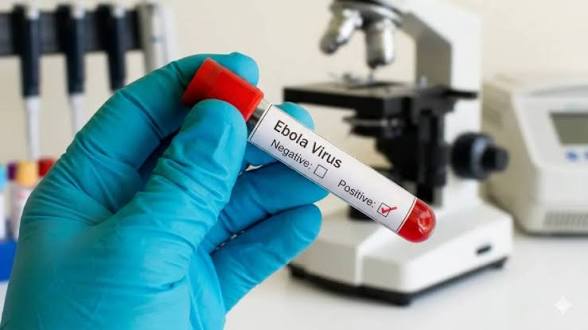
Kenya has confirmed a second case of Ebola, with health authorities stepping up surveillance and contact tracing as 108 people linked to the first patient remain in quarantine. The Ministry of Health says the newly confirmed patient is a 39-year-old close family member of the initial case, bringing the country’s total to two confirmed infections and one reported death. Authorities say there was no evidence of wider community transmission at the time of the announcement.
Highlights
- Kenya has confirmed two Ebola cases and reported one death.
- The second patient is a 39-year-old man related to the first patient.
- A total of 108 contacts are in quarantine and undergoing daily monitoring.
- Health teams are tracing additional contacts and strengthening infection-control measures.
- Kenya remains open, with no restrictions on travel, trade or public gatherings announced in the statement.
Main Story
Second Ebola Case Confirmed in Kenya
The Ministry of Health has confirmed another case of Ebola in Kenya, prompting intensified efforts to identify potential infections and prevent further transmission.
In a statement issued on Wednesday, October 14, 2026, the Ministry said the second patient was a 39-year-old man and a close family member of the first confirmed case.
The man had already been placed under quarantine and was receiving daily health assessments when he developed symptoms on October 13.
Health officials reported that he experienced fever, fatigue and joint pain. Medical teams isolated him and collected samples for laboratory testing.
The samples subsequently tested positive at both the National Virology Reference Laboratory and the Kenya Medical Research Institute-Centers for Disease Control and Prevention (KEMRI-CDC) laboratory.
The patient was then transferred to a designated treatment facility, where he is receiving supportive medical care.
The Ministry said the early identification of the infection demonstrates the importance of quarantine and regular monitoring in detecting cases before further transmission occurs.
108 Contacts Remain in Quarantine
Authorities are continuing to monitor people who may have been exposed to the virus through contact with the first patient.
According to the Ministry, 128 contacts had been identified, with 113 traced by October 13.
Of those located, 108 are in quarantine in Kenya and undergoing daily clinical assessments, including temperature checks. Their monitoring period is 21 days from their last possible exposure.
The remaining five contacts are outside Kenya, and the relevant health authorities have been notified in line with international public health requirements.
Efforts to locate the other 15 contacts are ongoing.
Health teams are also assessing people who may have interacted with the second patient after he developed symptoms, including healthcare workers and staff responsible for supervising individuals in quarantine.
The Ministry said anyone under observation who develops symptoms will be isolated and tested promptly.
Health Authorities Strengthen Infection Control
The government says additional measures have been introduced at quarantine and treatment facilities to reduce the risk of infections spreading.
Healthcare workers have been provided with protective equipment, while infection prevention and control procedures have been strengthened.
The national response is being coordinated through a central command structure under the Public Health (Declaration of Formidable Epidemic Disease) Order, 2026, and the Public Health (Ebola Disease) Rules, 2026.
The World Health Organization has also been notified in accordance with the International Health Regulations.
Although the confirmation of a second case has raised public health concerns, the Ministry said there was no evidence of wider community transmission at the time of its announcement.
The authorities are continuing to investigate possible exposure routes and monitor contacts as part of efforts to contain the outbreak.
What Kenyans Need to Know
The Ministry has urged the public to remain alert without panicking. It emphasised that Ebola does not spread through the air like influenza or COVID-19.
Transmission occurs through direct contact with the blood or other body fluids of an infected person who is symptomatic or has died from the disease, as well as contaminated materials.
Symptoms to watch for include:
- Fever and unusual tiredness.
- Muscle or joint pain.
- Vomiting and diarrhoea.
- Unexplained bleeding.
Anyone who develops these symptoms, particularly after a possible exposure, should seek medical attention promptly and inform healthcare workers about the potential exposure.
The Ministry has also asked Kenyans to respect the privacy of the affected family, avoid spreading unverified information and follow official health updates. Members of the public can call the toll-free number 719 for information.
As health teams work to contain the infections, early detection, responsible public communication and cooperation with health officials will be crucial in protecting communities across Kenya.

