
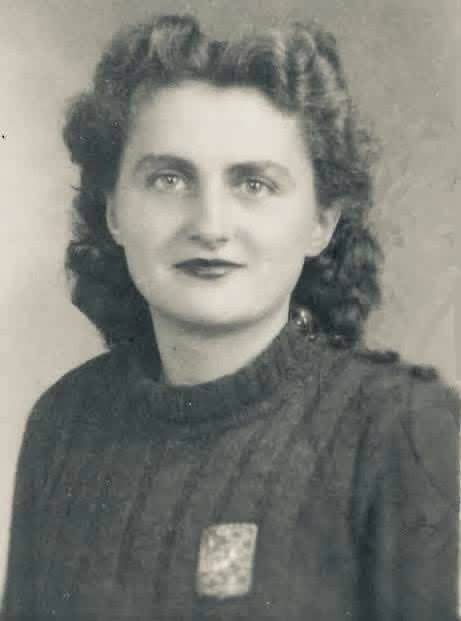
France is mourning one of its remaining heroes of World War II following the death of Solange Alexandre, a courageous woman who helped fight Nazi occupation and commanded her own resistance unit. Alexandre, who died aged 104 at a nursing home in Le Mans, spent much of her youth risking her life to gather intelligence, shelter Allied airmen and organise attacks against German forces.
Highlights
- Solange Alexandre, a French World War II Resistance veteran, has died aged 104.
- She founded and commanded the Pas-de-Boeuf Resistance network in 1944.
- Her unit comprised approximately 30 fighters who carried out operations against German forces.
- She helped shelter Allied airmen and participated in the liberation of Tours.
- President Emmanuel Macron paid tribute to her contribution to France’s freedom.
Main Story
France Loses One of Its Last World War II Resistance Heroes
France has lost one of its celebrated veterans of the Second World War following the death of Solange Alexandre, a former Resistance fighter who played a significant role in the country’s struggle against Nazi occupation.
Alexandre died at the age of 104 in a nursing home in Le Mans, leaving behind a remarkable history of courage and service during one of Europe’s darkest periods.
She became particularly known for establishing and leading her own group of anti-German fighters alongside her future husband, an extraordinary responsibility for a woman operating within the largely male-dominated Resistance movement.
Her involvement in the underground struggle began in 1941, when she started working as a courier, transporting information and messages between members of the Resistance.
How Alexandre Joined the Fight Against Nazi Germany
Born Solange Dubuisson in 1922 in the Sarthe department of western France, Alexandre grew up in a family deeply shaped by the First World War.
Her mother had lost her first husband during the conflict, while her father had sustained injuries while serving in 1917.
She later explained that patriotism, honour and loyalty to France were values she had grown up embracing.
Her decision to join the Resistance was influenced by a radio broadcast in June 1940, when General Charles de Gaulle appealed to the French population to continue fighting against Germany from his base in London.
Although she had never heard of de Gaulle before, his message inspired her to become involved in the resistance movement.
She was subsequently recruited by Saïd Belhaffaf, a Tunisian-born French military veteran who was already involved in the underground struggle.
Using the codename Corlay, Alexandre travelled around the Le Mans region on a bicycle, collecting intelligence and delivering messages while avoiding German surveillance.
Founded a Resistance Network With 30 Fighters
In 1943, Alexandre met Guy Déliot, who later became her first husband. He had abandoned his position in the French gendarmerie after refusing to participate in the arrest of Jewish people.
By April 1944, as Allied forces prepared to intensify their campaign against German occupation, the two decided to establish a clandestine resistance group in the countryside.
They founded the Pas-de-Boeuf network near Ruillé-sur-Loir, operating from forested areas where members could avoid detection.
The unit brought together approximately 30 fighters, including men who had escaped German forced labour programmes and survivors of another resistance group destroyed by enemy forces.
The group also sheltered two Allied airmen, one American and one Canadian, while organising sabotage operations against German forces.
Alexandre played a leadership role in coordinating the fighters and their activities, despite the considerable risks associated with being discovered by German authorities.
She later recalled that the Gestapo had attempted to arrest her twice, but she managed to escape on both occasions.
Took Part in France’s Liberation
Following the Allied landings in Normandy on June 6, 1944, Alexandre’s resistance unit became increasingly involved in operations against German occupation forces.
Her group contributed to the wider liberation effort, with Alexandre eventually taking part in the liberation of Tours in September 1944.
By the end of the war, she had attained the rank of sub-lieutenant in the French Forces of the Interior (FFI), recognising her contribution to the country’s resistance movement.
Her wartime experiences placed her among the women who played important but often under-recognised roles in the fight against Nazi Germany.
Macron Leads Tributes Following Her Death
French President Emmanuel Macron was among those who honoured Alexandre following the announcement of her death.
In a tribute shared on social media, Macron reflected on her modest attitude towards her wartime contribution, noting that she had always described her actions as simply fulfilling her responsibility.
He said her efforts had helped secure the freedom enjoyed by subsequent generations of French citizens and assured that the country would remember her sacrifice.
Life After the Second World War
After the war, Alexandre returned to civilian life and worked as a teacher.
She also accompanied her first husband, Guy Déliot, during his assignments as a gendarmerie officer in French overseas territories.
Their marriage ended tragically in 1960 when Déliot was killed in Martinique.
Alexandre later remarried in 1981 and continued living a life shaped by the memories of her wartime experiences.
Despite her extraordinary contribution to France, she twice declined the prestigious Légion d’Honneur, one of the country’s highest national distinctions.
She maintained that she had only fulfilled her responsibility and believed other people deserved the recognition more than she did.
Her death marks another significant loss for France as the generation that witnessed and fought in the Second World War continues to disappear.
Solange Alexandre may have spent her life insisting she was simply doing her duty, but her courage went far beyond ordinary service. She risked everything for a freedom future generations would enjoy, leaving behind a legacy that reminds the world that bravery has no gender and that some of history’s greatest heroes never seek recognition.

