
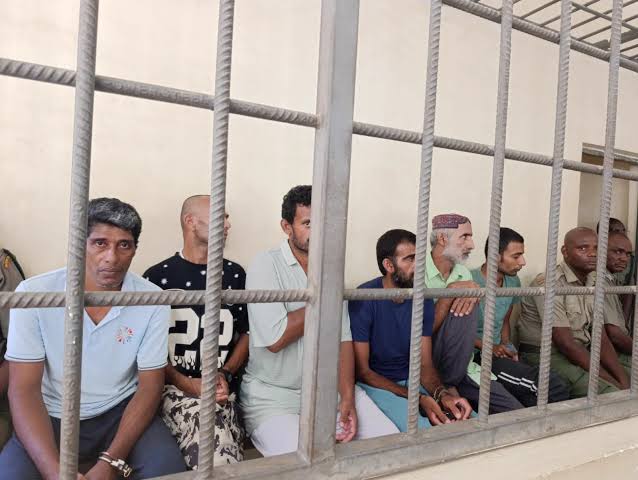
A Shanzu court has ruled that six Iranian nationals accused of trafficking more than one tonne of methamphetamine worth an estimated Sh8.2 billion have a case to answer, paving the way for the defence stage of the high-profile trial.
Highlights
- Six Iranian nationals face charges linked to 1,036.044kg of methamphetamine.
- The drugs are estimated to have a street value of Sh8.2 billion.
- Prosecutors called 12 witnesses during the trial.
- Investigators allege the narcotics were loaded in Iran and destined for Mauritius.
- The accused will now present their defence under Section 211 of the Criminal Procedure Code.
Main Story
Court Finds Prima Facie Case
Shanzu Chief Magistrate Anthony Mwicigi has ruled that the prosecution presented sufficient evidence for six Iranian nationals to be placed on their defence over an alleged multimillion-shilling methamphetamine trafficking operation.
The accused are Jaseem Darzadeh Nia, Nadeem Jadgal, Hassan Baloch, Raheem Baksh, Imran Baloch and Imtiyaz Daryay.
The decision came after prosecutors concluded their case, having called 12 witnesses to testify.
The Office of the Director of Public Prosecutions (ODPP) says the six are accused of trafficking 1,036.044 kilogrammes of methamphetamine, with the drugs estimated to be worth approximately Sh8.2 billion.
Drugs Allegedly Found on Vessel
According to evidence presented in court, the alleged offence took place between October 17 and 20, 2025, on the high seas.
Authorities reportedly acted on intelligence concerning a suspicious vessel operating in the Indian Ocean before intercepting and searching it.
During the search, investigators allegedly discovered numerous packages containing a white crystalline substance. Forensic analysis subsequently identified the substance as methamphetamine.
A further search reportedly uncovered 769 packets hidden across six of the vessel’s seven compartments.
A government-supervised process later established the total weight of the recovered narcotics at 1,036.044 kilogrammes.
Phones and SIM Cards Examined
The prosecution also relied on digital evidence gathered from five mobile phones and four SIM cards recovered during the operation.
Investigators told the court that the suspected shipment had allegedly originated from Pozm Port in Iran and was being transported towards Mauritius.
The vessel was described by prosecutors as unregistered and stateless.
Accused Changed Their Pleas
The six suspects initially admitted the charges before later withdrawing those pleas.
In January 2026, they asked the court to have the charges read to them again, arguing that they had not properly understood the allegations when they first appeared in court.
After the charges were presented afresh, all six entered pleas of not guilty.
The change of plea allowed the matter to proceed to a full hearing, during which the prosecution presented its evidence.
Court Denies Bond
The prosecution opposed the accused persons’ release on bond, citing concerns over their foreign nationality and lack of established residence or dependable contacts in Kenya.
Prosecutors argued that these circumstances could make it difficult to ensure their attendance in court.
The court subsequently declined to grant bond and ordered that the six remain in custody as the case progressed.
Defence Stage Begins
With the prosecution having completed its case and the court finding that a prima facie case exists, the accused will now be required to respond to the evidence against them under Section 211 of the Criminal Procedure Code.
The ruling does not amount to a finding of guilt. The six remain accused persons and will have an opportunity to challenge the prosecution’s evidence during the defence stage.
As the case moves into its next phase, the central question remains whether the defence can successfully challenge the evidence that has so far linked the six men to one of the largest alleged methamphetamine shipments before a Kenyan court.

