
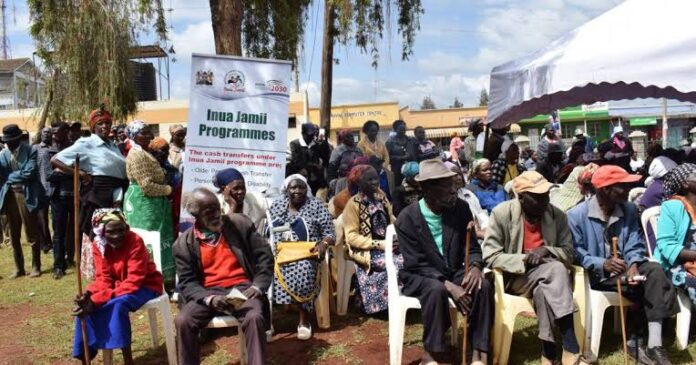
For thousands of vulnerable Kenyans, the Inua Jamii cash transfer has become more than a monthly payment it has helped families put food on the table, pay for medicine and, in some cases, start small businesses. The government is now looking to strengthen the programme through a new funding framework that could unlock additional resources and pave the way for more consistent support.
Highlights
- Inua Jamii provides KSh2,000 monthly to eligible beneficiaries.
- Some recipients have used the money to start or grow small businesses.
- Mobile money has made accessing payments safer for elderly beneficiaries.
- The government wants to attract more funding from partners and donors.
- A new legal framework has created a Social Protection Fund and National Board.
Main Story
Cash Support Becomes a Lifeline
The Inua Jamii programme continues to play an important role for elderly Kenyans, people living with severe disabilities and other vulnerable households.
The monthly KSh2,000 stipend helps beneficiaries cover everyday expenses, support relatives and, for some recipients, put a little money aside to pursue income-generating activities.
In Machakos, Janet Mwalimu, 32, has turned part of her support into a source of livelihood. Living with a disability and relying on a caregiver for daily assistance, Janet struggled to find employment before deciding to combine her savings with a loan.
She eventually opened a small business selling clothes and beauty products, giving her a chance to earn an income while putting her monthly support to productive use.
Beneficiaries Turn Payments Into Businesses
Janet is not alone in using the programme to create opportunities.
In Lungalunga, 76-year-old Alice Mwangi used her first payment to launch a roadside venture. By putting some of her monthly support back into the business, she has gradually worked towards expanding it.
In Kibera, 83-year-old Emily Chepkurui relies on the stipend while caring for her orphaned grandchildren. She also supplements the household income by selling traditional vegetables whenever she gets the opportunity.
Their experiences highlight how even modest social protection payments can provide vulnerable households with room to pursue small but meaningful economic activities.
Mobile Money Makes Access Safer
For elderly beneficiaries, the way payments are delivered has also made a difference.
Godfrey Waweru, an 82-year-old livestock farmer from Suswa, remembers the difficulties and security concerns older people faced when they had to travel to collect cash.
The increased use of mobile money has eased some of those challenges, allowing beneficiaries to access their funds more conveniently without making potentially risky journeys.
Calls for Higher Payments
Despite the programme’s impact, some beneficiaries say the KSh2,000 monthly payment is no longer enough to cover all their essential needs.
Jacqueline Mwinyiva, a mother and caregiver to a child living with cerebral palsy, depends on the support to help meet household expenses such as food and medicine.
She is among those calling for an increase in the stipend, arguing that a larger payment would give vulnerable families greater capacity to meet basic needs and improve their livelihoods.
New Framework Could Unlock More Funding
The government has also begun laying the groundwork for a stronger and more sustainable social protection system.
Inua Jamii payments previously operated without a structured legal framework governing their long-term financing. Legislation enacted last year changed that position by formally anchoring the programme in law.
The reforms established the National Board for Social Protection as well as the Social Protection Fund, creating a structure through which additional resources can be mobilised.
The government is now looking beyond its own budgetary allocation, with plans to work with organisations such as the World Bank, donors and other well-wishers to expand the pool of money available for social protection.
Officials believe a stronger fund could eventually provide beneficiaries with higher and more dependable payments.
Focus Shifts to Wider Coverage
Beyond increasing the amount received by current beneficiaries, the government also faces the task of bringing eligible Kenyans who have not yet joined the programme into the system.
The broader goal is to create a social protection programme that is better funded, more predictable and capable of responding to the needs of vulnerable households across the country.
For families already depending on Inua Jamii, the hope is that the new funding approach will translate into more meaningful and reliable support.
For vulnerable Kenyans, the real measure of Inua Jamii will be whether stronger funding can turn a modest monthly payment into lasting security and opportunity.

