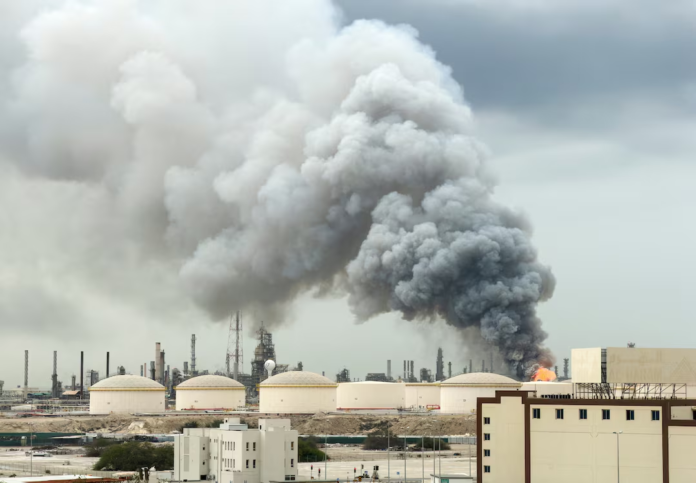
Escalating tensions involving the United States, Israel, and Iran are beginning to shake the global energy market, with several Middle Eastern oil producers already scaling back operations. As attacks and military responses intensify across the region, energy infrastructure has been hit, shipping routes threatened, and major exporters forced to take precautionary steps that could ripple across economies worldwide.
Highlights
- Iran’s energy infrastructure has suffered attacks, disrupting oil production and transport.
- Saudi Arabia and other Gulf producers are adjusting operations due to security concerns.
- Kuwait and Qatar have reduced output or halted production as tensions rise.
- The Strait of Hormuz shipping route faces increased risks, threatening global energy supply.
- Analysts warn oil prices could surge dramatically if the conflict escalates further.
Main Story
Iran’s Oil Infrastructure Under Pressure
Iran has experienced major disruptions to its oil production and distribution network since the conflict intensified. Missile strikes reportedly targeted fuel depots in Tehran and Alborz provinces, triggering fires and damaging key facilities linked to the country’s energy supply chain.
Iranian leaders have warned that continued hostilities could destabilize oil production throughout the wider West Asian region. The country’s parliamentary leadership cautioned that the conflict could disrupt both production and exports across neighboring energy-producing nations if tensions persist.
Although Tehran insists it has no plans to block the Strait of Hormuz one of the world’s most important oil transit routes recent attacks on tankers in the area have already reduced maritime traffic, raising alarm among global energy traders.
Saudi Arabia Adjusts Oil Shipments
Security concerns have also forced Saudi Arabia to take precautionary measures. Following a drone strike that affected one of its refineries, the kingdom’s national oil company temporarily shut down the facility to assess safety risks.
To maintain supply for global customers, Saudi Arabia has begun rerouting some crude shipments to the Red Sea port of Yanbu. The move aims to avoid the increasingly volatile Gulf waters while ensuring exports continue reaching international markets.
Kuwait Cuts Production as Shipping Risks Rise
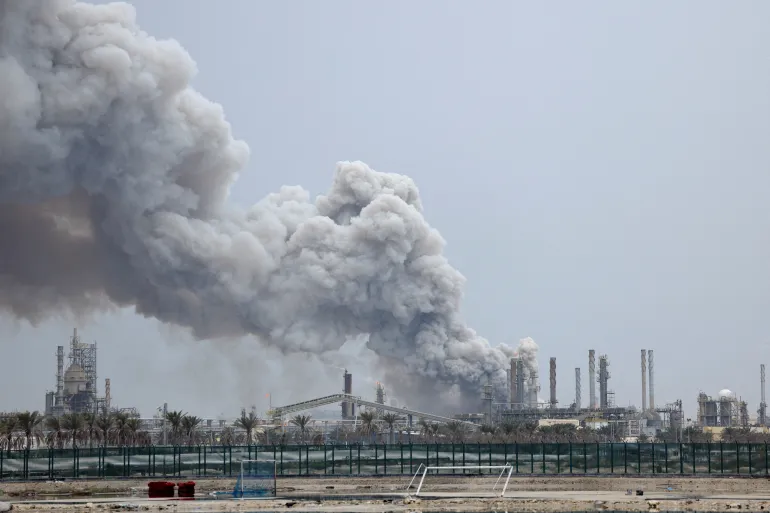
Kuwait has also moved to reduce crude production and refining activities. The country’s national oil corporation announced the decision as a temporary precaution while regional tensions remain high.
Officials cited growing threats to shipping routes, particularly through the Strait of Hormuz, as well as attacks targeting regional infrastructure. Reports indicate that the company has invoked force majeure due to limited shipping availability and safety concerns for vessels operating in the Gulf.
Qatar Halts LNG Output
Qatar, one of the world’s leading liquefied natural gas exporters, has temporarily suspended LNG production after attacks targeted two of its major energy facilities. The country’s energy company has formally notified buyers that supply disruptions may occur as the situation unfolds.
With Qatar responsible for around one-fifth of the global LNG supply, any prolonged shutdown could have significant consequences for energy markets worldwide. Officials have warned that if the Strait of Hormuz were to close, oil prices could skyrocket to around $150 per barrel within weeks, potentially triggering serious economic consequences globally.
UAE Managing Production Levels
In the United Arab Emirates, the Abu Dhabi National Oil Company has adjusted offshore production levels as a precautionary measure. The strategy is aimed at managing storage capacity and maintaining flexibility until regional conditions stabilize.
The company says it will be able to quickly restore normal operations once the security environment improves.
As tensions continue to rise in one of the world’s most critical energy corridors, the big question remains: how long can global markets withstand the pressure?

