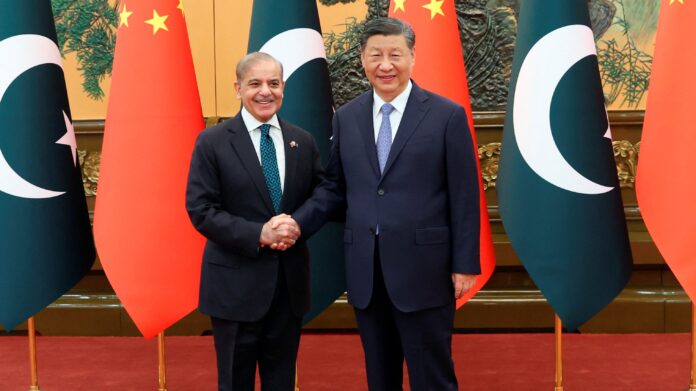
For decades, the “**all-weather friendship**” between **China** and **Pakistan** was a titanium-clad constant in Asian geopolitics, anchored by the **$65 billion China-Pakistan Economic Corridor (CPEC)**. But as Pakistan’s internal security apparatus fractures under the weight of a resurgent insurgency, the dragon is retreating into a shell of strategic hesitation.
The recent surge in **terror attacks** across **Balochistan** and **Khyber Pakhtunkhwa** has not only targeted Pakistani security forces but has placed a bullseye on Chinese engineers and infrastructure projects. While Islamabad begs for more intervention and financial reprieve, Beijing is recalculating the cost of its involvement in a war that seems to have no clear exit strategy.
## The CPEC Trap
The **China-Pakistan Economic Corridor** was supposed to be the “**crown jewel**” of **Xi Jinping’s Belt and Road Initiative (BRI)**. It promised to link the Arabian Sea at Gwadar to China’s Xinjiang region, bypassing the contested Malacca Strait. Today, that jewel is gathering dust and blood.
Data from regional security analysts suggests that over **15 major attacks** targeting Chinese interests have occurred in the last 24 months. From the **Dasu bus blast** to the targeted suicide bombing of a convoy in Karachi, the message from local insurgents—specifically the **Balochistan Liberation Army (BLA)** and the **Tehrik-i-Taliban Pakistan (TTP)**—is clear: China is no longer a guest; it is an occupier.
> “Beijing is facing a classic **imperial overstretch dilemma**,” says Dr. Aris Teoh, a senior geopolitical analyst specializing in Silk Road security. “They invested billions based on the assumption that the Pakistani military could guarantee security. That guarantee has expired.”
## Caught Between Islamabad and the Taliban
The complexity of China’s hesitation lies in its awkward relationship with the **Taliban** government in Kabul. For years, Beijing hoped the Taliban would act as a barrier against **Uighur militants** in the **East Turkestan Islamic Movement (ETIM)**. Instead, the Taliban’s return to power has emboldened the TTP, which uses Afghan soil to launch devastating strikes into Pakistan.
China find itself in a diplomatic pincer move. If it backs Pakistan’s military strikes into Afghanistan, it risks alienating the Taliban and inviting more domestic instability within its own borders. If it stays silent, its multi-billion dollar investments in Pakistan continue to bleed value.
Sources within the Chinese Foreign Ministry suggest that Beijing is “**deeply frustrated**” with Islamabad’s inability to stabilize the border regions. This frustration has manifested in a freeze on new high-profile CPEC projects. The tap is not just being turned off; it is being dismantled.
## The Security Privateering Solution?
There are increasing reports that China is no longer trusting the **Pakistan Army** to protect its assets. Whispers from the diplomatic corridors in Islamabad suggest that China has demanded the right to deploy its own **private security contractors**—essentially the Chinese version of the Wagner Group—to guard CPEC sites.
### Sovereignty Issues
– The Pakistani military high command has resisted this, fearing a total loss of sovereignty over their own territory.
### Economic Leverage
– China is using Pakistan’s **ballooning debt** as a lever, suggesting that further debt restructuring is contingent on “**enhanced security protocols**.”
### The Baloch Factor
– Local separatist groups have stated that the presence of Chinese boots on the ground would lead to a “**total war**” against Beijing’s interests.
This deadlock has paralyzed progress. Major energy and transport nodes that were slated for completion in 2023 remain stalled, with Chinese personnel confined to highly fortified compounds, essentially living as “**well-funded prisoners**” in a hostile landscape.
## The Financial Fallout
The numbers paint a bleak picture for Pakistan’s economic survival. **China accounts for nearly 30% of Pakistan’s total external debt**. While Beijing has historically rolled over loans to prevent a total economic collapse, the appetite for charity is waning. The Chinese economy is currently facing its own internal headwinds—a property crisis and cooling growth—making the bottomless pit of Pakistani security spending less attractive.
> “The math doesn’t work anymore,” suggests a former World Bank advisor for the region. “China expected a return on investment through trade and transit. Instead, they are paying a ‘**security tax**’ that exceeds the potential profits of the corridor.”
## Impact: A Shifting Power Dynamic
As China pulls back, a **power vacuum** is forming. For Pakistan, the realization is setting in: China will not be the “**cavalry**” that rides in to save them from a domestic insurgency. Beijing’s policy is non-interference, but that policy is often a polite mask for strategic abandonment when the **risk-to-reward ratio** turns sour.
The coming months will be a litmus test for the relationship. If China refuses to commit more capital or military support during Pakistan’s current security crisis, it signals the end of an era. The “**all-weather friendship**” may prove to be a fair-weather arrangement, leaving Islamabad to fight a multi-front war with a depleted treasury and a silent partner.
For the rest of the world, this hesitation sends a clear signal: **China is a cautious superpower**. It prefers to buy influence, but it is not yet willing to bleed for it. In the mountains of Pakistan, the limits of the **Chinese Dream** are being tested, and for now, the dragon is choosing to watch from a safe distance while its investments smoke in the distance.

