
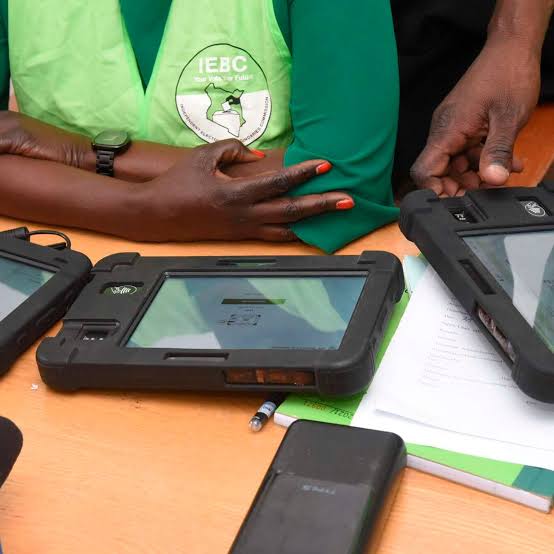
The High Court has ordered the Independent Electoral and Boundaries Commission (IEBC) to give accredited political parties and election observers access to source code and audit logs connected to continuous voter registration. The interim order is aimed at strengthening scrutiny of the electoral system as a wider petition questioning transparency and the voter register moves forward.
Highlights
- IEBC must give accredited parties and observers access to specified source code and audit logs.
- The order concerns technology used for continuous voter registration.
- The court raised concerns over issues contained in a previous voter register audit.
- A broader challenge to the suitability of IEBC’s technology was struck out.
- The petition will continue over technology access and voter-register publication.
Main Story
Court Orders Greater Access to IEBC Technology
The High Court has directed IEBC to provide accredited political parties and election observers with access to specific technical records relating to continuous voter registration.
Justice Gregory Mutai issued the order as an interim measure while hearing a petition filed by Gilbert Njoroge, who has raised questions about electoral technology and compliance with voter registration requirements.
The records covered by the order include relevant source code and audit logs.
The move gives authorised election stakeholders an opportunity to independently examine how parts of the voter registration system operate and what activities have taken place within it.
What the Court Is Actually Considering
Justice Mutai narrowed the petition, making it clear that the court would not reopen questions about the overall suitability of IEBC’s electoral technology.
That issue, the judge ruled, had already been determined and could not be litigated again under the legal principle of res judicata.
The remaining issues are more specific.
They include whether political parties and accredited observers should have constitutional access to the source code and audit logs, as well as whether IEBC has properly complied with requirements surrounding publication of the voter register.
Audit Raises Questions About the Voter Register
The petitioner relied on findings from a KPMG audit of Kenya’s voter register to support concerns about accuracy and transparency.
Among the figures cited in court were more than 481,000 registrations involving duplicate or missing identification numbers.
The material also referred to 164,269 records whose identification numbers were found to be invalid when compared with information held by the National Registration Bureau.
Another finding cited involved 246,465 deceased voters whose identification numbers were still appearing in the register as of June 2022.
The judge said the findings raised legitimate questions that deserved consideration during the full hearing.
Court Notes Limits of Audit Material
However, the High Court also pointed out that the portions of the KPMG report presented to it were incomplete.
The excerpts did not include all sections dealing with database and system controls or the responses provided by IEBC to the audit findings.
The judge further noted that the report contained restrictions relating to how its contents could be relied upon or disclosed.
This means the audit findings will still need to be considered within their full context as the case progresses.
Source Code Dispute to Be Tested
The petition also raises questions about access to the technology behind the voter registration system.
Claims that IEBC’s technology contractor refused access to source code and audit logs because of intellectual property concerns will be examined during the substantive hearing.
Justice Mutai said the arguments had crossed the initial threshold required for the court to allow the matter to proceed.
The interim access order therefore does not amount to a final finding that the electoral system is defective.
Court Rejects Call for Wider Suspension
Despite allowing access to technical records, the judge declined to stop IEBC from continuing to use the technology.
Justice Mutai noted that Kenya’s 2026 by-elections had already been conducted using the system without a court order preventing its deployment.
He also considered Kenya’s hybrid electoral model, which combines biometric voter identification with physical result forms.
According to the court, the physical documentation provides another layer that can be examined through manual verification, recounts and judicial oversight.
Public Interest Weighed Against Transparency Concerns
The court also considered whether allowing the electoral system to continue operating could undermine the petition.
Justice Mutai was not convinced that the case would become meaningless without a broader suspension of the technology.
He instead pointed to the public interest in allowing constitutionally mandated electoral processes to continue.
The judge cautioned that stopping such a process would be a serious step requiring a particularly strong case.
Some Claims Removed From the Case
The court also struck out several aspects of the petition.
These included the broader challenge to the suitability of IEBC’s electoral technology, which was dismissed on the basis that the issue had already been determined.
Claims concerning the extension of the Smart Party contract were also struck out because the petitioner had not first exhausted the available procurement review process.
Similarly, claims involving the sharing or processing of voter data were removed because the relevant remedies before the Data Protection Commissioner had not been exhausted.
What the Ruling Means
The ruling does not declare IEBC’s technology unsuitable or order the commission to stop using it.
Instead, it gives accredited political parties and election observers interim access to specified source code and audit logs connected to continuous voter registration.
The wider petition will continue focusing on access to electoral technology and whether the voter register has been properly published.
The decision therefore places greater emphasis on transparency while allowing the electoral system to remain operational.
Muturi Welcomes Decision
Former National Assembly Speaker Justin Muturi has welcomed the ruling, describing it as an important step towards greater transparency in Kenya’s electoral process.
The decision comes as preparations for the 2027 General Election continue and scrutiny of election technology remains a major part of the national conversation.
With political parties and observers now set to gain access to specified technical records, the coming stages of the case could provide further insight into how Kenya’s voter registration technology is managed and monitored.
As Kenya heads towards another closely watched election, transparency over the technology behind the vote could be just as important as the ballots themselves.
More on this topic: Atwoli Warns Gachagua Over IEBC Claims Ahead of 2027 Election. Official information: IEBC official website.

